홈MCP워크벤치Skills
홈워크벤치알림마이페이지
llms.txt · MCP 가이드개인정보처리방침 · 이용약관 · 지원v1.8.0
  1. 홈
  2. /화합물

M-디니트로벤젠

1,3-Dinitrobenzene

HCID 7452
새 노트새 반응견적 요청하기
인쇄 미리보기

데이터를 보충하는 중입니다. 잠시 후 페이지를 새로 고치면 최신 내용을 볼 수 있습니다

기본 정보개요이름 및 식별자물성안전 및 규제화학 및 산업관련 반응화합물 노트
부분 구조 검색유사 구조 찾기

기본 정보

CAS
99-65-0
표준 SMILES
O=[N+]([O-])c1cccc([N+](=O)[O-])c1
InChIKey
WDCYWAQPCXBPJA-UHFFFAOYSA-N
분자식
C6H4N2O4
평균 분자량
168.11 g/mol
단동위원소 질량
168.01710661

개요

m-Dinitrobenzene can cause male reproductive toxicity according to The Environmental Protection Agency (EPA).

이름 및 식별자

우선 이름
1,3-Dinitrobenzene
IUPAC
1,3-dinitrobenzene
현지명
M-디니트로벤젠
영어명
1,3-Dinitrobenzene
분자식
C6H4N2O4
분자량
168.11

이름 및 동의어

1,3-Dinitrobenzene99-65-0M-DINITROBENZENE2,4-Dinitrobenzenemeta-DinitrobenzeneBenzene, 1,3-dinitro-1,3-DinitrobenzolBenzene, m-dinitro-m-DNBDwunitrobenzen3-dinitrobenzene1,3-Dinitro-benzene
이름 더 보기
1,3-다이나이트로벤젠1,3-디니트로벤젠M-디니트로벤젠m-Dinitro벤젠1.3-Dinitro-Dinitrobezene
DTXSID9024065BinitrobenzeneDK8B627BU0NSC-7189DTXCID204065CHEBI:513971,3-DNBRefChem:72751

데이터베이스 식별자

CAS
99-65-0
PubChem CID
7452
DTXSID
DTXSID9024065
ChEMBL
CHEMBL114070
ChEBI
CHEBI:51397
UNII
DK8B627BU0
EC Number
202-776-8
Nikkaji
J1.177K

물성

구조 계산 물성보충 중

XLogP
1.5
극성 표면적
91.6 Ų
수소 결합 공여자 수
0
수소 결합 수용자 수
4
회전 가능 결합 수
0
무거운 원자 수
12
형식 전하
0
복잡도
175

실험 및 물리화학적 성질

Chemical Classes · 2건

Nitrogen Compounds -> Nitros, Aromatic

Reactive agents - 4th degree

DrugsPharmaceuticals -> Listed in ZINC15
SpringerMaterials Properties13C nuclear magnetic resonance spectrum
PesticidesPesticide -> EPA IRIS
LogP · 2건

log Kow= 1.49

1.49

Density · 5건

1.58 at 64.4 °F (USCG, 1999) - Denser than water; will sink

1.575 @ 18 °C/4 °C

1.6 g/cm³

1.5751 @ 18°C

1.58

Color/Form · 3건

Yellowish crystals

Colorless to yellow, rhombic needles or plates

Pale white or yellow, crystalline solid.

Solubility · 6건

0.02 % (NIOSH, 2024)

1 g dissolves in 2000 ml cold water, 320 ml boiling water; 1 g dissolves in 37 ml alcohol, 20 ml boiling alcohol; freely sol in chloroform, ethyl acetate

Very soluble in acetone and ethanol; soluble in ether

In water, 533 mg/l @ 25 °C

Solubility in water: very poor

안전 및 규제

안전 정보는 참고용이며, 공급업체의 물질안전보건자료(SDS), 관련 법규 및 전문가 평가를 대체하지 않습니다.

GHS 분류

GHS Classification · 6건

Danger

H300: Fatal if swallowed [Danger Acute toxicity, oral]

P260, P262, P264, P270, P271, P273, P280, P284, P301+P316, P302+P352, P304+P340, P316, P319, P320, P321, P330, P361+P364, P391, P403+P233, P405, and P501 (click each P-code to see the statement)

Danger

H300 (100%): Fatal if swallowed [Danger Acute toxicity, oral]

P260, P262, P264, P270, P271, P273, P280, P284, P301+P316, P302+P352, P304+P340, P316, P319, P320, P321, P330, P361+P364, P391, P403+P233, P405, and P501 (click each P-code to see the statement)

유해성 정보

Regulatory Information · 4건

Chemical: Benzene, 1,3-dinitro-

Hazard Traits - Neurotoxicity; Reproductive Toxicity

1,3-Dinitrobenzene: Does not have an individual approval but may be used under an appropriate group standard

The New Jersey Worker and Community Right to Know Act requires public and private employers to provide information about hazardous substances at their workplaces. (N.J.S.A. 34:5A-1 et. seq.)

DOT LabelPoison
Fire Hazards · 2건

Behavior in Fire: May explode (USCG, 1999)

Combustible. Gives off irritating or toxic fumes (or gases) in a fire. Finely dispersed particles form explosive mixtures in air.

Fire PotentialCombustible
Health Hazards · 1건

Inhalation or ingestion causes loss of color, nausea, headache, dizziness, drowsiness, and collapse. Eyes are irritated by liquid. Stains skin yellow; if contact is prolonged, can be absorbed into blood and cause same symptoms as for inhalation. (USCG, 1999)

Hazards Summary · 2건

Methemoglobinemia, liver injury, and visual impairment (central scotomas) have been reported in exposed workers. Listed in table of Industrial Chemicals for Which Methemoglobin Formation is the Principal Cause of Toxicity; [ACGIH] m-Dinitrobenzene was eliminated from in vitro testing after little response was detected, even at high concentrations. [French CL et al. Potency ranking of methemoglobin-forming agents. J Appl Toxicol. 15(3):167-74 (1995).]; An eye and respiratory tract irritant; Can induce methemoglobinemia and have effects on the liver; [ICSC]

화학 및 산업

약리 정보

Biological Half-Life · 1건

Following admin of a single oral dose of 25 mg/kg, whole blood of conventional rats had a peak mean concn of the parent cmpd of 4.2 ug/ml at 0.5 hr. Half-life was approx 10 hr. In germ-free rats the peak concn was 7.5 ug/ml after 0.5 hr (maintained for 6 hr); half-life was 20 hr. ...

Metabolism/Metabolites · 6건

... METABOLIZED ... BY REDN OF 1 OR BOTH NITRO GROUPS, & BY HYDROXYLATION OF BENZENE RING, TO PRODUCE DINITRO-, AMINONITRO-, & DIAMINOPHENOLS. AFTER FEEDING M-DINITROBENZENE (LABELLED WITH (14)CARBON) TO RABBITS THE METABOLITES PRESENT IN THE URINE WERE M-NITROANILINE ... M-PHENYLENEDIAMINE ... 2-AMINO-4-NITROPHENOL ... 4-AMINO-2-NITROPHENOL & 2,4-DIAMINOPHENOL. ... THE ABSENCE OF ANY 3,5-SUBSTITUTED PHENOLS SUGGESTS THAT REDN OF 1 OF NITRO GROUPS PRECEDES HYDROXYLATION.

The biotransformation of m-dinitrobenzene was studied in rabbits. The animals recieved a single oral dose of radiocarbon-labeled m-DNB in the range of 50 to 100 mg/kg. Urine was collected for two days after dosing for analysis of metabolites. Over the two day period, more than 80% of the radiolabel was excreted in the urine; feces contained between 0.3 and 5.2% of the radioactive dose. m-DNB underwent extensive biotransformation. The major urinary metabolites were 2,4-diaminophenol (31% of the dose), m-nitroaniline and m-phenylenediamine (together, 35% of the dose), and 2-amino-4-nitrophenol (24%).

The redn of aromatic nitro compounds was investigated in purified milk xanthine oxidase system. ... The redn rate was greatest for p-substitution of electron-withdrawing groups, and for m-substitution of electron-repelling groups, respectively.

Nitroreductase activity was previously known to occur under nitrogen atmosphere in the cytosolic and microsomal fractions of liver homogenates. This study describes a subcellular nitroreductase activity which occurs in liver mitochondria under aerobic conditions. Mitochondria were isolated from rat liver and assayed for their capacity to reduce certain nitro compounds by measuring spectrophotometrically both the appearance of amino compounds and the consumption of nicotinamide adenine dinucleotide. Intact mitochondria were found to possess a p-dinitrobenzene reductase activity. The activity was destroyed by heat, and was present at only 20% in the microsomal fraction. It was strictly nicotinamide adenine dinucleotide-dependent, while only little or no activity occurred with reduced nicotinamide adenine dinucleotide or other oxidative substrates. Nitro reduction was inhibited by thiol reagents. Rat liver mitochondria showed about 15% activity with o-dinitrobenzene and m-dinitrobenzene, while there was less than 5% activity with a series of p-nitro compounds including chloramphenicol.

관련 반응

55건
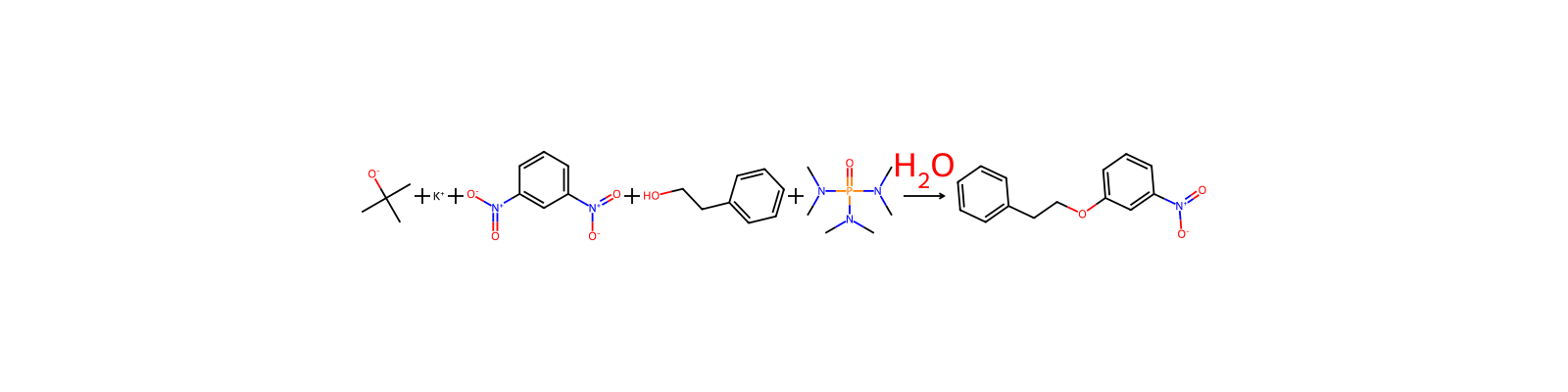
반응 기록 만들기
HRID 64082 반응식
HRID 64082반응물로uspto-grants-2016_09
HRID 67796 반응식
HRID 67796반응물로uspto-grants-1982_08
HRID 110570 반응식
HRID 110570반응물로Training data from https://doi.org/10.1039/C8SC04228D (2/10)
HRID 231616 반응식
HRID 231616반응물로uspto-grants-1989_07
HRID 231618 반응식
HRID 231618반응물로uspto-grants-1989_07
HRID 259218 반응식
HRID 259218반응물로uspto-grants-1977_07
HRID 288434 반응식
HRID 288434반응물로Training data from https://doi.org/10.1039/C8SC04228D (8/10)
HRID 313153 반응식
HRID 313153반응물로Training data from https://doi.org/10.1039/C8SC04228D (8/10)
1 / 7 페이지

화합물 노트

불러오는 중…

이 페이지에서기본 정보개요이름 및 식별자물성안전 및 규제화학 및 산업관련 반응화합물 노트
더보기
새 노트새 반응견적 요청하기

0.02%

CorrosivityLiquid dinitrobenzene will attack some forms of plastics, rubber, and coatings. /Dinitrobenzene, all isomers/
Flash Point · 5건

302 °F (NIOSH, 2024)

302 °F

302 °F (CLOSED CUP)

149 °C

302 °F

Boiling Point · 5건

556 °F at 756 mmHg (NTP, 1992)

302.8 °C @ 770 mm Hg

300-303 °C

291 °C @760 [mm Hg]

572 °F

DecompositionWhen heated to decomposition it emits toxic fumes of /nitrogen oxides/.

물리화학적 성질

녹는점
86 °C · 86 °C
끓는 점
297 °C · 297 °C(lit.)
밀도
1.575 · 1.575
증기압
8.15 x · 8.15 x 10-4 mmHg at 35 °C (Hine et al., 1963)
굴절률
1.466 · 1.4660 (estimate)
인화점
150 °C · 150 °C
저장 조건
2 · 2-8°C
용해도
클로로포름(약간 용해됨), DMSO(약간 용해됨), 메탄올(아주 약간)
물리적 상태
고체
Specific Gravity
1.368 · 1.368
색상
흰색에서 황색을 띠는 결정
수용성
500 mg/L · 500mg/L(20℃)
비열
1.17 J/ · Cp(crystal): 1.17 J/(g·K), at 25℃
Merck
14 · 14,3273
BRN
1105654 · 1105654
Henry's Law Constant
1.8 · 1.8×102 mol/(m3Pa) at 25℃, Chao et al. (2017)
Dielectric constant
2.8 · 2.8(20.0℃)
안정성
안정적인. 환원제, 산화제, 강염기와 호환되지 않습니다. 가열하면 폭발할 수 있음.
주요 응용
환경
InChI
1S/C6H4N2O4/c9-7(10)5-2-1-3-6(4-5)8(11)12/h1-4H
InChIKey
WDCYWAQPCXBPJA-UHFFFAOYSA-N
SMILES
[O-][N+](=O)c1cccc(c1)[N+]([O-])=O
NIST
1 · Benzene, 1,3-dinitro-(99-65-0)
EPA
m-Dinitrobenzene (99-65-0)

화학적 성질

orange to yellow crystalline powder. Freely soluble in benzene, chloroform, ethyl acetate, soluble in alcohol, slightly soluble in water. Can evaporate with water vapour.

The major hazards encountered in the use and handling of 1,3-dinitrobenzene stem from its toxicologic properties and explosivity. Toxic by all routes (ie, inhalation, ingestion, dermal absorption), exposure to this yellowish, crystalline substance may occur from its use in the production of analine, dyes, explosives, industrial solvents, and pesticides. Effects from exposure mayinclude contact burns to the skin and eyes, headache, nausea, lethargy, heart palpitations, methemoglobinemia, jaundice, and respiratory failure. Effects may be delayed up to 1-4 hours. OSHA has established an 8 hour, Time Weighted Average (TWA) limit of 1 mg/cu m, with a skin designation for this substance. In activities and situations where over-exposure may occur, wear a positive pressure self-contained breathing apparatus and chemical protective clothing which is specifically recommended by the shipper or manufacturer. If contact should occur, irrigate exposed eyes with copious amounts of tepid water for at least 15 minutes and wash exposed skin thoroughly with soap and water. Contaminated clothing should be removed and discarded or left at the site for cleaning before being reworn. 1,3-Dinitrobenzene is a severe explosion hazard when exposed to friction, mechanical shock, localized thermal shock, or contamination. For fires involving 1,3-dinitrobenzene, extinguish with dry chemical, CO2, water spray, fog, or standard foam. Fight the fire from as far a distance as possible in an explosion-resistant location. If fire is massive, back off, protect surroundings, and let burn. 1,3-Dinitrobenzene may be transported via air, rail, road, and water, in containers bearing the label, "Poison." 1,3-Dinitrobenzene should be stored in a permanent magazine, away from heat, sources of ignition, sources of physical damage, oxidizers, combustibles, caustics, and metals such as tin and zinc. For small spills of 1,3-dinitrobenzene, use a clean shovel to place material into clean, dry, covered containers for later disposal (liquid solutions are taken up with sand or other noncombustible absorbent). Dike far ahead of large liquid spills to prevent runoff. Large dry spills should be covered with plastic sheeting. Large spills into bodies of water should be trapped at the bottom with sand bag barriers, apply activated carbon, and use mechanical dredges or lifts to remove immobilized masses.

DOT ID and Guide1597 152
Reactive GroupNitro, Nitroso, Nitrate, and Nitrite Compounds, Organic
EC ClassificationSymbol: T+, N; R: 26/27/28-33-50/53; S: (1/2)-28-36/37-45-60-61; Note: C
UN ClassificationUN Hazard Class: 6.1; UN Pack Group: II
Special Reports · 4건

Dangerous Prop Ind Mater Rep 6 (1): 49-52 (1986). Review dinitrobenzene safety toxicol; Health hazard of dinitrobenzene.

Anonymous; J Appl Toxicol 9 (3): 199-202 (1989). Toxicology update for dinitrobenzene with 42 references on toxicity, metabolism, teratogenicity, mutagenicity, and carcinogenicity.

U.S. Dept Health & Human Services/Agency for Toxic Substances Disease Registry; Toxicological Profile for 1,3-Dinitrobenzene/1,3,5-Trinitrobenzene (1995) NTIS # PB/95/264289/AS

DHHS/ATSDR; Toxicological Profile for 1,3-Dinitrobenzene and 1,3,5-Trinitrobenzene (June 1995)

TSCA Requirements · 2건

Section 8(a) of TSCA requires manufacturers of this chemical substance to report preliminary assessment information concerned with production, exposure, and use to EPA as cited in the preamble in 51 FR 41329.

Pursuant to section 8(d) of TSCA, EPA promulgated a model Health and Safety Data Reporting Rule. The section 8(d) model rule requires manufacturers, importers, and processors of listed chemical substances and mixtures to submit to EPA copies and lists of unpublished health and safety studies. m-Dinitrobenzene is included on this list.

안전 및 보호

Fire Fighting · 2건

Fire Extinguishing Agents: Water from protected location (USCG, 1999)

Use water spray, foam, powder, carbon dioxide. In case of fire: keep drums, etc., cool by spraying with water. Combat fire from a sheltered position.

First Aid Measures · 4건

Fresh air, rest. Artificial respiration may be needed. Refer for medical attention.

Remove contaminated clothes. Rinse and then wash skin with water and soap. Refer for medical attention .

First rinse with plenty of water for several minutes (remove contact lenses if easily possible), then refer for medical attention.

Rinse mouth. Give a slurry of activated charcoal in water to drink. Refer for medical attention .

First Aid · 2건

EYES: First check the victim for contact lenses and remove if present. Flush victim's eyes with water or normal saline solution for 20 to 30 minutes while simultaneously calling a hospital or poison control center. Do not put any ointments, oils, or medication in the victim's eyes without specific instructions from a physician. IMMEDIATELY transport the victim after flushing eyes to a hospital even if no symptoms (such as redness or irritation) develop.

(General first aid procedures)

Safe StorageSeparated from strong oxidants, strong bases and food and feedstuffs. See Chemical Dangers.
Exposure Control and Personal ProtectionBiological Exposure Indices (BEI) [ACGIH] - Methemoglobin in blood = 1.5% of hemoglobin during or at end of shift. [ACGIH]
Fire Fighting ProceduresFire Fighting Respirator: Self-contained breathing apparatus with a full facepiece operated in pressure-demand or other positive pressure mode.
Cleanup Methods · 1건

1. Remove all ignition sources. 2. Ventilate area of spill. 3. For small quantities, sweep onto paper or other suitable material & burn in a suitable combustion chamber which allows burning in an unconfined condition & is equipped with an appropriate effluent gas cleaning device. Large quantities may be reclaimed; however, if this is not practical, dissolve in fuel oil & atomize in a suitable combustion chamber equipped with an appropriate effluent gas cleaning device.

Nonfire Spill Response · 1건

SMALL SPILLS AND LEAKAGE: If you spill this chemical, use absorbent paper to pick up all liquid spill material. Your contaminated clothing and absorbent paper should be sealed in a vapor-tight plastic bag for eventual disposal. Solvent wash all contaminated surfaces with alcohol followed by washing with a strong soap and water solution. Do not reenter the contaminated area until the Safety Officer (or other responsible person) has verified that the area has been properly cleaned.

Disposal Methods · 4건

SRP: At the time of review, criteria for land treatment or burial (sanitary landfill) disposal practices are subject to significant revision. Prior to implementing land disposal of waste residue (including waste sludge), consult with environmental regulatory agencies for guidance on acceptable disposal practices.

1. By making packages of dinitrobenzene in paper or other flammable material & burning in a suitable combustion chamber which allows burning in an unconfined condition & is equipped with an appropriate effluent gas cleaning device. 2. By dissolving dinitrobenzene in fuel oil & atomizing in a suitable combustion chamber equipped with an appropriate effluent gas cleaning device.

Dissolve in combustible solvent such as alcohols, benzene, etc. Spray the solution into the furnace with afterburner and scrubber.

The following wastewater treatment technologies have been investigated for dinitrobenzene: Concentration process: Reverse osmosis. /Dinitrobenzene/

Spillage Disposal · 1건

Consult an expert! Sweep spilled substance into covered containers. If appropriate, moisten first to prevent dusting. Carefully collect remainder. Then store and dispose of according to local regulations. Do NOT let this chemical enter the environment. Personal protection: complete protective clothing including self-contained breathing apparatus.

Preventive Measures · 5건

Eating and smoking should not be permitted in areas where dinitrobenzene or liquids containing dinitrobenzene are handled, processed, or stored. Employees who handle dinitrobenzene or liquids containing dinitrobenzene should wash their hands thoroughly with soap or mild detergent and water before eating, smoking, or using toilet facilities.

Protect containers against physical damage. Keep away from heat and sources of ignition or acute fire hazard area. Storage area should be equipped with an automatic sprinkler system if within a building.

Clothing contaminated with dinitrobenzene should be placed in closed containers for storage until it can be discarded or until provision is made for the removal of dinitrobenzene from the clothing.

If employees' clothing becomes contaminated with solid dinitrobenzene, employees should change into uncontaminated clothing before leaving the work premises. ... If the clothing is to be laundered or otherwise cleaned to remove the dinitrobenzene, the person performing the operation should be informed of dinitrobenzene's hazardous properties.

For more Preventive Measures (Complete) data for 1,3-DINITROBENZENE (12 total), please visit the HSDB record page.

Isolation and EvacuationExcerpt from ERG Guide 152 [Substances - Toxic (Combustible)]:

독성 정보

Treatment · 1건

Treatment is mainly symptomatic and may include gastric lavage and/or the administration of activated charcoal. Benzodiazepine may be administered if seizures occur. If methemoglobinemia is evident, 1 to 2 mg/kg of 1% methylene blue should be administered via IV. (T36)

InteractionsIN SUBACUTE POISONING, SYMPTOMS MAY BE PRECIPITATED BY SUNLIGHT OR BY INGESTION OF ALCOHOL. /DINITROBENZENE/
Target Organs · 2건

Immune

Eyes, skin, blood, liver, cardiovascular system, central nervous system

Health EffectsChronic exposure to 1,3-dinitrobenzene can cause a reduction (or loss) in the number of red blood cells (anemia). It may also cause behavioral changes and male reproductive system damage. (L199)
Environmental Fate · 3건

TERRESTRIAL FATE: Based on a classification scheme(1), an estimated Koc value of 150(SRC), determined from a measured log Kow of 1.49(2) and a regression-derived equation(3), indicates that 1,3-dinitrobenzene is expected to have high mobility in soil(SRC). It has been shown that nitrophenols and nitrobenzenes adsorb strongly to clay surfaces and the mobility of 1,3-dinitrobenzene is expected to be low in soils rich in clay content(4,5). Volatilization of 1,3-dinitrobenzene from moist soil surfaces is not expected to be an important fate process(SRC) given a Henry's Law constant of 4.9X10⁻⁸ atm-cu m/mole(6). 1,3-Dinitrobenzene is not expected to volatilize from dry soil surfaces(SRC) based upon an estimated vapor pressure of 2X10⁻⁴ mm Hg(6). More than 64 days were required to biodegrade 1,3-dinitrobenzene in an aqueous biodegradation screening test using a silt loam inoculum at 25 °C(7), which suggests biodegradation will occur slowly in soil(SRC).

AQUATIC FATE: Based on a classification scheme(1), an estimated Koc value of 150(SRC), determined from a measured log Kow of 1.49(2) and a regression-derived equation(3), indicates that 1,3-dinitrobenzene is not expected to adsorb to suspended solids and sediment(SRC). Volatilization from water surfaces is not expected to be an important fate process(3) based upon a Henry's Law constant of 4.9X10⁻⁸ atm-cu m/mole(4). According to a classification scheme(5), BCF values of 2-75 measured in fish(6,7), suggests bioconcentration in aquatic organisms is low to moderate (SRC). The half-life of 1,3-dinitrobenzene in water from the Tennessee River, 1 mile downstream from a munitions plant, was 1 day(8). However, 1,3-dinitrobenzene did not biodegrade in pristine water from rivers and creeks in Maryland(8), suggesting that biodegradation may occur rapidly in acclimated environments, but slowly under non-acclimated conditions(SRC).

ATMOSPHERIC FATE: According to a model of gas/particle partitioning of semivolatile organic compounds in the atmosphere(1), 1,3-dinitrobenzene, which has a vapor pressure of 2X10⁻⁴ mm Hg at 25 °C(SRC), determined from a fragment constant method(2), is expected to exist in the vapor phase in the ambient atmosphere. Vapor-phase 1,3-dinitrobenzene is degraded in the atmosphere by reaction with photochemically-produced hydroxyl radicals(SRC); the half-life for this reaction in air is estimated to be 526 days(SRC), calculated from its rate constant of 3X10-14 cu cm/molecule-sec at 25 °C(SRC) determined using a structure estimation method(3). 1,3-Dinitrobenzene absorbs light greater than 290 nm and may be susceptible to direct photolysis(4), but the kinetics of this reaction are unknown(SRC).

Adverse EffectsOccupational hepatotoxin - Secondary hepatotoxins: the potential for toxic effect in the occupational setting is based on cases of poisoning by human ingestion or animal experimentation.
Exposure Routes · 3건

The substance can be absorbed into the body by inhalation, through the skin and by ingestion.

inhalation, skin absorption, ingestion, skin and/or eye contact

Oral (L199) ; inhalation (L199) ; dermal (L199)

Toxicity Summary · 1건

In the red blood cell, 1,3-DNB induces formation of methemoglobin, leading to cyanosis. Reduction of the nitrogroup(s) of 1,3-DNB produces reactive nitroaromatic radical anions which redox cycle to produce other reactive, toxic species such as superoxide anion. Redox cycling of these intermediates probably causes the methemoglobinemia. In the male reproductive system, 1,3-DNB causes disruption of spermatogenesis resulting in hypospermia, poor sperm quality, and infertility. Reduction of 1,3-DNB to reactive species such as nitrosonitrobenzene is believed to damage Sertoli cells. (L199)

Signs and Symptoms · 6건

Burning sensation. Blue lips, fingernails and skin. Dizziness. Headache. Nausea. Weakness. Laboured breathing.

MAY BE ABSORBED! See Inhalation.

Redness. Pain.

See Inhalation.

Anoxia, cyanosis; visual disturbance, central scotomas; bad taste, burning mouth, dry throat, thirst; yellowing hair, eyes, skin; anemia; liver damage

Exposure to high concentrations of 1,3-dinitrobenzene can reduce the ability of blood to carry oxygen and can cause your skin to become bluish in color. Other symptoms of 1,3-dinitrobenzene exposure include headache, nausea, and dizziness.(L199)

Effluent Concentrations · 1건

The concentration of 1,3-dinitrobenzene in an extract of effluent water from organics and plastics industries was 1,055 ng/ul(1). 1,3-Dinitrobenzene has been detected in the effluent of facilities that produce 2,4,6-trinitrotoluene (TNT) at a concn of 4 ppm(2).

ICSC Environmental DataThe substance is toxic to aquatic organisms.
EPA IRIS Information · 3건

m-Dinitrobenzene

Immune

1 x 10 ^-4 mg/kg-day

규제 정보

TSCA Requirements · 2건

Section 8(a) of TSCA requires manufacturers of this chemical substance to report preliminary assessment information concerned with production, exposure, and use to EPA as cited in the preamble in 51 FR 41329.

Pursuant to section 8(d) of TSCA, EPA promulgated a model Health and Safety Data Reporting Rule. The section 8(d) model rule requires manufacturers, importers, and processors of listed chemical substances and mixtures to submit to EPA copies and lists of unpublished health and safety studies. m-Dinitrobenzene is included on this list.

CERCLA Reportable Quantities · 1건

Persons in charge of vessels or facilities are required to notify the National Response Center (NRC) immediately, when there is a release of this designated hazardous substance, in an amount equal to or greater than its reportable quantity of 100 lb or 45.4 kg. The toll free number of the NRC is (800) 424-8802; In the Washington D.C. metropolitan area (202) 426-2675. The rule for determining when notification is required is stated in 40 CFR 302.4 (section IV. D.3.b).

Clean Water Act Requirements · 1건

m-Dinitrobenzene is designated as a hazardous substance under section 311(b)(2)(A) of the Federal Water Pollution Control Act and further regulated by the Clean Water Act Amendments of 1977 and 1978. These regulations apply to discharges of this substance. This designation includes any isomers and hydrates, as well as any solutions and mixtures containing this substance.

State Drinking Water Guidelines · 2건

(FL) FLORIDA 50 ug/l

(ME) MAINE 0.7 ug/l

Federal Drinking Water GuidelinesEPA 1 ug/l

안전 데이터

OEB
C
OEL
TWA: 1 mg/m3 [skin]
wgk
3
tsca
TSCA listed
rtecs
CZ7350000
ridadr
UN 3443 6.1/PG 2
독성
LD50 in male, female rats (mg/kg): 91, 81 orally (Cody)
HS 번호
29042090
risk_code
26/27/28-33-50/53-40-36/37/38-23/24/25-11-52/53-36-20/21/22
hazard_code
T+,N,T,F,Xn
safety_code
28-36/37-45-60-61-28A-27-16-26
포장분류
II
위험 등급
6.1
기존화학 물질
KE-05-0551
Hazard Classifications
Acute Tox. 1 DermalAcute Tox. 2 InhalationAcute Tox. 2 OralAquatic Acute 1Aquatic Chronic 1STOT RE 2
스토리지 클래스
6.1A - Combustible acute toxic Cat. 1 and 2very toxic hazardous materials
유해 물질 데이터
99-65-0(Hazardous Substances Data)

The metabolism of radiolabeled dinitrobenzene isomers was compared in hepatocytes and hepatic subcellular fractions isolated from male Fischer-344 rats. Under aerobic conditions, reduction was the major metabolic pathway for m- and p-dinitrobenzene in hepatocytes with m- and p-nitroaniline accounting for 74.0 + or - 1.2% and 81.0 + or - 0.6% (mean + or - standard error, n= 4), respectively, of the radioactivity present after a 30 min incubation. The major metabolite of o-dinitrobenzene in similar incubations was S-(2-nitrophenyl)glutathione which represented 48.1 + or - 5.5% of the total radioactivity; o-nitroaniline accounted for 29.5 + or - 2.1% of the radioactivity. Incubation of dinitrobenzenes with microsomes produced nitroanilines as well as nitrosonitrobenzenes and nitrophenylhydroxylamines. Reduction of o- and m-dinitrobenzene by microsomes was reduced nicotinamide adenine dinucleotide-dependent. Reduction of p-dinitrobenzene could be supported by nicotinamide adenine dinucleotide as well as reduced nicotinamide adenine dinucleotide, although the rate of reduction was slower with nicotinamide adenine dinucleotide. Conjugation of o- and p-dinitrobenzene, but not m-dinitrobenzene, with glutathione occurred in cytosol incubations although only o-dinitrobenzene formed the glutathione conjugate in intact hepatocytes.

1,3-Dinitrobenzene is absorbed via oral, inhalation, and dermal routes and is believed to be able to penetrate the red blood cell membrane. The metabolism of 1,3-DNB includes both oxidative and reductive biotransformations, followed by conjugation. The main metabolites are 3-aminoacetanilide, 4-acetamidophenylsulfate, 1,3-diacetamidobenzene, and 3-nitroaniline-N-glucuronide. The main route of excretion of 1,3-DNB metabolites is the urine. (L199)

Absorption, Distribution and Excretion · 4건

It is readily absorbed through the skin, either as solid, liquid or vapor.

Male F-344 rats were given a single oral or ip dose of 20 or 25 mg/kg of 1,3-dinitrobenzene or split ip doses of two 10 mg treatments (separated by a four hr interval) daily. Rats were divided into the following groups of six individuals each: conventional, germ-free, & germ-free repopulated with suspensions of bacteria. After an oral dose of 25 mg/kg, the formation of methemoglobin with time was similar for conventional & germ-free rats. ... When administered (14)C-labeled 1,3-dinitrobenzene, whole blood, plasma, liver, kidney, testis, sciatic nerve, white & brown fat, & brain stem of germ-free rats had higher concns of radioactivity than the respective tissues of conventional rats. Following admin of a single oral dose of 25 mg/kg, whole blood of conventional rats had a peak mean concn of the parent cmpd of 4.2 ug/ml at 0.5 hr. Half-life was approx 10 hr. In germ-free rats the peak concn was 7.5 ug/ml after 0.5 hr (maintained for 6 hr); half-life was 20 hr. ...

In, animals, 1,3-DNB is rapidly absorbed by the oral route; data from one study indicate that at least 70% of a single oral dose was absorbed. In animals, depending on the vehicle, 1,3-DNB can also be readily absorbed through the skin. It appears that polar vehicles facilitate absorption. ... Following oral exposure, the main route of excretion of 1,3-DNB metabolites in animals is the urine.

Rabbits treated with randomly labeled 14-C-1,3-DNB in arachis oil in single doses of 50-100 mg/kg excreted 65-93% of the administered radioactivity in the urine within 2 days of dosing. This indicated that at least that amount was absorbed from the GI tract. Similar results were reported in rats in which excretion data suggested that at least 63% of a single oral dose was absorbed.

용도 및 제조

Uses · 6건

Usually manufactured as a mixture of 3 isomers, DNB is used to make dyes, explosives, celluloids, and organic chemicals; [ACGIH]

CHEM INT FOR: M-PHENYLENEDIAMINE, USED FOR ARAMID FIBERS, SPANDEX FIBERS; DYES; EXPLOSIVES

1,3-Dinitrobenzene is used in organic synthesis and as a camphor substitute for cellulose nitrate. /Dinitrobenzene/

USED FOR THE DETECTION OF 17-KETOSTEROID

USED TO PREPARE AMINOCRESOLS BY ELECTROLYTIC REDUCTION

USED AS AN INTERMEDIATE IN THE PRODUCTION OF AROMATIC AMINES /BY CATALYTIC REDUCTION WITH ELEMENTAL IRON IN HYDROCHLORIC ACID MEDIUM/ FOR DYE SYNTHESIS

U.S. Production · 2건

(1975) PROBABLY GREATER THAN 4.54X10+5 G

(1977) PROBABLY GREATER THAN 2.27X10+6 G

Methods of Manufacturing2-STAGE NITRATION PROCESS: REACTION OF BENZENE WITH MIXTURE OF SULFURIC & NITRIC ACID, FOLLOWED BY REACTION OF NITROBENZENE WITH MIXTURE OF SULFURIC & NITRIC ACID
General Manufacturing Information · 3건

Benzene, 1,3-dinitro-: ACTIVE

OF 3 ISOMERS OF DINITROBENZENE, META-DINITROBENZENE IS MOST COMMONLY MANUFACTURED.

Selective control of weeds.

응용 분야 · 3건

개요1,3-Dinitrobenzene (1,3-DNB) is an impurity present in the manufacture of 2,4,6-trinitrotoluene. Workers in munitions plants are at risk of exposure. While it does not bioaccumulate, it persists in the environments (air, water, and soil) with slow rates of degradation. Metabolism in animals (rabbits) results in reduction of the nitro functionalities to amine functionalities to produce 2,4-diaminophenol, m-nitroaniline, m-phenylenediamine, and 2-amino-4-nitrophenol. Human exposure is generally dermal contact or inhalation of vapor.

용도1,3-Dinitrobenzene (1,3-DNB) is an impurity present in the manufacture of 2,4,6-trinitrotoluene. Dinitrobenzene (as a mixture of 1,2-dinitro- 1,3-dinitro- and 1,4-dinitro-isomers) is used in the manufacture of dyes and explosives, and in organic syntheses.

일반 설명1,3-Dinitrobenzene is a yellow solid with a slight odor. Sinks in water. (USCG, 1999)

제조 방법 · 1건

1,3-Dinitrobenzene is accessible by nitration of nitrobenzene. The reaction proceeds under acid catalysis using sulfuric acid. The directing effect of the nitro group of nitrobenzene leads to 93% of the product resulting from nitration at the meta-position. The ortho- and para-products occur in only 6% and 1%, respectively.

상·하류 제품 정보

상류 원료

파라-디니트로 벤젠아황산나트륨Benzenesulfonic acid sodium salt벤젠질산나이트로벤젠디니트로 벤젠황산산성아황산나트륨Benzenethiol,2,4-dinitro-N,N-Dimethyl-3-nitroaniline2,4-디나이트로페닐히드라진2,4-디니트로요오도벤젠2,4-디니트로벤조익산1-Iodo-3-nitrobenzene3-Nitrophenylboronic acid

하류 제품

2-Nitrobenzenesulfenyl chloride에모딘2,3-디클로로-1,4-나프토퀴논엠-아니시딘2,3,5-트리메틸-1,4-벤즈아민나이트로벤젠2-NitrobenzenesulfonamideM-나이트로아닐린m-디클로로벨젠Methyl N-(3-nitrophenyl)carbamateM-페닐렌다이아민Phenol, 4-amino-, reaction products with 1,3-dinitrobenzene and sodium sulfide

추가 설명

정의ChEBI: 1,3-dinitrobenzene is a dinitrobenzene that is benzene disubstituted at positions 1 and 3 with nitro groups. It has a role as a neurotoxin.