홈MCP워크벤치Skills
홈워크벤치알림마이페이지
llms.txt · MCP 가이드개인정보처리방침 · 이용약관 · 지원v1.8.0
  1. 홈
  2. /화합물

아크릴산 글리시딜

Glycidyl acrylate
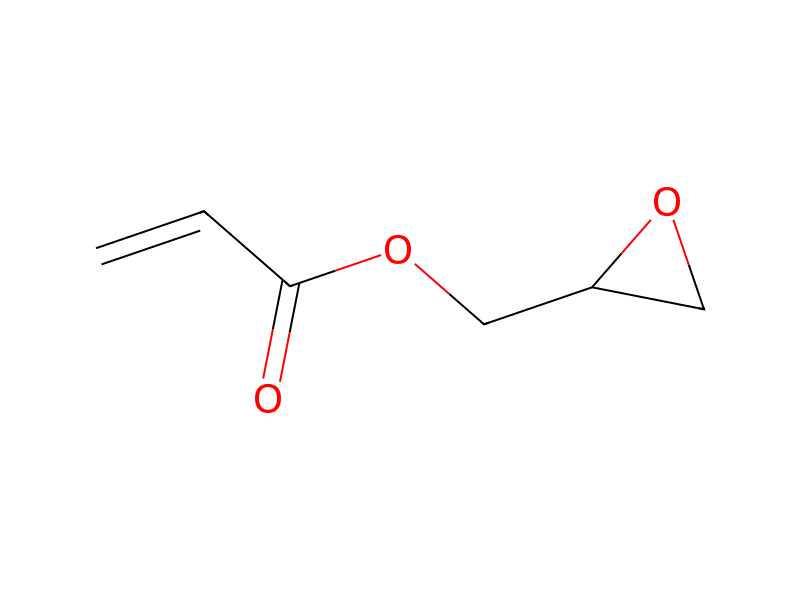
HCID 7836
새 노트새 반응견적 요청하기
인쇄 미리보기
기본 정보개요이름 및 식별자물성안전 및 규제화학 및 산업관련 반응화합물 노트
부분 구조 검색유사 구조 찾기

기본 정보

CAS
106-90-1
표준 SMILES
C=CC(=O)OCC1CO1
InChIKey
RPQRDASANLAFCM-UHFFFAOYSA-N
분자식
C6H8O3
평균 분자량
128.13 g/mol
단동위원소 질량
128.04734412

개요

Glycidyl acrylate is a light amber liquid. (NTP, 1992)

이름 및 식별자

우선 이름
Glycidyl acrylate
IUPAC
oxiran-2-ylmethyl prop-2-enoate
현지명
아크릴산 글리시딜
영어명
Glycidyl acrylate
분자식
C6H8O3
분자량
128.13

이름 및 동의어

GLYCIDYL ACRYLATE106-90-12,3-Epoxypropyl acrylateGlycidyl propenateoxiran-2-ylmethyl prop-2-enoateAcrylic acid glycidyl esterAcrylic acid, 2,3-epoxypropyl ester2-Propenoic acid, oxiranylmethyl esterMethacyclic acid, 2,3-epoxypropyl ester1-Propanol, 2,3-epoxy-, acrylateglycidyl propenoateGlycidylester kyseliny akrylove
이름 더 보기
글리시딜아크릴산아크릴산글리시딜글리시딜아크릴산2,3-에폭시프로필 아크릴레이트2-프로펜산, 2-옥시란일메틸 에스터글리시딜 아크릴레이트글리시딜 아크릴산글리시딜 프로페네이트글리시딜아크릴레이트아크릴산, 2,3-에폭시프로필 에스터아크릴산, 글리시딜 에스터에폭시프로필 아크릴레이트옥시란-2-일메틸 프로-2-에노에이트옥시란-2-일메틸 프로프-2-에노에이트glycidylOxiran-2-ylmethyl acrylateSR 378NSC 24151NSC 67196glycidylpropenateacrylatedeglycidyle
M 581epoxypropyl acrylateNSC-24151L8N627D5ZC2-Propenoic acid, 2-oxiranylmethyl esterNSC-67196DTXSID5025360RefChem:143827

데이터베이스 식별자

CAS
106-90-1
PubChem CID
7836
DTXSID
DTXSID5025360
UNII
L8N627D5ZC
EC Number
203-440-3
Nikkaji
J33.797H

물성

구조 계산 물성

XLogP
0.4
극성 표면적
38.8 Ų
수소 결합 공여자 수
0
수소 결합 수용자 수
3
회전 가능 결합 수
4
무거운 원자 수
9
형식 전하
0
복잡도
130

실험 및 물리화학적 성질

Chemical ClassesFlammable agents - 2nd degree
PolymersPlastics & Rubber -> (Meth)acrylates
Density · 3건

1.1 (NTP, 1992) - Denser than water; will sink

1.1074 @ 20 °C/20 °C

1.1074 @ 20°C

Color/FormLiquid
Solubility · 2건

10 to 50 mg/mL at 68.9 °F (NTP, 1992)

Insoluble in water

Flash Point · 2건

141 °F (NTP, 1992)

141 °F (61 °C) (open cup)

Boiling Point · 3건

135 °F at 2 mmHg (NTP, 1992)

57 °C @ 2 mm Hg

Polymerization occurs at boiling point

DecompositionWhen heated to decomp it emits acrid smoke and fumes.
Melting PointFreezing point: -41.5 °C
Vapor Density · 2건

4.4 (NTP, 1992) - Heavier than air; will sink (Relative to Air)

4.4 (air= 1)

안전 및 규제

안전 정보는 참고용이며, 공급업체의 물질안전보건자료(SDS), 관련 법규 및 전문가 평가를 대체하지 않습니다.

GHS 분류

GHS Classification · 6건

Danger

H301: Toxic if swallowed [Danger Acute toxicity, oral]

P260, P261, P262, P264, P270, P271, P272, P280, P301+P316, P301+P330+P331, P302+P352, P302+P361+P354, P304+P340, P305+P354+P338, P316, P321, P330, P333+P317, P361+P364, P362+P364, P363, P403+P233, P405, and P501 (click each P-code to see the statement)

Danger

H301 (100%): Toxic if swallowed [Danger Acute toxicity, oral]

P260, P261, P262, P264, P270, P271, P272, P280, P301+P316, P301+P330+P331, P302+P352, P302+P361+P354, P304+P340, P305+P354+P338, P316, P321, P330, P333+P317, P361+P364, P362+P364, P363, P403+P233, P405, and P501 (click each P-code to see the statement)

유해성 정보

Regulatory Information · 3건

Chemical: 2-Propenoic acid, oxiranylmethyl ester

TP - indicates a substance that is the subject of a proposed TSCA section 4 test rule.

The New Jersey Worker and Community Right to Know Act requires public and private employers to provide information about hazardous substances at their workplaces. (N.J.S.A. 34:5A-1 et. seq.)

Other Safety InformationEvaluation - Glycidyl acrylate and glycidyl methacrylate
DOT LabelFlammable Liquid Poison
Fire HazardsThis chemical is combustible. (NTP, 1992)
Fire PotentialFlammable liquid when exposed to heat or flame.
Health HazardsExcerpt from ERG Guide 131 [Flammable Liquids - Toxic]:
Hazards Summary · 1건

A skin and eye irritant; [Hawley] External application to rabbit eyes scored 10 on a scale of 1-10 (10 being most severe) for degree of injury after 24 hours; [HSDB] May polymerize; [CAMEO] Corrosive to skin and eyes, based on animal studies; [CHEMINFO] Can cause burns; May cause skin sensitization; [eChemPortal: ESIS] A corrosive substance that can cause injury to the skin, eyes, and respiratory tract; May cause skin sensitization; Can be absorbed through skin; Inhalation may cause chemical pneumonitis and pulmonary edema; [MSDSonline] See ACRYLIC RESINS (MONOMERS).

화학 및 산업

용도 및 제조

Uses · 5건

Used as monomer (polymers for adhesives and coatings), crosslinking agent (polymers of trialkyltin esters), and epoxy resin diluent; [HSDB]

Painting (Pigments, Binders, and Biocides) [Category: Paint]

MONOMER FOR POLYMERS USED IN ADHESIVES & COATINGS

CROSSLINKING AGENT FOR POLYMERS OF TRIALKYLTIN ESTERS

EPOXY RESIN DILUENT

U.S. Imports(1983) 1.36x10+9 g /Acrylates & Acrylic Acid/
U.S. Production(1977) AT LEAST 4.54X10+7 G
Methods of Manufacturing · 3건

Acrylates can be prepared by ... dehydration of the corresponding hydroxyalkanoic acid, saponification of the alkene nitrile, catalytic hydration of acetylene and carbon monoxide, or the reaction of acetone with hydrocyanic acid. /Acrylates/

In ... propylene oxidation process acrolein is first formed by the catalytic oxidation of propylene vapor at high temp in the presence of steam. The acrolein is then oxidized to acrylic acid. ... The acrylic acid is esterified with alcohol to the ... acrylic ester in a separate process. /Acrylic ester monomers/

Epichlorohydrin + acrylic acid (esterification)

Formulations/Preparations... Hydroquinone or monomethyl ether hydroquinone are added to acrylic monomers to stabilize them ... . /Acrylic ester monomers/
General Manufacturing Information2-Propenoic acid, 2-oxiranylmethyl ester: ACTIVE
응용 분야 · 3건

개요Glycidyl acrylate (GA) is a monomer that polymerizes in the presence of a free-radical initiator to form polyacrylic acid. This compound is used as a cross-linking agent for coatings, adhesives, and sealing compounds. GA is an excellent starting material for the preparation of cationic polymers with high reactivity and good stability. It has been used as a control agent in the synthesis of polycarboxylic acids and fatty acids. The hydroxyl group on this molecule allows it to be used as a water-repellent coating or sealant.

관련 반응

19건
반응 기록 만들기
HRID 126673 반응식
HRID 126673반응물로uspto-grants-1981_03
HRID 284367 반응식
HRID 284367반응물로Training data from https://doi.org/10.1039/C8SC04228D (8/10)
HRID 293980 반응식
HRID 293980반응물로Training data from https://doi.org/10.1039/C8SC04228D (8/10)
HRID 574026 반응식
HRID 574026반응물로uspto-grants-2015_05
HRID 850693 반응식
HRID 850693반응물로uspto-grants-2000_01
HRID 894937 반응식
HRID 894937생성물로uspto-grants-1981_08
HRID 936470 반응식
HRID 936470반응물로Validation data from https://doi.org/10.1039/C8SC04228D
HRID 1089656 반응식
HRID 1089656생성물로uspto-grants-1992_01
1 / 3 페이지

화합물 노트

불러오는 중…

이 페이지에서기본 정보개요이름 및 식별자물성안전 및 규제화학 및 산업관련 반응화합물 노트
더보기
새 노트새 반응견적 요청하기
Vapor Pressure
2.97 [mmHg]
Physical Description · 2건

Glycidyl acrylate is a light amber liquid. (NTP, 1992)

Light amber liquid; [CAMEO] Colorless liquid; [CHEMINFO] Clear deep red liquid; [MSDSonline]

물리화학적 성질

녹는점
-42 °C · -42 °C
끓는 점
60 °C · 60°C 16mm
밀도
1.1163 g/cm3 · 1.1163 g/cm3
굴절률
1.4508 · 1.4508 (589.3 nm 20℃)
인화점
61 °C · 61°C(lit.)
저장 조건
-20 °C · -20°C Freezer
용해도
클로로포름(소량으로 용해), 메탄올(약간 용해됨)
물리적 상태
투명한 액체
색상
Colorless to Light orange to Yellow
안정성
안정성 가연성. 강한 산화제와 호환되지 않습니다. 중합되기 쉬울 수 있습니다.
InChI
InChI=1S/C6H8O3/c1-2-6(7)9-4-5-3-8-5/h2,5H,1,3-4H2
InChIKey
RPQRDASANLAFCM-UHFFFAOYSA-N
SMILES
C(OCC1CO1)(=O)C=C
EPA
Glycidyl acrylate (106-90-1)

화학적 성질

amber liquid

Reactive GroupEpoxides
Reactivity AlertsHighly Flammable
Reactivity ProfileGLYCIDYL ACRYLATE may be sensitive to polymerizing conditions and/or catalysts. This compound will react with oxidizers. (NTP, 1992)
Air and Water ReactionsWater soluble.
NFPA Hazard Classification · 3건

0 - Materials that, under emergency conditions, would offer no hazard beyond that of ordinary combustible materials.

2 - Materials that must be moderately heated or exposed to relatively high ambient temperatures before ignition can occur. Materials would not under normal conditions form hazardous atmospheres with air, but under high ambient temperatures or under moderate heating could release vapor in sufficient quantities to produce hazardous atmospheres with air.

0 - Materials that in themselves are normally stable, even under fire conditions.

안전 및 보호

Fire FightingFires involving this chemical should be extinguished with a foam, dry chemical or carbon dioxide extinguisher. (NTP, 1992)
First Aid · 1건

EYES: First check the victim for contact lenses and remove if present. Flush victim's eyes with water or normal saline solution for 20 to 30 minutes while simultaneously calling a hospital or poison control center. Do not put any ointments, oils, or medication in the victim's eyes without specific instructions from a physician. IMMEDIATELY transport the victim after flushing eyes to a hospital even if no symptoms (such as redness or irritation) develop.

Storage Conditions · 1건

The effectiveness of phenolic inhibitors is dependent on the presence of oxygen and the monomers must be stored under air rather than an inert atmosphere. Temp must be kept low to minimize formation of peroxides and other products. ... The acrylic esters may be stored in mild or stainless steel, or aluminum. /Acrylic acid & derivatives/

Nonfire Spill Response · 1건

SMALL SPILLS AND LEAKAGE: If you spill this chemical, use absorbent paper to pick up all liquid spill material. Your contaminated clothing and absorbent paper should be sealed in a vapor-tight plastic bag for eventual disposal. Solvent wash all contaminated surfaces with alcohol followed by washing with a strong soap and water solution. Do not reenter the contaminated area until the Safety Officer (or other responsible person) has verified that the area has been properly cleaned.

Disposal Methods · 1건

SRP: At the time of review, criteria for land treatment or burial (sanitary landfill) disposal practices are subject to significant revision. Prior to implementing land disposal of waste residue (including waste sludge), consult with environmental regulatory agencies for guidance on acceptable disposal practices.

Preventive Measures · 3건

Awareness of the dangers and of good engineering design are essential to safety. Employees should be instructed about the necessity of cleansing the skin if it is contaminated by materials which are irritants or skin-absorbed. With careful design, however, and complete enclosure of those processes where toxic chemicals or intermediates occur, dangerous exposures can be avoided. /Acrylic acid & derivatives/

SRP: Contaminated protective clothing should be segregated in such a manner so that there is no direct personal contact by personnel who handle, dispose, or clean the clothing. Quality assurance to ascertain the completeness of the cleaning procedures should be implemented before the decontaminated protective clothing is returned for reuse by the workers. Contaminated clothing should not be taken home at end of shift, but should remain at employee's place of work for cleaning.

SRP: The scientific literature for the use of contact lenses in industry is conflicting. The benefit or detrimental effects of wearing contact lenses depend not only upon the substance, but also on factors including the form of the substance, characteristics and duration of the exposure, the uses of other eye protection equipment, and the hygiene of the lenses. However, there may be individual substances whose irritating or corrosive properties are such that the wearing of contact lenses would be harmful to the eye. In those specific cases, contact lenses should not be worn. In any event, the usual eye protection equipment should be worn even when contact lenses are in place.

Isolation and EvacuationExcerpt from ERG Guide 131 [Flammable Liquids - Toxic]:
Protective Action Criteria (PAC) · 3건

0.081 [ppm]

0.89 [ppm]

5.4 [ppm]

Personal Protective Equipment (PPE) · 3건

RECOMMENDED RESPIRATOR: Where the neat test chemical is weighed and diluted, wear a NIOSH-approved half face respirator equipped with an organic vapor/acid gas cartridge (specific for organic vapors, HCl, acid gas and SO2) with a dust/mist filter. (NTP, 1992)

SUITABLE PROTECTIVE CLOTHING & SELF CONTAINED RESP PROTECTIVE APPARATUS SHOULD BE AVAILABLE FOR USE OF THOSE WHO MAY HAVE TO RESCUE PERSONS OVERCOME BY FUMES. /ACRYLIC ACID & DERIVATIVES/

Protection required for safe handling of acrylic acid and esters commonly includes use of impervious gloves, shoe soles, and clothing; splash-proof goggles ... . /Acrylic acid & derivatives/

독성 정보

Adverse EffectsDermatotoxin - Skin burns.
Human Toxicity Excerpts · 1건

THE ACUTE TOXICITY OF THE ACRYLATES DECREASES WITH INCREASING MOLECULAR WEIGHT. ... HUMAN SIGNS & SYMPTOMS FOLLOWING INGESTION OF ACRYLIC MONOMERS INCL COLLAPSE, SEVERE RESPIRATORY DIFFICULTIES, & CNS STIMULATION. ACUTE INHALATION OF HIGHER CONCN MAY CAUSE MARKED IRRITATION, SALIVATION, CONJUNCTIVAL IRRITATION, & PRONOUNCED PULMONARY IRRITATION OR EDEMA. PROLONGED SKIN OR EYE CONTACT MAY RESULT IN SEVERE TISSUE DAMAGE. THE PATHOLOGY FROM SINGLE EXPOSURE IS NONSPECIFIC, CONTRARY TO REPEATED EXPOSURE EFFECTS, WHICH INCL PULMONARY CONGESTION OR HEMORRHAGE & CLOUDY SWELLING OF LIVER & KIDNEY. /ACRYLATES/

Non-Human Toxicity Excerpts · 3건

GLYCIDYL ACRYLATE ADMIN @ 0.5 MG/100 G IP, SHOWED NO INHIBITORY EFFECT ON TRANSPLANTED WALKER TUMORS IN RATS 24 HR AFTER DOSE, BONE MARROW SHOWED 2% ANAPHASES IN EXCESS OF CONTROLS WITH STICKY CHROMOSOME BRIDGES.

Acrylic acid 2,3-epoxypropyl ester has been tested externally on the eyes of rabbits & ... rated 10 on scale of 1 to 10 according to the degree of injury observed after 24 hr. The most severely injurious substances have been rated 10.

Contact sensitivity was produced in guinea pigs with mono-, di-, and tri- acrylate compounds. /Mono-, di-, and tri- acrylate compounds/

Antidote and Emergency Treatment · 2건

Basic treatment: Establish a patent airway. Suction if necessary. Watch for signs of respiratory insufficiency and assist ventilations if necessary. Administer oxygen by nonrebreather mask at 10 to 15 L/min. Monitor for pulmonary edema and treat if necessary ... . Monitor for shock and treat if necessary ... . For eye contamination, flush eyes immediately with water. Irrigate each eye continuously with normal saline during transport ... . Do not use emetics. For ingestion, rinse mouth and administer 5 mL/kg up to 200 mL of water for dilution if the patient can swallow, has a strong gag reflex, and does not drool. Administer activated charcoal ... . /Esters and related compounds/

Advanced treatment: Consider orotracheal or nasotracheal intubation for airway control in the patient who is unconscious. Positive-pressure ventilation techniques with a bag-valve-mask device may be beneficial. Monitor cardiac rhythm and treat arrhythmias if necessary ... . Start an IV with D5W TKO /SRP: "To keep open", minimal flow rate/. Use lactated Ringer's if signs of hypovolemia are present. Watch for signs of fluid overload. For hypotension with signs of hypovolemia, administer fluid cautiously. Consider vasopressors if patient is hypotensive with a normal fluid volume. Watch for signs of fluid overload ... . Consider drug therapy for pulmonary edema ... . Use proparacaine hydrochloride to assist eye irrigation ... . /Esters and related compounds/

Toxicity DataLCLo (rat) = 125 ppm/4h
Non-Human Toxicity Values · 2건

LD50 Rat oral 210 mg/kg

LD50 Rabbit skin 400 mg/kg

안전 데이터

tsca
TSCA listed
rtecs
AS9275000
ridadr
2810
HS 번호
2916.12.5050
risk_code
23/24/25-34-43
hazard_code
T
safety_code
26-36/37/39-45
포장분류
III
위험 등급
6.1(b)
기존화학 물질
KE-18033
유해 물질 데이터
106-90-1(Hazardous Substances Data)
함량 및 규제정보
물질구분: 유독물질; 혼합물(제품)함량정보: 글리시딜 아크릴산 및 이를 25% 이상 함유한 혼합물
유해화학물질 필터링
97-1-6

용도Glycidyl Acrylate 85% can be used as an adhesive composition.

일반 설명Light amber liquid.