홈MCP워크벤치Skills
홈워크벤치알림마이페이지
llms.txt · MCP 가이드개인정보처리방침 · 이용약관 · 지원v1.8.0
  1. 홈
  2. /화합물

Hexylamine

HCID 8102
새 노트새 반응견적 요청하기
인쇄 미리보기
기본 정보개요이름 및 식별자물성안전 및 규제화학 및 산업관련 반응화합물 노트
부분 구조 검색유사 구조 찾기

기본 정보

CAS
111-26-2
표준 SMILES
CCCCCCN
InChIKey
BMVXCPBXGZKUPN-UHFFFAOYSA-N
분자식
C6H15N
평균 분자량
101.19 g/mol
단동위원소 질량
101.12044948

개요

Hexylamine appears as a water-white liquid with an amine-like odor. Less dense than water and poorly soluble in water. Hence floats on water. May be toxic by inhalation, ingestion or skin absorption.

이름 및 식별자

우선 이름
Hexylamine
IUPAC
hexan-1-amine
영어명
n-Hexylamine
분자식
C6H15N
분자량
101.19

이름 및 동의어

Hexylamine111-26-2hexan-1-amine1-Aminohexanen-Hexylamine1-HEXANAMINE1-HexylamineMono-n-hexylamineDTXSID3021930ENT 16554CI4E002ZV8NSC-2590
이름 더 보기
CHEBI:5712DTXCID801930FEMA NO. 4243RefChem:5885203-851-8MFCD00008240hexanamineHexyl amine

데이터베이스 식별자

CAS
111-26-2
PubChem CID
8102
DTXSID
DTXSID3021930
ChEMBL
CHEMBL1320720
ChEBI
CHEBI:5712
UNII
CI4E002ZV8
EC Number
203-851-8
Nikkaji
J45.009J

물성

구조 계산 물성

XLogP
2.1
극성 표면적
26 Ų
수소 결합 공여자 수
1
수소 결합 수용자 수
1
회전 가능 결합 수
4
무거운 원자 수
7
형식 전하
0
복잡도
27.4

실험 및 물리화학적 성질

Chemical Classes · 2건

Nitrogen Compounds -> Amines, Aliphatic

Flammable agents - 3rd degree

pHpH of 1% w/v aqueous solution was 12.9 at 30 °C
SpringerMaterials PropertiesBoiling point
LogP · 4건

log Kow = 2.06

2.06

1.52/2.34

1.98

OdorFishy aroma
Food AdditivesFLAVORING AGENT OR ADJUVANT -> FDA Substance added to food
Density · 3건

0.7660 g/cu cm at 20 °C

Relative density (water = 1): 0.77

0.761-0.767

Flavoring AgentsEU Flavoring substances
Viscosity10.06 mPa.s at 20 °C
Color/Form · 2건

Water-white liquid

Colorless liquid

Solubility · 6건

In water, 12,000 mg/L at 20-25 °C

안전 및 규제

안전 정보는 참고용이며, 공급업체의 물질안전보건자료(SDS), 관련 법규 및 전문가 평가를 대체하지 않습니다.

GHS 분류

GHS Classification · 6건

This chemical does not meet GHS hazard criteria for 4.4% (11 of 251) of reports.

Danger

H226 (95.2%): Flammable liquid and vapor [Warning Flammable liquids]

P210, P233, P240, P241, P242, P243, P260, P262, P264, P264+P265, P270, P273, P280, P301+P316, P301+P317, P301+P330+P331, P302+P352, P302+P361+P354, P303+P361+P353, P304+P340, P305+P354+P338, P316, P317, P321, P330, P361+P364, P362+P364, P363, P370+P378, P391, P403+P235, P405, and P501 (click each P-code to see the statement)

Aggregated GHS information provided per 251 reports by companies from 15 notifications to the ECHA C&L Inventory. Each notification may be associated with multiple companies.

Danger

유해성 정보

Regulatory Information · 5건

Chemical: 1-Hexanamine

Commission Regulation (EC) No 1565/2000 (Repealed by Com. Implementing Reg. (EU) No 872/2012)

Status: Active Update: 05-12-2018 https://echa.europa.eu/registration-dossier/-/registered-dossier/18656

Hexylamine: Does not have an individual approval but may be used under an appropriate group standard

The New Jersey Worker and Community Right to Know Act requires public and private employers to provide information about hazardous substances at their workplaces. (N.J.S.A. 34:5A-1 et. seq.)

DOT LabelCorrosive Flammable Liquid
Fire Hazards · 2건

Excerpt from ERG Guide 132 [Flammable Liquids - Corrosive]:

Flammable. Gives off irritating or toxic fumes (or gases) in a fire. Above 29 °C explosive vapour/air mixtures may be formed.

Fire Potential · 2건

Dangerous fire hazard when exposed to heat or flame ... .

Flammable.

Health HazardsExcerpt from ERG Guide 132 [Flammable Liquids - Corrosive]:

화학 및 산업

약리 정보

Cellular LocationsCytoplasm

용도 및 제조

Uses · 4건

Used as an intermediate and associated with tobacco smoke; [NTP] Used as a flavoring agent; [FDA]

Smoking cigarettes [Category: Food & Drugs]

Reported uses (ppm):

n-Hexylamine is used in organic syntheses.

Household ProductsInformation on 1 consumer products that contain Hexylamine in the following categories is provided:
Use Classification · 3건

Flavouring Agent -> FLAVOURING_AGENT -> JECFA Functional Classes

Flavoring Agents -> JECFA Flavorings Index

Flavouring Agent -> FLAVOURING_AGENT -> JECFA Functional Classes

General Manufacturing Information1-Hexanamine: ACTIVE

관련 반응

328건
반응 기록 만들기
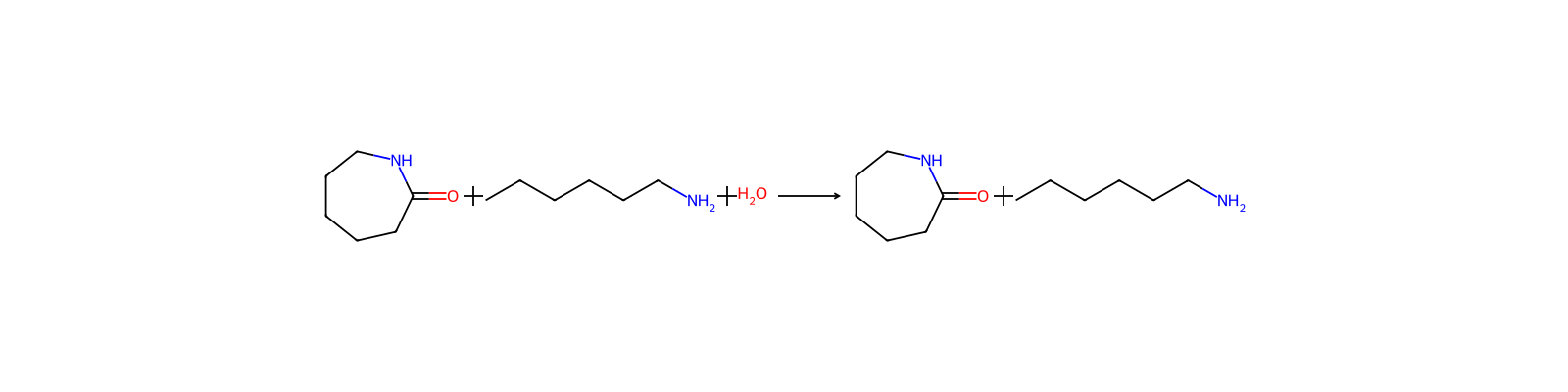
HRID 28077 반응식
HRID 28077반응물로uspto-grants-1980_09
HRID 56177 반응식
HRID 56177반응물로uspto-grants-2016_09
HRID 74710 반응식
HRID 74710반응물로uspto-grants-2014_09
HRID 87423 반응식
HRID 87423반응물로Training data from https://doi.org/10.1039/C8SC04228D (2/10)
HRID 95205 반응식
HRID 95205반응물로Training data from https://doi.org/10.1039/C8SC04228D (2/10)
HRID 96213 반응식
HRID 96213반응물로Training data from https://doi.org/10.1039/C8SC04228D (2/10)
HRID 99599 반응식
HRID 99599반응물로Training data from https://doi.org/10.1039/C8SC04228D (2/10)
HRID 122896 반응식
HRID 122896반응물로Training data from https://doi.org/10.1039/C8SC04228D (2/10)
1 / 41 페이지

화합물 노트

불러오는 중…

이 페이지에서기본 정보개요이름 및 식별자물성안전 및 규제화학 및 산업관련 반응화합물 노트
더보기
새 노트새 반응견적 요청하기

Miscibile in ethanol, ether; soluble in chloroform

12 mg/mL at 25 °C

Solubility in water, g/100ml: 1.2

Soluble in water

Soluble (in ethanol)

Flash Point · 4건

85 °F (NFPA, 2010)

85 °F (29 °C) (Open cup)

27 °C (81 °F) (Closed cup)

29 °C o.c.

물리화학적 성질

녹는점
-22.9 °C · -22.9 °C
끓는 점
131 · 131-132 °C
밀도
0.77 g/cm3 · 0.77 g/cm3
산도 계수 (pKa)
10.69 · 10.69±0.10(Predicted)
Hazards Summary · 1건

A severe eye and skin irritant; [RTECS] Causes burns to the skin, eyes, and respiratory tract; Inhalation may cause pulmonary edema; Can be absorbed through skin; [ICSC] Safe when used as a flavoring agent in food; [JECFA] Causes burns; Inhalation may cause corrosive injuries to upper respiratory tract; Toxic by ingestion and skin absorption; [Sigma-Aldrich MSDS]

Reactive GroupAmines, Phosphines, and Pyridines
UN ClassificationUN Hazard Class: 3; UN Subsidiary Risks: 8; UN Pack Group: II
Reactivity AlertsHighly Flammable
Reactivity Profile · 1건

HEXYLAMINE neutralize acids in exothermic reactions to form salts plus water. May be incompatible with isocyanates, halogenated organics, peroxides, phenols (acidic), epoxides, anhydrides, and acid halides. Flammable gaseous hydrogen may be generated in combination with strong reducing agents, such as hydrides.

Chemical DangersDecomposes on heating. This produces toxic fumes including nitrogen oxides. Reacts violently with oxidants. This generates fire and explosion hazard. The substance is a medium strong base.
Flammable LimitsLower flammable limit: 2.1% by volume; Upper flammable limit: 9.3% by volume

안전 및 보호

Fire Fighting · 2건

Excerpt from ERG Guide 132 [Flammable Liquids - Corrosive]:

Use water spray, powder, alcohol-resistant foam, carbon dioxide. In case of fire: keep drums, etc., cool by spraying with water.

First Aid Measures · 4건

Fresh air, rest. Half-upright position. Artificial respiration may be needed. Refer for medical attention.

First rinse with plenty of water for at least 15 minutes, then remove contaminated clothes and rinse again. Refer for medical attention .

First rinse with plenty of water for several minutes (remove contact lenses if easily possible), then refer for medical attention.

Rinse mouth. Give one or two glasses of water to drink. Do NOT induce vomiting. Refer for medical attention .

First AidExcerpt from ERG Guide 132 [Flammable Liquids - Corrosive]:
Safe StorageFireproof. Separated from strong oxidants and strong acids.
Firefighting HazardsHazardous decomposition products formed under fire conditions. - Carbon oxides, Nitrogen oxides (NOx).
Fire Fighting Procedures · 3건

If material on fire or involved in fire: Do not extinguish fire unless flow can be stopped. Use water in flooding quantities as fog. Solid streams of water may spread fire. Cool all affected containers with flooding quantities of water. Apply water from as far a distance as possible. Use "alcohol" foam, dry chemical, or carbon dioxide.

Suitable extinguishing media: Use water spray, alcohol-resistant foam, dry chemical or carbon dioxide.

Advice for firefighters: Wear self contained breathing apparatus for fire fighting if necessary.

Storage ConditionsKeep container tightly closed in a dry and well-ventilated place. Containers which are opened must be carefully resealed and kept upright to prevent leakage. Air sensitive.
Cleanup Methods · 1건

ACCIDENTAL RELEASE MEASURES: Personal precautions, protective equipment and emergency procedures: Wear respiratory protection. Avoid breathing vapors, mist or gas. Ensure adequate ventilation. Remove all sources of ignition. Evacuate personnel to safe areas. Beware of vapors accumulating to form explosive concentrations. Vapors can accumulate in low areas. Environmental precautions: Prevent further leakage or spillage if safe to do so. Do not let product enter drains. Discharge into the environment must be avoided. Methods and materials for containment and cleaning up: Contain spillage, and then collect with an electrically protected vacuum cleaner or by wet-brushing and place in container for disposal according to local regulations.

Nonfire Spill ResponseExcerpt from ERG Guide 132 [Flammable Liquids - Corrosive]:
Disposal Methods · 2건

SRP: Recycle any unused portion of the material for its approved use or return it to the manufacturer or supplier. Ultimate disposal of the chemical must consider: the material's impact on air quality; potential migration in air, soil or water; effects on animal, aquatic and plant life; and conformance with environmental and public health regulations. If it is possible or reasonable use an alternative chemical product with less inherent propensity for occupational harm/injury/toxicity or environmental contamination.

Product: Burn in a chemical incinerator equipped with an afterburner and scrubber but exert extra care in igniting as this material is highly flammable. Offer surplus and non-recyclable solutions to a licensed disposal company. Contact a licensed professional waste disposal service to dispose of this material. Contaminated packaging: Dispose of as unused product

Spillage Disposal · 1건

Remove all ignition sources. Personal protection: complete protective clothing including self-contained breathing apparatus. Do NOT let this chemical enter the environment. Collect leaking and spilled liquid in sealable containers as far as possible. Absorb remaining liquid in sand or inert absorbent. Then store and dispose of according to local regulations. Wash away remainder with plenty of water. Do NOT wash away into sewer.

Preventive Measures · 5건

It material not on fire and not involved in fire: Keep sparks, flames, and other sources of ignition away. Keep material out of water sources and sewers. Build dikes to contain flow as necessary. Use water spray to knock-down vapors.

Personnel protection: Avoid breathing vapors. Keep upwind. ... Do not handle broken packages unless wearing appropriate personal protective equipment. Wash away any material which may have contacted the body with copious amounts of water or soap and water.

Do not eat, drink, or smoke during work.

Use ventilation, local exhaust or breathing protection.

For more Preventive Measures (Complete) data for 1-Hexylamine (11 total), please visit the HSDB record page.

독성 정보

Interactions · 1건

The effect of mersalyl on the relaxation of catch by various monoamines was studied in the anterior byssal retractor muscle of Mytilus. As has already been reported, mersalyl blocked the relaxing response to indoleamines but not block that to catecholamines. The relaxations in response to catecholamine-related compounds (dopa, octopamine, tyramine, phenylephrine, beta-phenylethylamine and phenylethanolamine) and hexylamine were, however, antagonized more or less effectively with mersalyl. It was suggested that the catecholamine-related compounds and hexylamine can act on relaxing nerve endings to increase neurotransmitter serotonin in the junctional clefts, and mersalyl antagonizes the relaxation in response to these compounds by blocking the serotonin.

Ecotoxicity Values · 4건

EC50; Species: Daphnia magna (Water Flea) age <24 hr, Lake Langedam strain; Conditions: freshwater, static, 20 °C, pH 7.8-8.0, hardness 250 mg/L CaCO3, dissolved oxygen 93-99%; Concentration: 20000 ug/L for 24 hr (95% confidence interval: 11000-42000 ug/L); Effect: intoxication, immobilization />98% purity/

EC50; Species: Daphnia magna (Water Flea) age <24 hr, Lake Langedam strain; Conditions: freshwater, renewal, 20 °C, pH 7.8-8.0, hardness 250 mg/L CaCO3, dissolved oxygen 93-99%; Concentration: 8600 ug/L for 48 hr (95% confidence interval: 7000-11000 ug/L); Effect: intoxication, immobilization />98% purity/

LC50; Species: Pimephales promelas (Fathead Minnow) age 26-34 day juvenile; Conditions: freshwater, flow through, 25 °C, pH 7.8, hardness 45 mg/L CaCO3; Concentration: 56600 ug/L for 96 hr /> or =95% purity/

LC50; Species: Pimephales promelas (Fathead Minnow) age 30 day, length 16.5 mm, weight 0.074 g; Conditions: freshwater, flow through, 24.8 °C, pH 8.0, hardness 45.6 mg/L CaCO3, alkalinity 43.6 mg/L CaCO3, dissolved oxygen 7.4 mg/L; Concentration: 56600 ug/L for 96 hr (95% confidence interval: 53800-59600 ug/L) /99% purity/

Environmental Fate · 3건

TERRESTRIAL FATE: Based on a classification scheme(1), an estimated Koc value of 147(SRC), determined from a structure estimation method(2), indicates that hexylamine is expected to have high mobility in soil(SRC). The pKa of hexylamine (conjugate acid) is 10.64(3), indicating that this compound will exist almost entirely in cation form in the environment at pH 4-8 and mostly to partially in cation form at pH 8-10 and cations generally adsorb more strongly to soils containing organic carbon and clay than their neutral counterparts(4). Volatilization of cationic hexylamine from moist soil surfaces is not expected to be an important fate process since cations do not volatilize(SRC). Volatilization of neutral hexylamine from moist soil surfaces may occur given a measured Henry's Law constant of 2.68X10⁻⁵ atm-cu m/mole(5). Hexylamine is expected to volatilize from dry soil surfaces(SRC) based upon a vapor pressure of 7.95 mm Hg at 20 °C(6). Most primary amines, including hexylamine, are considered to be readily biodegradable(7). The analogous compounds pentylamine and hexanediamine, present at 100 mg/L, reached 75 and 55% of their theoretical BOD in 2 and 3 weeks, respectively, using an activated sludge inoculum at 30 mg/L in the Japanese MITI test which classified both as readily biodegradable(8).

AQUATIC FATE: Based on a classification scheme(1), an estimated Koc value of 147(SRC), determined from a structure estimation method(2), indicates that hexylamine is not expected to adsorb to suspended solids and sediment(SRC). The pKa of hexylamine (conjugate acid) is 10.64(3), indicating that this compound will exist almost entirely in cation form in the environment at pH 4-8 and mostly to partially in cation form at pH 8-10. Volatilization of cationic hexylamine from water surfaces is not expected to be an important fate process since cations do not volatilize(SRC). Volatilization of neutral hexylamine from water surfaces is expected(4) based upon a measured Henry's Law constant of 2.68X10⁻⁵ atm-cu m/mole at 25 °C(5). Using this Henry's Law constant and an estimation method(4), volatilization half-lives for a model river and model lake are 1.5 and 14 days, respectively(SRC). According to a classification scheme(6), an estimated BCF of 11(SRC), from its log Kow of 2.06(7) and a regression-derived equation(2), suggests the potential for bioconcentration in aquatic organisms is low(SRC). Most primary amines, including hexylamine, are considered to be readily biodegradable(8). The analogous compounds pentylamine and hexanediamine, present at 100 mg/L, reached 75 and 55% of their theoretical BOD in 2 and 3 weeks, respectively, using an activated sludge inoculum at 30 mg/L in the Japanese MITI test which classified both as readily biodegradable(9). Aliphatic amines are considered stable to hydrolysis, as the molecules do not contain any functional group sensitive to hydrolysis(8).

ATMOSPHERIC FATE: According to a model of gas/particle partitioning of semivolatile organic compounds in the atmosphere(1), hexylamine, which has a vapor pressure of 7.95 mm Hg at 20 °C(2), is expected to exist solely as a vapor in the ambient atmosphere. Gas-phase hexylamine is degraded in the atmosphere by reaction with photochemically-produced hydroxyl radicals(SRC); the half-life for this reaction in air is estimated to be 10.3 hours(SRC), calculated from its rate constant of 3.7X10⁻¹¹ cu cm/molecule-sec at 25 °C(SRC) that was derived using a structure estimation method(3). Hexylamine does not contain chromophores that absorb at wavelengths >290 nm(4) and, therefore, is not expected to be susceptible to direct photolysis by sunlight(SRC).

Food Survey Values · 1건

Hexylamine was detected in beer distillates(1) and 24 Italian cheeses(2). Hexylamine has use as odor and/or flavor additive in cereal, cheese, dairy, fish, fruit and meat(3). Food categories include baked goods, breakfast cereals, cheese, condiments, relishes, confection, frosting, fats, oils, fish products, frozen dairy, fruit ices, gravies, meat products, milk products, grains, poultry, processed fruits, seasonings, flavors snack foods and soups; maximum reported food use concentration is 10 ppm(3).

Adverse EffectsDermatotoxin - Skin burns.
Exposure RoutesThe substance can be absorbed into the body by inhalation, through the skin and by ingestion.
Toxicity Summary · 1건

IDENTIFICATION AND USE: Hexylamine is used in organic syntheses. HUMAN STUDIES: Hexylamine is a moderate to severe irritant for the skin, eyes, and mucous membranes. ANIMAL STUDIES: Hexylamine was a severe skin irritant when tested in rabbits for 24 hr. Hexylamine in the concentration of 144.9 ug/mL without metabolic activation and 640.9 ug/mL with metabolic activation does not cause genetic chromosome aberrations when Chinese hamster lung cells are exposed for 6 and 24 hr.

Plant Concentrations · 1건

Hexylamine was identified in steam volatiles from steam distilled Latakia tobacco leaf(1). Among the plants with an obnoxious smell created by volatile amines (including hexylamine) are hogweed cow parsnip (Heracleum sphondylium), bear's-foot (Helleborus foetidus), cuckoopint (Arum Maculatum) and hawthorn (Crataegus oxyacantha)(2). Hexylamine was detected, not quantified in tobacco (Nicotiana tabacum; Solanaceae)(3).

Signs and Symptoms · 4건

Burning sensation. Cough. Sore throat. Laboured breathing. Shortness of breath. Symptoms may be delayed.

Redness. Pain. Skin burns.

Redness. Pain. Severe deep burns.

Burning sensation. Abdominal pain. Shock or collapse.

Ongoing Test Status · 2건

EPA has released the Interactive Chemical Safety for Sustainability (iCSS) Dashboard. The iCSS Dashboard provides an interactive tool to explore rapid, automated (or in vitro high-throughput) chemical screening data generated by the Toxicity Forecaster (ToxCast) project and the federal Toxicity Testing in the 21st century (Tox21) collaboration. /The title compound was tested by ToxCast and/or Tox21 assays/[USEPA; ICSS Dashboard Application; Available from, as of August 9, 2018: http://actor.epa.gov/dashboard/]

The following link will take the user to the National Toxicology Program (NTP) Test Status of Agents Search page, which tabulates the results and current status of tests such as "Short-Term Toxicity Studies", "Long-term Carcinogenicity Studies", "Developmental Studies", "Genetic Toxicology Studies", etc., performed with this chemical. Testing status for hexylamine is available.[Available from, as of August 9, 2018: https://ntpsearch.niehs.nih.gov/?e=True&ContentType=Testing+Status]

Effluent ConcentrationsGasoline and diesel fueled engine exhaust from automobiles was analyzed for aliphatic amines (including hexylamine) and total amine emission was less than 1 ug/km(1).
ICSC Environmental DataThe substance is toxic to aquatic organisms. It is strongly advised not to let the chemical enter into the environment.

안전 데이터

ridadr
2734
포장분류
II
위험 등급
3