
HRID 104158생성물로
Lauryldimethylamine

112-18-5CCCCCCCCCCCCN(C)CYWFWDNVOPHGWMX-UHFFFAOYSA-NN,n-dimethyldodecylamine appears as a clear yellow liquid with a fishlike odor. Insoluble in water and less dense than water. Hence floats on water. Contact may irritate skin, eyes and mucous membranes. May be toxic by ingestion, inhalation or skin absorption. Used to make other chemicals.
Cosmetic ingredients (Dimethyl Lauramine) -> CIR (Cosmetic Ingredient Review)
Antistatic; Hair conditioning
Personal care product -> emollient -> DIMLA: dimethyl lauryl amine
N,n-dimethyldodecylamine appears as a clear yellow liquid with a fishlike odor. Insoluble in water and less dense than water. Hence floats on water. Contact may irritate skin, eyes and mucous membranes. May be toxic by ingestion, inhalation or skin absorption. Used to make other chemicals.
Liquid; CBI
Clear yellow liquid with a fishy odor; [CAMEO] Clear colorless liquid; [MSDSonline]
안전 정보는 참고용이며, 공급업체의 물질안전보건자료(SDS), 관련 법규 및 전문가 평가를 대체하지 않습니다.
This chemical does not meet GHS hazard criteria for 1.1% (12 of 1116) of reports.
Danger
H302 (98.7%): Harmful if swallowed [Warning Acute toxicity, oral]
P260, P264, P264+P265, P270, P273, P280, P301+P317, P301+P330+P331, P302+P361+P354, P304+P340, P305+P354+P338, P316, P317, P321, P330, P363, P391, P405, and P501 (click each P-code to see the statement)
Aggregated GHS information provided per 1116 reports by companies from 27 notifications to the ECHA C&L Inventory. Each notification may be associated with multiple companies.
Danger
Chemical: 1-Dodecanamine, N,N-dimethyl-
Commission Regulation (EC) No 1565/2000 (Repealed by Com. Implementing Reg. (EU) No 872/2012)
1-Dodecanamine, N,N-dimethyl- is listed on the EPA's Chemical Data Reporting (CDR) system. Manufacturers and importers of 1-Dodecanamine, N,N-dimethyl- are required to report information about their production and use of this chemical to the EPA under the Toxic Substances Control Act (TSCA). (40 eCFR Part 711)
REACH registered substance: Dodecyldimethylamine (EC: 203-943-8)
Dimethyldodecylamine: Does not have an individual approval but may be used under an appropriate group standard
CIR ingredient: Dimethyl Lauramine
Used as corrosion inhibitor, acid-stable emulsifier, cationic detergent, and intermediate in chemical synthesis; [HSDB] Commonly found in commercial mixtures with C12-14 alkyldimethylamine (CAS 84649-84-3); Used to make amineoxides, betaines, and quaternary amino compounds with end-uses as disinfectants, detergents, textile chemicals, pharmaceuticals, corrosion inhibitors, etc.; [SIDSUNEP]
Corrosion inhibitor; acid-stable emulsifier; as cationic detergent
USED TO SYNTHESIZE A MICROBIOCIDE FROM REACTION PRODUCT OF CHLOROMETHYLATED CROSS-LINKED POLYSTYRENE
CHEM INT FOR N,N-DIMETHYL-N-DODECANAMINE OXIDE
CHEM INT FOR BENZYL DIMETHYL DODECYL AMMONIUM CHLORIDE
2023: 50,000,000 - <100,000,000 lb
(1979) PROBABLY GREATER THAN 6.81X10+6 GRAMS
(1981) PROBABLY GREATER THAN 4.54X10+6 GRAMS

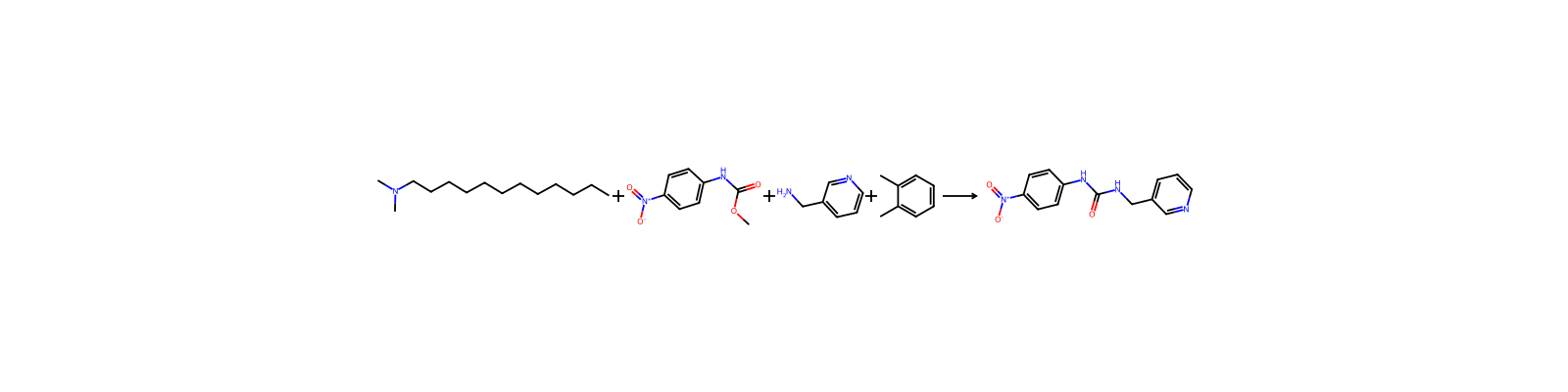


112-18-5、68390-97-6、68391-04-8DTXSID1026906CHEMBL109737CHEBI:229425Liquid
Severely irritating to skin and eyes; [SAX] Abnormalities of the heart, lungs, and GI tract observed in animals in oral and dermal lethal-dose studies; [EPA HPVIS] Corrosive to rabbit skin; No specific target organs identified following 28-day gavage study of rats; Does not induce point mutation effects or chromosomal mutations; Parental, fertility, and embryo/fetal/pup toxicity only seen at doses above the NOEL; [SIDSUNEP] A severe skin and eye irritant; [RTECS] Causes burns; Harmful if swallowed; Inhalation can cause corrosive effects to upper respiratory tract and lungs; [Aldrich MSDS]
N,N-DIMETHYLDODECYLAMINE neutralizes acids in exothermic reactions to form salts plus water. May be incompatible with isocyanates, halogenated organics, peroxides, phenols (acidic), epoxides, anhydrides, and acid halides. Flammable gaseous hydrogen may be generated in combination with strong reducing agents, such as hydrides.
N,N-Dimethyldodecylamine
Severe marine pollutant
Acute Tox. 4 (98.7%)
Acute toxicity - category 4
Acute toxicity (Oral) - Category 4
Acute toxicity (Oral) - Category 4
EYES: First check the victim for contact lenses and remove if present. Flush victim's eyes with water or normal saline solution for 20 to 30 minutes while simultaneously calling a hospital or poison control center. Do not put any ointments, oils, or medication in the victim's eyes without specific instructions from a physician. IMMEDIATELY transport the victim after flushing eyes to a hospital even if no symptoms (such as redness or irritation) develop.
SMALL SPILLS AND LEAKAGE: If you spill this chemical, FIRST REMOVE ALL SOURCES OF IGNITION. Then, use absorbent paper to pick up all liquid spill material. Seal the absorbent paper, as well as any of your clothing which may be contaminated, in a vapor-tight plastic bag for eventual disposal. Wash any surfaces you may have contaminated with a soap and water solution. Do not reenter the contaminated area until the Safety Officer (or other responsible person) has verified that the area has been properly cleaned.
SRP: At the time of review, criteria for land treatment or burial (sanitary landfill) disposal practices are subject to significant revision. Prior to implementing land disposal of waste residue (including waste sludge), consult with environmental regulatory agencies for guidance on acceptable disposal practices.
SRP: The scientific literature for the use of contact lenses in industry is conflicting. The benefit or detrimental effects of wearing contact lenses depend not only upon the substance, but also on factors including the form of the substance, characteristics and duration of the exposure, the uses of other eye protection equipment, and the hygiene of the lenses. However, there may be individual substances whose irritating or corrosive properties are such that the wearing of contact lenses would be harmful to the eye. In those specific cases, contact lenses should not be worn. In any event, the usual eye protection equipment should be worn even when contact lenses are in place.
RECOMMENDED RESPIRATOR: Where the neat test chemical is weighed and diluted, wear a NIOSH-approved half face respirator equipped with an organic vapor/acid gas cartridge (specific for organic vapors, HCl, acid gas and SO2) with a dust/mist filter. (NTP, 1992)
TERRESTRIAL FATE: Based on a classification scheme(1), an estimated Koc value of 21,700(SRC), determined from an estimated log Kow of 5.4(2,SRC) and a regression-derived equation(3), indicates that N,N-dimethyl-1-dodecanamine is expected to be immobile in soil(SRC). Volatilization of N,N-dimethyl-1-dodecanamine from moist soil surfaces is expected to be an important fate process(SRC) given an estimated Henry's Law constant of 4.9X10⁻³ atm-cu m/mole(SRC), using a fragment constant estimation method(4); however, adsorption may attenuate this process(SRC). N,N-Dimethyl-1-dodecanamine is not expected to volatilize from dry soil surfaces(SRC) based upon an estimated vapor pressure of 0.016 mm Hg(SRC), determined from a fragment constant method(5). N,N-Dimethyl-1-dodecanamine, present at 100 mg/l, achieved 49.4% of its theoretical BOD in 2 weeks using an activated sludge inoculum at 30 mg/l and the Japanese MITI test(6).
AQUATIC FATE: Based on a classification scheme(1), an estimated Koc value of 21,700(SRC), determined from an estimated log Kow of 5.4(2,SRC) and a regression-derived equation(3), indicates that N,N-dimethyl-1-dodecanamine is expected to adsorb to suspended solids and sediment in water(SRC). Volatilization from water surfaces is expected(3) based upon an estimated Henry's Law constant of 4.9X10⁻³ atm-cu m/mole(SRC), developed using a fragment constant estimation method(4); however, adsorption may attenuate this process(SRC). Using this Henry's Law constant and an estimation method(3), volatilization half-lives for a model river and model lake are 2 hours and 6 days, respectively if adsorption is neglected(SRC). The volatilization half-life from a model pond is about 160 days when adsorption is considered(5). According to a classification scheme(6), an estimated BCF of 310(SRC), from its estimated log Kow(2) and a regression-derived equation(7), suggests the potential for bioconcentration in aquatic organisms is high(SRC). N,N-Dimethyl-1-dodecanamine, present at 100 mg/l, achieved 49.4% of its theoretical BOD in 2 weeks using an activated sludge inoculum at 30 mg/l and the Japanese MITI test(8).
ATMOSPHERIC FATE: According to a model of gas/particle partitioning of semivolatile organic compounds in the atmosphere(1), N,N-dimethyl-1-dodecanamine, which has an estimated vapor pressure of 0.016 mm Hg at 25 °C(2), is expected to exist solely as a vapor in the ambient atmosphere. Vapor-phase N,N-dimethyl-1-dodecanamine is degraded in the atmosphere by reaction with photochemically-produced hydroxyl radicals(SRC); the half-life for this reaction in air is estimated to be 4 hours(SRC), calculated from its rate constant of 9.3X10⁻¹¹ cu cm/molecule-sec at 25 °C(3) determined using a structure estimation method(3).
The Koc of N,N-dimethyl-1-dodecanamine is estimated as 21,700(SRC), using an estimated log Kow of 5.4(1,SRC) and a regression-derived equation(2). According to a classification scheme(3), this estimated Koc value suggests that N,N-dimethyl-1-dodecanamine is expected to be immobile in soil(SRC).
THERMAL DECOMPOSITION OF TOBACCO ANTISUCKERING COMPD, INCL N,N-DIMETHYLDODECANAMINE WAS STUDIED IN RELATION TO POSSIBLE HEALTH HAZARD DURING SMOKING. AMMONIA, HYDROGEN CYANIDE, PHENOL, CRESOLS, BENZO[A]PYRENE, BENZO[E]PYRENE, BENZ[A]ANTHRACENE, CHRYSENE, & 1- & 2-NAPHTHOLS WERE IDENTIFIED AT 850 °C AS PYROLYSIS PRODUCTS OF N,N-DIMETHYLDODECANAMINE.
AEROBIC: N,N-Dimethyl-1-dodecanamine, present at 100 mg/l, achieved 49.4% of its theoretical BOD in 2 weeks using an activated sludge inoculum at 30 mg/l and the Japanese MITI test(1). N,N-Dimethyl-1-dodecanamine was completely mineralized by pure cultures with dodecanal and dodecanoic acid as intermediates(2).
An estimated BCF of 310 was calculated for N,N-dimethyl-1-dodecanamine(SRC), using an estimated log Kow of 5.4(1,SRC) and a regression-derived equation(2). According to a classification scheme(3), this BCF suggests the potential for bioconcentration in aquatic organisms is high(SRC).
The Henry's Law constant for N,N-dimethyl-1-dodecanamine is estimated as 4.9X10⁻³ atm-cu m/mole(SRC) using a fragment constant estimation method(1). This Henry's Law constant indicates that N,N-dimethyl-1-dodecanamine is expected to volatilize from water surfaces(2); however, adsorption may attenuate this process(SRC). Based on this Henry's Law constant, the volatilization half-life from a model river (1 m deep, flowing 1 m/sec, wind velocity of 3 m/sec)(2) is estimated as 2 hours if adsorption is neglected(SRC). The volatilization half-life from a model lake (1 m deep, flowing 0.05 m/sec, wind velocity of 0.5 m/sec)(2) is estimated as 6 days if adsorption is neglected(SRC). The volatilization half-life from a model pond is about 164 days when adsorption is considered(3). N,N-Dimethyl-1-dodecanamine's Henry's Law constant(1) indicates that volatilization from moist soil surfaces may occur; however adsorption may attenuate this process(SRC). N,N-Dimethyl-1-dodecanamine is not expected to volatilize from dry soil surfaces(SRC) based upon an estimated vapor pressure of 0.016 mm Hg(SRC), determined from a fragment constant method(4).
The rate constant for the vapor-phase reaction of N,N-dimethyl-1-dodecanamine with photochemically-produced hydroxyl radicals has been estimated as 9.3X10⁻¹¹ cu cm/molecule-sec at 25 °C(SRC) using a structure estimation method(1). This corresponds to an atmospheric half-life of about 4 hours at an atmospheric concentration of 5X10+5 hydroxyl radicals per cu cm(1). N,N-Dimethyl-1-dodecanamine is not expected to undergo hydrolysis in the environment due to the lack of hydrolyzable functional groups(2) nor to directly photolyze due to the lack of absorption in the environmental portion of the UV spectrum.
All Other Basic Organic Chemical Manufacturing
1-Dodecanamine, N,N-dimethyl-: ACTIVE
APPLICATIONS: N,N-DIMETHYLDODECANAMINE WAS STRONG SUPPRESSOR OF BEETLE BROOD DEVELOPMENT, EVEN AT 50 PPM.
용도N,N-Dimethyldodecylamine is used as a as a capping agent during the synthesis of Au(core) -Pd(shell) bimetallic nanoparticles in toluene. It is used in the synthesis of N-alkyl-N,N-dimethyl-1-ammonio-2-hydroxy-3-propane sulfonate. Also used in the preparation of novel bis-quaternary ammonium salt.
일반 설명N,N-Dimethyldodecylamine is a colorless to light colored liquid at room temperature. Has the fishy odor that characterizes fatty amines. Very slightly soluble in water and denser than water. Industrial materials containing this compound typically are blends with closely similar alkyl compounds such as tetradecyldimethylamine and hexadecyldimethylamine. Used as intermediates in the manufacture of quaternary ammonium compounds for use in cleaning agents and cosmetics.
1-도데칸올과 다이메틸아민의 반응체 1-도데칸아민과 폼알데하이드의 반응체 코코넛 오일 알킬아민과 폼알데하이드의 반응체 코코넛오일 알코올과 다이메틸아민의 반응체 (N-알킬 다이메틸아민의 혼합물 생성)