홈MCP워크벤치Skills
홈워크벤치알림마이페이지
llms.txt · MCP 가이드개인정보처리방침 · 이용약관 · 지원v1.8.0
  1. 홈
  2. /화합물

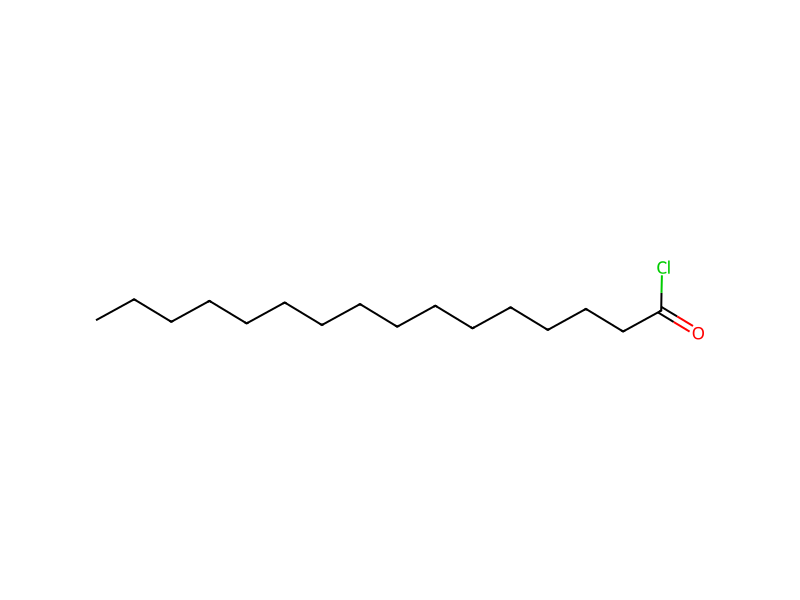
Palmitoyl chloride

HCID 8206
새 노트새 반응견적 요청하기
인쇄 미리보기

데이터를 보충하는 중입니다. 잠시 후 페이지를 새로 고치면 최신 내용을 볼 수 있습니다
기본 정보이름 및 식별자물성안전 및 규제화학 및 산업관련 반응화합물 노트
부분 구조 검색유사 구조 찾기

기본 정보

CAS
112-67-4
표준 SMILES
CCCCCCCCCCCCCCCC(=O)Cl
InChIKey
ARBOVOVUTSQWSS-UHFFFAOYSA-N
분자식
C16H31ClO
평균 분자량
274.9 g/mol
단동위원소 질량
274.2063433

이름 및 식별자

우선 이름
Palmitoyl chloride
IUPAC
hexadecanoyl chloride
영어명
Palmitoyl chloride
분자식
C16H31ClO
분자량
274.87

이름 및 동의어

Palmitoyl chlorideHEXADECANOYL CHLORIDE112-67-4Palmitic acid chlorideHexadecanoic acid, chloride7642R2JOSBNSC-9854DTXSID4051582RefChem:169735DTXCID8030134203-996-7Palmityl chloride
이름 더 보기
N-HEXADECANOYL CHLORIDEmitoyLPalmitoylchloridCETYLOYL CHLORIDEPalmitoyl choridePALNITOYL CHLORIDEPalmitoylChloride>
Hexadecanoyl-chloride-MFCD00000742palmitoylchloridehexadecanoic acid chlorideC16H31ClOUNII-7642R2JOSBPalmitic chlorideHSDB 5573

데이터베이스 식별자

CAS
112-67-4
PubChem CID
8206
DTXSID
DTXSID4051582
UNII
7642R2JOSB
EC Number
203-996-7
Nikkaji
J110.173K

물성

구조 계산 물성보충 중

XLogP
7.3
극성 표면적
17.1 Ų
수소 결합 공여자 수
0
수소 결합 수용자 수
1
회전 가능 결합 수
14
무거운 원자 수
18
형식 전하
0
복잡도
180

실험 및 물리화학적 성질

Color/FormCOLORLESS LIQUID
SolubilityVERY SOL IN ETHER
Boiling Point · 2건

199 °C @ 20 MM HG

BOILING POINT: 194.5 °C AT 17 MM HG

Melting Point11-12 °C
Refractive IndexINDEX OF REFRACTION: 1.4514 @ 20 °C/D
Physical Description · 2건

Hexadecanoyl chloride appears as a clear colorless to light yellow liquid with a pungent odor. Freezing point 11-12 °C. Irritates skin, eyes, and mucous membranes. May be toxic by ingestion, inhalation and skin absorption.

Clear colorless to light yellow liquid; mp = 11-12 deg C; [CAMEO] Clear colorless liquid; mp = 11-13 deg C; [MSDSonline]

Other Experimental PropertiesDECOMPOSES IN WATER, ALCOHOL

물리화학적 성질

녹는점
11 · 11-13 °C (lit.)
끓는 점
88 · 88-90 °C/0.2 mmHg (lit.)

안전 및 규제

안전 정보는 참고용이며, 공급업체의 물질안전보건자료(SDS), 관련 법규 및 전문가 평가를 대체하지 않습니다.

GHS 분류

GHS Classification · 6건

This chemical does not meet GHS hazard criteria for 0.5% (1 of 201) of reports.

Danger

H290 (21.4%): May be corrosive to metals [Warning Corrosive to Metals];H312 (52.7%): Harmful in contact with skin [Warning Acute toxicity, dermal];H314 (25.4%): Causes severe skin burns and eye damage [Danger Skin corrosion/irritation];H315 (74.1%): Causes skin irritation [Warning Skin corrosion/irritation];H317 (74.1%): May cause an allergic skin reaction [Warning Sensitization, Skin]

P234, P260, P261, P264, P272, P280, P301+P330+P331, P302+P352, P302+P361+P354, P304+P340, P305+P354+P338, P316, P317, P321, P332+P317, P333+P317, P362+P364, P363, P390, P405, P406, and P501 (click each P-code to see the statement)

Aggregated GHS information provided per 201 reports by companies from 17 notifications to the ECHA C&L Inventory. Each notification may be associated with multiple companies.;Reported as not meeting GHS hazard criteria per 1 of 201 reports by companies.;There are 16 notifications provided by 200 of 201 reports by companies with hazard statement code(s).;Information may vary between notifications depending on impurities, additives, and other factors. The percentage value in parenthesis indicates the notified classification ratio from companies that provide hazard codes. Only hazard codes with percentage values above 10% are shown. For more detailed information, please visit ECHA C&L website.

유해성 정보

Regulatory Information · 3건

Chemical: Hexadecanoyl chloride

Status: Active Update: 23-05-2022 https://echa.europa.eu/registration-dossier/-/registered-dossier/32158

Palmitoyl chloride: Does not have an individual approval but may be used under an appropriate group standard

Other Safety InformationIMAP assessments - Hexadecanoyl chloride: Human health tier I assessment;IMAP assessments - Hexadecanoyl chloride: Environment tier I assessment
DOT LabelCorrosive

화학 및 산업

용도 및 제조

General Manufacturing InformationHexadecanoyl chloride: ACTIVE

응용 분야

용도Palmitoyl Chloride was used as a polymeric carriers for plasmid DNA (pDNA) delivery to 293T cells.

일반 설명A clear colorless to light yellow liquid with a pungent odor. Freezing point 11-12°C. Irritates skin, eyes, and mucous membranes. May be toxic by ingestion, inhalation and skin absorption.

상·하류 제품 정보

상류 원료

파미틴 산

하류 제품

Chloramphenicol palmitateL-아스코르빈산팔미틴산에스테르세틸 알코올2-하이드록시에틸팔미테이트N,N'-에탄-1,2-디일비스헥사데칸-1-아미드글리시딜팔미테이트3-부텐산,4-하이드록시-,감마-락톤4-Hexadecylaniline팔미트산프로필에스테르

관련 반응

250건
반응 기록 만들기
HRID 4492 반응식
HRID 4492반응물로uspto-grants-1988_02
HRID 5127 반응식
HRID 5127반응물로uspto-grants-1993_09
HRID 6095 반응식
HRID 6095반응물로uspto-grants-1993_09
HRID 19748 반응식
HRID 19748반응물로uspto-grants-2010_06
HRID 32377 반응식
HRID 32377반응물로uspto-grants-2008_09
HRID 34304 반응식
HRID 34304반응물로uspto-grants-1988_08
HRID 90193 반응식
HRID 90193반응물로Training data from https://doi.org/10.1039/C8SC04228D (2/10)
HRID 92745 반응식
HRID 92745반응물로Training data from https://doi.org/10.1039/C8SC04228D (2/10)
1 / 32 페이지

화합물 노트

불러오는 중…

이 페이지에서기본 정보이름 및 식별자물성안전 및 규제화학 및 산업관련 반응화합물 노트
더보기
새 노트새 반응견적 요청하기
밀도
0.906 g/mL · 0.906 g/mL at 25 °C (lit.)
굴절률
20 · n20/D 1.452(lit.)
인화점
230 °F · >230 °F
저장 조건
30 °C · Store below +30°C.
용해도
클로로포름(적게), 에틸아세테이트(약간)에 용해됨
물리적 상태
액체
Specific Gravity
0.905 · 0.905
색상
투명한
수용성
분해
BRN
972409 · 972409
안정성
수분에 민감한
InChI
1S/C16H31ClO/c1-2-3-4-5-6-7-8-9-10-11-12-13-14-15-16(17)18/h2-15H2,1H3
InChIKey
ARBOVOVUTSQWSS-UHFFFAOYSA-N
SMILES
CCCCCCCCCCCCCCCC(Cl)=O
NIST
Palmitoyl chloride(112-67-4)
EPA
Hexadecanoyl chloride (112-67-4)

화학적 성질

clear liquid

Fire Hazards · 1건

Excerpt from ERG Guide 154 [Substances - Toxic and/or Corrosive (Non-Combustible)]:;Non-combustible, substance itself does not burn but may decompose upon heating to produce corrosive and/or toxic fumes. Some are oxidizers and may ignite combustibles (wood, paper, oil, clothing, etc.). Corrosives in contact with metals may evolve flammable hydrogen gas. Containers may explode when heated. For electric vehicles or equipment, ERG Guide 147 (lithium ion or sodium ion batteries) or ERG Guide 138 (sodium batteries) should also be consulted. (ERG, 2024)

Health Hazards · 1건

Excerpt from ERG Guide 154 [Substances - Toxic and/or Corrosive (Non-Combustible)]:;TOXIC and/or CORROSIVE; inhalation, ingestion or skin contact with material may cause severe injury or death. Contact with molten substance may cause severe burns to skin and eyes. Avoid any skin contact. Fire may produce irritating, corrosive and/or toxic gases. Runoff from fire control or dilution water may be corrosive and/or toxic and cause environmental contamination. (ERG, 2024)

Hazards Summary · 1건

Slowly decomposed by water forming hydrochloric and palmitic acids; A skin, eye, and mucous membrane irritant; [CAMEO] Corrosive to skin and eyes; [eChemPortal: ERMA] Reacts violently with water; A corrosive substance that can cause injury to the skin, eyes, and respiratory tract; A lachrymator; Inhalation may cause chemical pneumonitis; [MSDSonline]

Reactive GroupAcyl Halides, Sulfonyl Halides, and Chloroformates
Reactivity Profile · 1건

HEXADECANOYL CHLORIDE is incompatible with bases (including amines), with strong oxidizing agents, and with alcohols. May react vigorously or explosively if mixed with diisopropyl ether or other ethers in the presence of trace amounts of metal salts [J. Haz. Mat., 1981, 4, 291].

Air and Water ReactionsDecomposes rather slowly in water to form hydrochloric acid and palmitic acid, a fatty acid that is not soluble in water.
Hazard Classes and CategoriesMet. Corr. 1 (21.4%);Acute Tox. 4 (52.7%);Skin Corr. 1 (25.4%);Skin Irrit. 2 (74.1%);Skin Sens. 1 (74.1%)

안전 및 보호

Fire Fighting · 1건

Excerpt from ERG Guide 154 [Substances - Toxic and/or Corrosive (Non-Combustible)]:;SMALL FIRE: Dry chemical, CO2 or water spray.;LARGE FIRE: Dry chemical, CO2, alcohol-resistant foam or water spray. If it can be done safely, move undamaged containers away from the area around the fire. Dike runoff from fire control for later disposal.;FIRE INVOLVING TANKS, RAIL TANK CARS OR HIGHWAY TANKS: Fight fire from maximum distance or use unmanned master stream devices or monitor nozzles. Do not get water inside containers. Cool containers with flooding quantities of water until well after fire is out. Withdraw immediately in case of rising sound from venting safety devices or discoloration of tank. ALWAYS stay away from tanks in direct contact with flames. (ERG, 2024)

First Aid · 1건

Excerpt from ERG Guide 154 [Substances - Toxic and/or Corrosive (Non-Combustible)]:;Refer to the "General First Aid" section. Specific First Aid: For corrosives, in case of contact, immediately flush skin or eyes with running water for at least 30 minutes. Additional flushing may be required. (ERG, 2024)

Nonfire Spill Response · 1건

Excerpt from ERG Guide 154 [Substances - Toxic and/or Corrosive (Non-Combustible)]:;ELIMINATE all ignition sources (no smoking, flares, sparks or flames) from immediate area. Do not touch damaged containers or spilled material unless wearing appropriate protective clothing. Stop leak if you can do it without risk. Prevent entry into waterways, sewers, basements or confined areas. Absorb or cover with dry earth, sand or other non-combustible material and transfer to containers. DO NOT GET WATER INSIDE CONTAINERS. (ERG, 2024)

Isolation and Evacuation · 1건

Excerpt from ERG Guide 154 [Substances - Toxic and/or Corrosive (Non-Combustible)]:;IMMEDIATE PRECAUTIONARY MEASURE: Isolate spill or leak area in all directions for at least 50 meters (150 feet) for liquids and at least 25 meters (75 feet) for solids.;SPILL: Increase the immediate precautionary measure distance, in the downwind direction, as necessary.;FIRE: If tank, rail tank car or highway tank is involved in a fire, ISOLATE for 800 meters (1/2 mile) in all directions; also, consider initial evacuation for 800 meters (1/2 mile) in all directions. (ERG, 2024)

Personal Protective Equipment (PPE) · 1건

Excerpt from ERG Guide 154 [Substances - Toxic and/or Corrosive (Non-Combustible)]:;Wear positive pressure self-contained breathing apparatus (SCBA). Wear chemical protective clothing that is specifically recommended by the manufacturer when there is NO RISK OF FIRE. Structural firefighters' protective clothing provides thermal protection but only limited chemical protection. (ERG, 2024)

독성 정보

Adverse EffectsDermatotoxin - Skin burns.;Lacrimator (Lachrymator) - A substance that irritates the eyes and induces the flow of tears.;Toxic Pneumonitis - Inflammation of the lungs induced by inhalation of metal fumes or toxic gases and vapors.

규제 정보

Regulatory Information · 3건

Chemical: Hexadecanoyl chloride

Status: Active Update: 23-05-2022 https://echa.europa.eu/registration-dossier/-/registered-dossier/32158

Palmitoyl chloride: Does not have an individual approval but may be used under an appropriate group standard

안전 데이터

wgk
1
tsca
TSCA listed
ridadr
UN 3265 8/PG 2
독성
LD50 orally in Rabbit: > 2000 mg/kg
HS 번호
2915 90 70
risk_code
14-34-29
hazard_code
C
safety_code
26-36/37/39-43-45-8
포장분류
II
위험 등급
8
F 고인화성물질
9-21
Hazard Classifications
Skin Corr. 1B
스토리지 클래스
8A - Combustible corrosive hazardous materials
유해 물질 데이터
112-67-4(Hazardous Substances Data)
Cholesteryl palmitate
옥틸 헥사데칸산염
토사노 산
에스트라-1,3,5(10)-트리엔-3,17베타-디올17-팔미테이트