
이소퀴놀린
Isoquinoline
데이터를 보충하는 중입니다. 잠시 후 페이지를 새로 고치면 최신 내용을 볼 수 있습니다
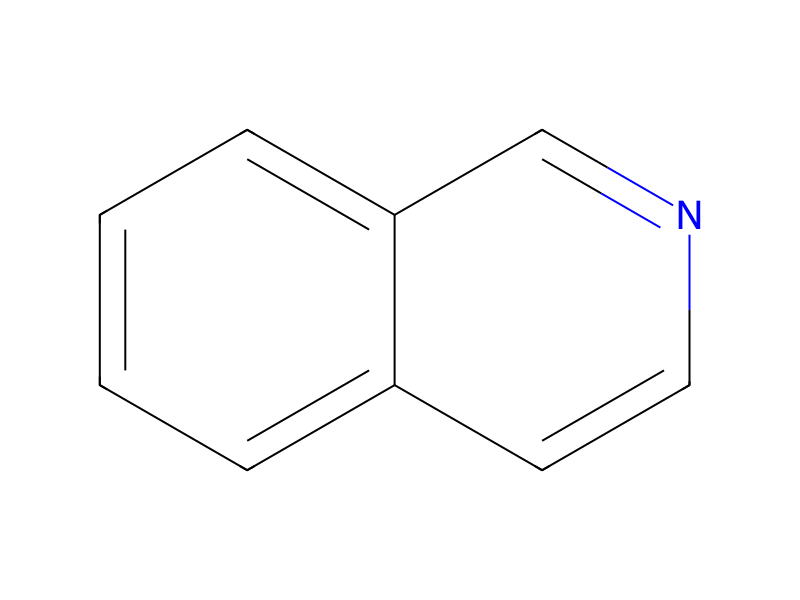
기본 정보
- CAS
119-65-3- 표준 SMILES
c1ccc2cnccc2c1- InChIKey
AWJUIBRHMBBTKR-UHFFFAOYSA-N- 분자식
- C9H7N
- 평균 분자량
- 129.16 g/mol
- 단동위원소 질량
- 129.05784923
개요
Isoquinoline is an ortho-fused heteroarene that is a benzopyridine in which the N atom not directly attached to the benzene ring. It is a member of isoquinolines, a mancude organic heterobicyclic parent, an azaarene and an ortho-fused heteroarene.
이름 및 식별자
- 우선 이름
- Isoquinoline
- IUPAC
- isoquinoline
- 현지명
- 이소퀴놀린
- 영어명
- Isoquinoline
- 분자식
- C9H7N
- 분자량
- 129.16
이름 및 동의어
ISOQUINOLINE119-65-32-Benzazine2-AzanaphthaleneLeucolinebeta-QuinolineIsochinolinBenzo[c]pyridine3,4-BenzopyridineBenzo(c)pyridineFEMA No. 2978DTXSID2047644
이름 더 보기
아이소퀴놀린이소퀴놀린ISOQUINOLINBenzopyridineFEMA 2978ISOQINOLINEIsoquinoL
JGX76Y85M6NSC-3395DTXCID0027644CHEBI:16092RefChem:792283204-341-87-methoxy-1,6-dimethylisoquinoline-5,8-dione2-Benzanine
데이터베이스 식별자
- CAS
119-65-3- PubChem CID
- 8405
- DTXSID
DTXSID2047644- ChEMBL
CHEMBL12315- ChEBI
CHEBI:16092- UNII
- JGX76Y85M6
- EC Number
- 204-341-8
- Nikkaji
- J43.394B
물성
구조 계산 물성보충 중
- XLogP
- 2.1
- 극성 표면적
- 12.9 Ų
- 수소 결합 공여자 수
- 0
- 수소 결합 수용자 수
- 1
- 회전 가능 결합 수
- 0
- 무거운 원자 수
- 10
- 형식 전하
- 0
- 복잡도
- 111
실험 및 물리화학적 성질
Chemical Classes
Nitrogen Compounds -> Quinolines
Waste-water effluent contaminant
DrugsPharmaceuticals -> Listed in ZINC15
SpringerMaterials PropertiesAngular frequency
LogP
2.08
2.08
Food AdditivesFLAVORING AGENT OR ADJUVANT -> FDA Substance added to food
Density1.097-1.103
Flavoring AgentsEU Flavoring substances
Solubility
4.52 mg/mL at 25 °C
Slightly soluble in water
Soluble (in ethanol)
Boiling Point
242.00 to 243.00 °C. @ 760.00 mm Hg
242-243 °C
Melting Point25.5 - 26 °C
Refractive Index1.621-1.627
안전 및 규제
안전 정보는 참고용이며, 공급업체의 물질안전보건자료(SDS), 관련 법규 및 전문가 평가를 대체하지 않습니다.
GHS 분류
GHS Classification
This chemical does not meet GHS hazard criteria for < 0.1% (1 of 1677) of reports.
Danger
H302 (> 99.9%): Harmful if swallowed [Warning Acute toxicity, oral]
P262, P264, P264+P265, P270, P280, P301+P317, P302+P352, P305+P351+P338, P316, P321, P330, P332+P317, P337+P317, P361+P364, P362+P364, P405, and P501 (click each P-code to see the statement)
Aggregated GHS information provided per 1677 reports by companies from 8 notifications to the ECHA C&L Inventory. Each notification may be associated with multiple companies.
Warning
유해성 정보
Regulatory Information
Chemical: Isoquinoline
Commission Regulation (EC) No 1565/2000 (Repealed by Com. Implementing Reg. (EU) No 872/2012)
Isoquinoline is listed on the EPA's Chemical Data Reporting (CDR) system. Manufacturers and importers of Isoquinoline are required to report information about their production and use of this chemical to the EPA under the Toxic Substances Control Act (TSCA). (40 eCFR Part 711)
REACH registered substance: Isoquinoline (EC: 204-341-8)
Isoquinoline: Does not have an individual approval but may be used under an appropriate group standard
Hazards SummaryA moderate skin irritant; [RTECS] Safe when used as a flavoring agent in food; [JECFA] An irritant; Highly toxic by skin absorption; Harmful by ingestion; [Acros Organics MSDS] See Quinoline.
Hazard Classes and Categories
Acute Tox. 4 (> 99.9%)
Acute toxicity (Oral) - Category 4
독성 정보
Toxicological InformationRanking: 454 (total points: 460.62)
화학 및 산업
약리 정보
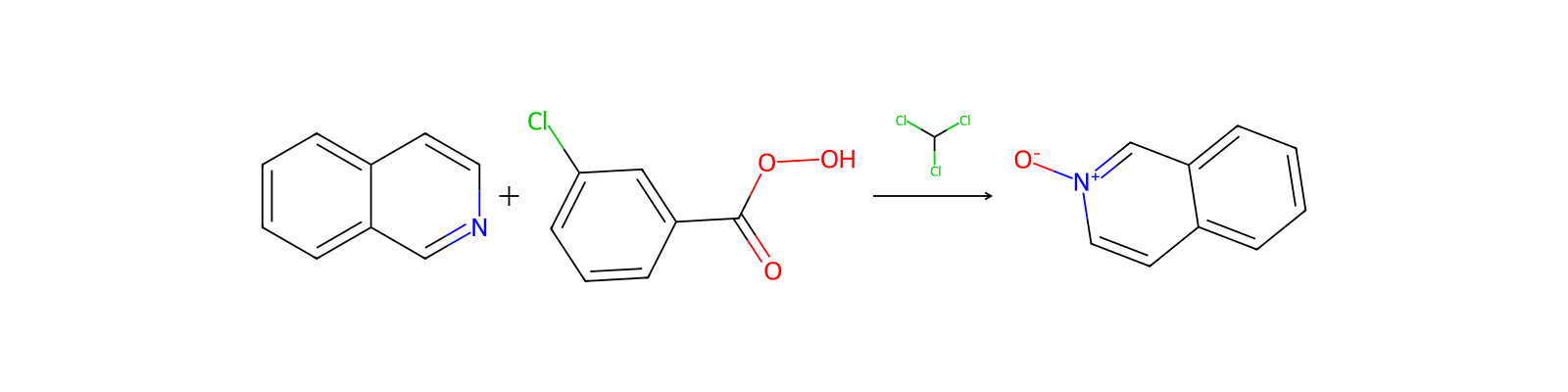
Metabolism/MetabolitesIsoquinoline has known human metabolites that include isoquinoline N-oxide.
Cellular LocationsCytoplasm
용도 및 제조
UsesPresent in coal tar; Used to make dyes, insecticides, antimalarials, and rubber accelerators; [Merck Index] Used as flavoring agent or adjuvant; [FDA]
U.S. Production2023: 25,000,000 - <75,000,000 lb
Industry UsesCatalyst
Use Classification
Flavouring Agent -> FLAVOURING_AGENT -> JECFA Functional Classes
Flavoring Agents -> JECFA Flavorings Index
Flavouring Agent -> FLAVOURING_AGENT -> JECFA Functional Classes
Flavouring Agent -> FLAVOURING_AGENT -> JECFA Functional Classes
Flavouring Agent -> FLAVOURING_AGENT -> JECFA Functional Classes
General Manufacturing Information
Plastics Material and Resin Manufacturing
Isoquinoline: ACTIVE
응용 분야
개요Isoquinoline, also known as 2-azanaphthalene, benzo[c]pyridine, or 2-benzanine, is a structural isomer of quinoline. It has structural and spectroscopic properties similar to quinoline. Isoquinoline was first isolated in 1885 by Hoogewerf and van Dorp from the quinoline fraction of coal tar by fractional crystallization. It is used to prepare dyes, insecticides, and antimalarial compounds, among other things.
용도Isoquinolines are used in the manufacture of dyes, paints, insecticides and antifungals. It is also used as a solvent for the extraction of resins and terpenes, and as a corrosion inhibitor.Isoquinoline (isq) has been used:in the preparation of cis-[(dcbH2)2Ru(isq)2](ClO4)2 [dcbH2 = 4,4′-(CO2H)2-2,2′-bipyridine].to investigate the toxicity of three two-ring and five three-ring azaarenes to the green alga Scenedesmus acuminatus and its relationship with molecular structure.
관련 반응
279건




화합물 노트
불러오는 중…