홈MCP워크벤치Skills
홈워크벤치알림마이페이지
llms.txt · MCP 가이드개인정보처리방침 · 이용약관 · 지원v1.8.0
  1. 홈
  2. /화합물

니켈

Nickel cation

HCID 934
새 노트새 반응견적 요청하기
인쇄 미리보기
기본 정보개요이름 및 식별자물성안전 및 규제화학 및 산업관련 반응화합물 노트
부분 구조 검색유사 구조 찾기

기본 정보

CAS
14701-22-5
표준 SMILES
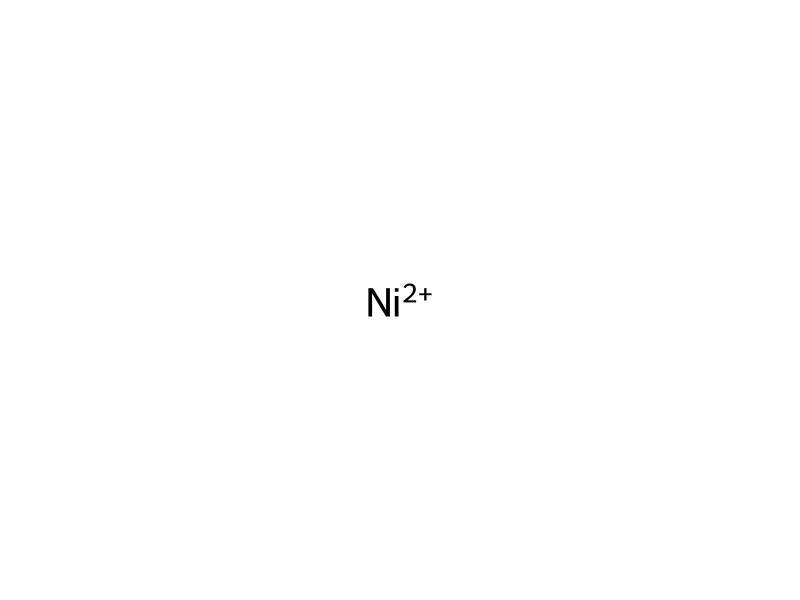
[Ni+2]
InChIKey
VEQPNABPJHWNSG-UHFFFAOYSA-N
분자식
Ni+2
평균 분자량
58.693 g/mol
단동위원소 질량
57.935342

개요

Nickel(2+) is a nickel cation in which the nickel carries a double positive charge. It has a role as a cofactor. It is a nickel cation, a monoatomic dication, a divalent metal cation and a metal cation allergen.

이름 및 식별자

우선 이름
Nickel cation
IUPAC
nickel(2+)
현지명
니켈
영어명
Nickel
분자식
Ni
분자량
58.69

이름 및 동의어

Nickel(2+)Nickel cationnickelous ionNICKEL (II) IONNickel, ion (Ni2+)nickel(2+) ionNickel ionsNickel(II) ionNickel(2+)ionsnickel(II) cationNi++Ni2+
이름 더 보기
니켈초산니켈아세트산니켈아세트산,니켈(II)염니켈디아세트산니켈로우스아세트산니켈니켈, 원소Niraney niRaney nickelNickel powderSILVER(I) NITRATENickel, p.a.Ranery NiNickel 270nickel atomNickel plate
Nickel ion(2+)14701-22-5Nickel cation (Ni2+)OIS2CXW7AMUNII-OIS2CXW7AMNiIICHEBI:49786Ni(2+)

데이터베이스 식별자

CAS
14701-22-5、7440-02-0
PubChem CID
934
DTXSID
DTXSID60163564
ChEBI
CHEBI:49786
UNII
OIS2CXW7AM
Nikkaji
J2.510.549D

물성

구조 계산 물성

극성 표면적
0 Ų
수소 결합 공여자 수
0
수소 결합 수용자 수
0
회전 가능 결합 수
0
무거운 원자 수
1
형식 전하
2
복잡도
0

실험 및 물리화학적 성질

Melting Point1455 °C
Physical DescriptionSolid

물리화학적 성질

녹는점
1453 °C · 1453 °C (lit.)
끓는 점
2732 °C · 2732 °C (lit.)
밀도
8.9 g/mL · 8.9 g/mL at 25 °C (lit.)
증기 밀도
5.8 · 5.8 (vs air)
저장 조건
no restrictions.
용해도
2 O; · insoluble in H2O; slightly soluble in dilute acid solutions
물리적 상태
철사
색상
흰색에서 회백색
Specific Gravity
8.9 · 8.9
냄새
냄새 없는
수소이온지수(pH)
8.5 · 8.5-12.0
Flame Color
Colorless to silvery white
수용성
물에 녹지 않습니다.
비열
0.44 J/ · Cp(crystal): 0.44 J/(g·K); Cp(gas): 0.4 J/(g·K), at 25℃
Merck
14 · 14,8107
안정성
대규모 형태로 안정적입니다. 분말은 자연 발화성이므로 자연 발화할 수 있습니다. 티타늄, 질산암모늄, 과염소산칼륨, 히드라조산과 격렬하게 반응할 수 있습니다. 산, 산화제, 황과 호환되지 않습니다.

안전 및 규제

안전 정보는 참고용이며, 공급업체의 물질안전보건자료(SDS), 관련 법규 및 전문가 평가를 대체하지 않습니다.

안전 및 보호

Minimum Risk LevelIntermediate Inhalation: 0.0002 mg/m3 (L134) Chronic Inhalation: 0.00009 mg/m3 (L134)

독성 정보

TreatmentExcess exposure to nickel is usually handled by preventing further exposure and symptomatic treatment. Nickel poisoning may also be treated using chelation therapy with sodium diethyldithiocarbamate. (L42)
Health Effects · 1건

The most common harmful health effect of nickel in humans is an allergic reaction. This usually manifests as a skin rash, although some people experience asthma attacks. Long term inhahation of nickel causes chronic bronchitis and reduced lung function, as well as damage to the naval cavity. Ingestion of excess nickel results in damage to the stomach, blood, liver, kidneys, and immune system, as well as having adverse effects on reproduction and development. (L41)

Exposure RoutesOral (L41) ; inhalation (L41) ; dermal (L41)
Toxicity Summary · 1건

Nickel is known to substitute for other essential elements in certain enzmes, such as calcineurin. It is genotoxic, and some nickel compounds have been shown to promote cell proliferation. Nickel has a high affinity for chromatin proteins, particularly histones and protamines. The complexing of nickel ions with heterochromatin results in a number of alterations including condensation, DNA hypermethylation, gene silencing, and inhibition of histone acetylation, which have been shown to disturb gene expression. Nickel has also been shown to alter several transcription factors, including hypoxia-inducible transcription factor, activating transcription factor, and NF-KB transcription factor. There is also evidence that nickel ions inhibit DNA repair, either by directly inhibiting DNA repair enzymes or competing with zinc ions for binding to zinc-finger DNA binding proteins, resulting in structural changes in DNA that prevent repair enzymes from binding. Nickel ions can also complex with a number of cellular ligands including amino acids, peptides, and proteins resulting in the generation of oxygen radicals, which induce base damage, DNA strand breaks, and DNA protein crosslinks. (L41, A40)

화학 및 산업

약리 정보

Metabolism/Metabolites · 1건

Nickel is absorbed mainly through the lungs and gastrointestinal tract. Once in the body it enters the bloodstream, where it binds to albumin, L-histidine, and α2-macroglobulin. Nickel tends to accumulate in the lungs, thyroid, kidney, heart, and liver. Absorbed nickel is excreted in the urine, whereas unabsorbed nickel is excreted in the faeces. (L41)

용도 및 제조

UsesPure nickel is mainly used to make alloys, which are found in items such as coins, jewelry, valves and heat exchangers. Nickel compounds are used for nickel plating, to color ceramics, to make some batteries, and as catalysts. (L41)
응용 분야 · 6건

개요니켈은 은백색의 강한 광택이 있는 금속이다. 철족 원소로 단단하며 가단성과 연성이 있다. 황 화합물인 침상니켈석이나 비소 화합물인 홍비니켈석, 황/비소 화합물인 황비니켈석 광물에서 산출된다.

용도공기 중에서 변하지 않고, 산화 반응을 일으키지 않아 도금이나 합금 등을 통해 동전의 재료로 사용된다. 자성을 띠며 코발트와 함께 산출된다.

용도특히 니켈은 표면이 산화하며 치밀한 막이생겨 내부를 보호해서 녹이 잘 슬지않으므로 철등 금속의 부식방지하는 니켈도금용으로 널리 쓰인다. 하지만 대부분은 철과 크롬과 합금해 스테인리스강을 만드는데 쓰인다. 그외 각종 다른 합금을 만드는 재료로 널리 쓰인다.

출처Nickel is the 23rd most abundant element found in the Earth’s crust. It is somewhat plentiful but scattered and makes up one-hundredth of 1% of igneous rocks. Nickel metal is foundin meteorites (as are some other elements). It is believed that molten nickel, along with iron,makes up the central sphere that forms the core of the Earth.There are several types of nickel ores. One is the major ore for nickel called pentlandite(NiS 2FeS), which is iron/nickel sulfide. Another is a mineral called niccolite (NiAs), discovered in 1751 and first found in a mining area of Sweden. By far, the largest mining area fornickel is located in Ontario, Canada, where it is recovered from what is thought to be a verylarge meteorite that crashed into the Earth eons ago. This large nickel deposit is one reasonfor the theory of the Earth’s core being molten nickel and iron, given that both the Earth andmeteorites were formed during the early stages of the solar system. Some nickel ores are alsofound in Cuba, the Dominican Republic, and Scandinavia. Traces of nickel exist in soils, coal,plants, and animals.

관련 반응

29건

반응 기록 만들기
HRID 91577 반응식
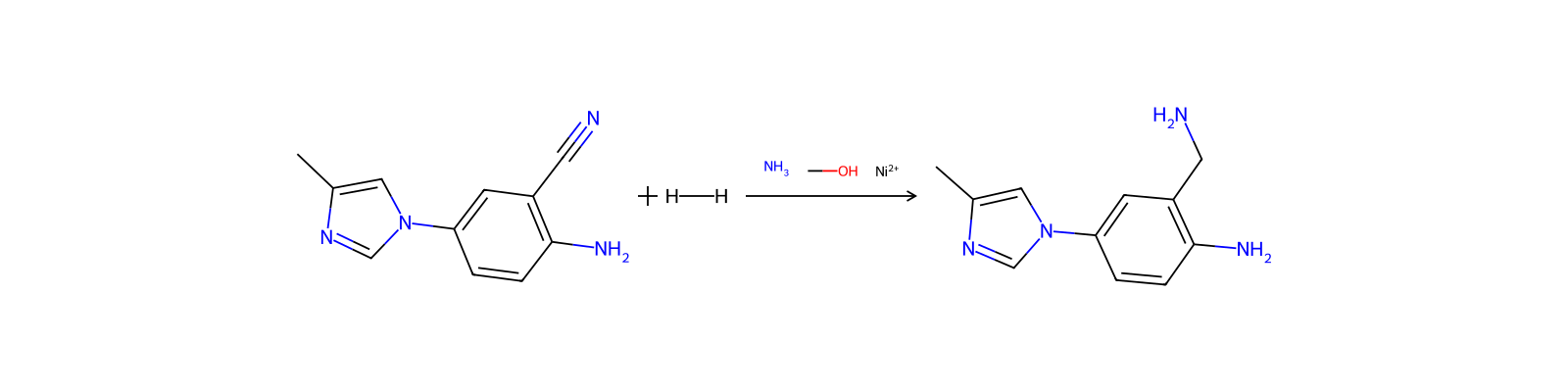
HRID 91577생성물로반응물로Training data from https://doi.org/10.1039/C8SC04228D (2/10)
HRID 102267 반응식
HRID 102267반응물로Training data from https://doi.org/10.1039/C8SC04228D (2/10)
HRID 147253 반응식
HRID 147253반응물로Training data from https://doi.org/10.1039/C8SC04228D (9/10)
HRID 165531 반응식
HRID 165531반응물로Training data from https://doi.org/10.1039/C8SC04228D (9/10)
HRID 177185 반응식
HRID 177185반응물로Training data from https://doi.org/10.1039/C8SC04228D (6/10)
HRID 213095 반응식
HRID 213095생성물로반응물로Training data from https://doi.org/10.1039/C8SC04228D (6/10)
HRID 224897 반응식
HRID 224897촉매로uspto-grants-1980_11
HRID 472154 반응식
HRID 472154촉매로uspto-grants-2014_01
1 / 4 페이지

화합물 노트

불러오는 중…

이 페이지에서기본 정보개요이름 및 식별자물성안전 및 규제화학 및 산업관련 반응화합물 노트
더보기
새 노트새 반응견적 요청하기
InChI
1S/Ni
InChIKey
PXHVJJICTQNCMI-UHFFFAOYSA-N
SMILES
[Ni]
Modulus of Elasticity
207 GPa · 207 GPa
Poissons Ratio
0.31 · 0.31
Shear Modulus
76 GPa · 76.0 GPa
NIST
Nickel(7440-02-0)
EPA
Nickel (7440-02-0)

화학적 성질

RANEY NICKEL is a hard, ductile, magnetic metal with a silver-white color.

Signs and SymptomsSymptoms of nickel poisoning include headache, nausea, vomiting, dizziness, irritability, and difficulty sleeping, followed by chest pains, sweating, rapid heart beat, and a dry cough. (L42)
Carcinogen ClassificationMetallic nickel is possibly carcinogenic to humons (Group 2B). Nickel compounds are carcinogenic to humans (Group 1). (L135)
Toxicity DataLD50: 250 mg/kg (Intraperitoneal, Rat) (T26)

안전 데이터

OEB
D
OEL
TWA: 0.015 mg/m3 [*Note: The REL does not apply to Nickel carbonyl.]
wgk
3
IDLA
10 mg Ni/m3
tsca
TSCA listed
rtecs
VW4725000
ridadr
UN 1493 5.1/PG 2
독성
Occupational exposures may occur in its mining, smelting, and refining. The general population ingests nickel in food. Skin sensitization and dermatitis leading to chronic eczema, called “nickel itch,” frequently occurs, especially in wearers of pierced earrings. Nickel can also irritate the conjunctiva and respiratory tract mucous membranes. Absorption from the digestive tract is poor, so systemic poisoning is rare, but since it is an irritant it acts as an emetic. Systemic effects include hyperglycemia, capillary damage, CNS depression, myocardial weakness, and kidney damage. Nickel and its compounds are carcinogenic following inhalation, but not following ingestion or skin contact. Cancer of the lung and nasal passages results, with a latent period of about 25 years; smokers are at greater risk. In addition to irritation and carcinogenesis, nickel carbonyl (nickel tetracarbonyl, Ni(CO)4) exerts relatively mild, tran_x0002_sientinitial symptoms including headache, giddiness, nausea, and shortness of breath. These symptoms are followed by very serious symptoms hours to days later, consisting of tightness in the chest, shortness of breath, rapid respiration, pulmonary edema, cyanosis, and extreme weakness; this can be fatal. Heat decomposition of nickel carbonyl yields carbon monoxide. Chelating agents can be used to remove nickel from the body.
HS 번호
38151100
risk_code
34-50/53-43-40-10-17-52/53-48/23
hazard_code
C,Xi,Xn,F,T
safety_code
26-45-60-61-36-22-36/37-16-15-5-36/37/39-43-28
포장분류
II
위험 등급
4.1
기존화학 물질
KE-25818
F 고인화성물질
8
자연 발화 온도
87 °C
Hazard Classifications
Carc. 2Skin Sens. 1STOT RE 1
스토리지 클래스
6.1D - Non-combustible acute toxic Cat.3toxic hazardous materials or hazardous materials causing chronic effects
유해 물질 데이터
7440-02-0(Hazardous Substances Data)

용도Nickel-plating; for various alloys such as new silver, Chinese silver, German silver; for coins, electrotypes, storage batteries; magnets, lightning-rod tips, electrical contacts and electrodes, spark plugs, machinery parts; catalyst for hydrogenation of oils and other organic substances. See also Raney nickel. manufacture of Monel metal, stainless steels, heat resistant steels, heat and corrosion resistant alloys, nickel-chrome resistance wire; in alloys for electronic and space applications.

일반 설명Nickel catalyst, is extremely fine powdered nickel. Nickel is grayish colored. Insoluble in water. Nickel catalyst is used to promote the chemical action in manufacturing synthetics and to process vegetable oil and petroleum. If exposed to air or moisture, Nickel may become hot enough to ignite. Nickel is insoluble in water and does not react with larger volumes of water.

제조 방법 · 2건

생산 방법Nickel is obtained by processing sulfide and laterite ore concentrates using pyrometallurgic and hydrometallurgic processes. The resultant nickel matte obtained by roasting and smelting is subjected to further cleaning by electro-, vapo-, and hydrometallurgic refining methods. Some portion of the matte is roasted to obtain commercial nickel oxide agglomerate. Pure, 99.9% nickel can be obtained by electrolytic refining process. The most pure, 99.97%, nickel is obtained by vapometallurgy. In this process, known also as the Mond method,nickel and copper sulfide blend is converted to oxides and then reduced by heating with water gas at 350–400°C. The resultant active form of nickel is treated with carbon monoxide to give volatile nickel carbonyl [Ni(CO)4]. The latter reaction is reversible; heating results in pure nickel and carbon monoxide.

The carbonyl process is most commonly employed when very pure nickel is required. The impure metal is reacted with pure carbon monoxide at 50° and the carbonyl produced fractionated several times prior to pyrolysis at around 200°. The nickel thus obtained has a purity of 99.90-99.99% depending upon the materials used. Electrolytic methods for producing high purity nickel depend upon the production of high purity nickel salts. The nickel obtained by the electrolysis of pure nickel chloride solution with inert platinum-iridium anodes is 99.99% pure.

상·하류 제품 정보

상류 원료

황산탄산나트륨(경회)

하류 제품

2-Chloro-4,5-diaminopyrimidine4-Amino-6-chloropyrimidin-5-ylamine2.5-디메틸-2.5-디-티-부틸퍼옥시헥산메틸4-아미노-3-메틸벤조에이트5-Amino-6-chloro-pyrimidin-4-ol5-클로로인돌-3-카르복스알데히드질산 니켈methanation catalystsCyclododecane피마자 기름, 수소화된N-(3-아미노프로필)-이미다졸3-카베톡시-2-피페리돈2,5-디메틸-2,5-헥산디올4-아미노-2-(트리플루오로메틸)피리미딘-5-카르발데히드1,2-DIAMINO-2-메틸프로판6-Amino-2-methyl-2-heptanol니켈 산화물 블랙Isopropyl 4-aminobenzoate4-Chloro-6-hydrazino-pyrimidin-5-ylamine4-Amino-5-aminomethyl-2-methylpyrimidine하이드록시신나믹애씨드에리트리톨N-EthylpropylamineNickel (II) carbonate basic tetrahydrate비스(아미노프로필)피페라진sec-부틸아민4,5-Dichloro-1,2-benzenediamine3-Pentadecylphenol하이드록시-1-메틸디페리딘1,5-디메틸-2-피롤리디논1,7-디데아자아데닌secondary hydrocarbon steam reforming catalysts6-아미노인돌Benalaxyl4-메틸린돌-3-카르복스알데하이드5-Aminopyrimidine1,2,4-부탄트리올1-메틸-피페리딘-4-탄소니트릴(1-메틸-4-피페리디닐)메탄아민8-메톡시퀴놀린-6-아민
추가 설명 · 4건

확인시험이 품목의 정량법에 따라 얻어진 시험용액 5mL에 브롬시액 몇 방울을 가하고 수산화암모늄을 가하여 약 알칼리성으로 한 다음 디메틸글리옥심시액 2∼3mL 가할 때 시험용액의 색은 진한 적색을 나타내며, 침전이 생긴다.

정량법이 품목 2g을 정밀히 달아 정량용 여과지 펄프로 반 정도 채운 100mL 자제도가니에 취하고, 650℃까지 서서히 가열하여 표면의 유지가 여과지 펄프에 잘 흡수되도록 하고 서서히 탄화시킨 다음 650℃에서 2시간 동안 강열하여 회화한다. 식힌 다음 염산 20mL을 가하여 그 액을 400mL 비이커로 옮기고, 조심스럽게 수욕조에서 증발건고 시킨다. 다시 식힌 다음 염산 20mL을 가하고 잘 녹을 수 있도록 따뜻하게 하여 500mL 메스플라스크 옮긴 후 물을 눈금까지 채운 다음 혼합한다. 불용물이 가라앉을 때까지 정치시킨 다음 상징액 50mL을 취하여 400mL 비이커에 옮긴 후 물을 가하여 250mL로 한다(만약 비이커에 잔류물이 있는 경우 중간 속도의 여과지에 여과하여 취함). 주석산 2g을 가한 후 80℃로 가열한 다음 디메틸글리옥심시액 30mL을 가한다. 시험용액이 약 알칼리성이 될 때까지 수산화암모늄을 가한 후 수욕조에 20분간 둔다. 침전물을 유리여과기에 여과시킨 후 침전물의 세척액이 염화물 반응을 보이지 않을 때까지 뜨거운 물로 씻어준다. 침전물을 120℃에서 2시간 동안 건조시킨 후 항량이 될 때까지 데시케이터에서 건조하여 무게를 측정하고, 다음 식에 따라 니켈의 함량(%)을 구한다. 20.32 : 침전물의 니켈 %

정의이 품목은 니켈 촉매로서 수소 및 열 처리로 활성화 시켜 얻어진 것이다. 다만, 품질보존 등을 위하여 실리카, 가공유지 등을 첨가할 수 있다.

정의ChEBI: Chemical element (nickel group element atom) with atomic number 28.