홈MCP워크벤치Skills
홈워크벤치알림마이페이지
llms.txt · MCP 가이드개인정보처리방침 · 이용약관 · 지원v1.8.0
  1. 홈
  2. /화합물

다이아조메테인(디아조메탄)

Diazomethane

HCID 9550
새 노트새 반응견적 요청하기
인쇄 미리보기
기본 정보개요이름 및 식별자물성안전 및 규제화학 및 산업관련 반응화합물 노트
부분 구조 검색유사 구조 찾기

기본 정보

CAS
334-88-3
표준 SMILES
C=[N+]=[N-]
InChIKey
YXHKONLOYHBTNS-UHFFFAOYSA-N
분자식
CH2N2
평균 분자량
42.04 g/mol
단동위원소 질량
42.02179806

개요

Diazomethane is a yellow gas with a musty odor that is shipped as a liquid under pressure. (NIOSH, 2024) Highly toxic by inhalation.

이름 및 식별자

우선 이름
Diazomethane
IUPAC
diazomethane
현지명
다이아조메테인(디아조메탄)
영어명
Diazomethane
분자식
CH2N2
분자량
42.03998

이름 및 동의어

DIAZOMETHANEAzimethyleneAcomethylene334-88-3Methane, diazo-Diazonium methylide60A625P70PDTXSID0024008CHEBI:73716azomethyleneRefChem:388924DTXCID604008
이름 더 보기
다이아조메테인다이아조메테인(디아조메탄)디아조메탄다이아조메탄DIAZIRINEazimethaneDIAZOMETHANE IN ETHERMethane, diazo-(8CI,9CI)Diazomethane ISO 9001:2015 REACH
206-382-7EINECS 206-382-7CCRIS 205HSDB 1628BRN 0102415UNII-60A625P70P4-01-00-03056 (Beilstein Handbook Reference)METHANE,DIAZO

데이터베이스 식별자

CAS
334-88-3
PubChem CID
9550
DTXSID
DTXSID0024008
ChEBI
CHEBI:73716
UNII
60A625P70P
EC Number
206-382-7
Nikkaji
J2.576C、J625.947B

물성

구조 계산 물성

XLogP
1.6
극성 표면적
2 Ų
수소 결합 공여자 수
0
수소 결합 수용자 수
1
회전 가능 결합 수
0
무거운 원자 수
3
형식 전하
0
복잡도
25.8

실험 및 물리화학적 성질

Chemical Classes · 3건

Hazardous Air Pollutants (HAPs)

Nitrogen Compounds -> Other Nitrogen Compounds

Flammable agents - 4th degree

SpringerMaterials PropertiesCoriolis coupling
PesticidesPesticide -> EPA IRIS
LogP2.00 (estimated)
OdorMusty odor
Density · 4건

1.45

Relative density (water = 1): 1.45

1.45 @25 °C

1.45(relative gas density)

Color/FormYellow gas [Note: Shipped as a liquefied compressed gas]
Solubility · 6건

Reacts with water (NIOSH, 2024)

Soluble in ... benzene, alcohol

Very soluble in ether and dioxane

Decomposes in water

Solubility in water: reaction

Reacts

Flash Point · 2건

Flammable gas

NA (Gas)

Boiling Point · 6건

안전 및 규제

안전 정보는 참고용이며, 공급업체의 물질안전보건자료(SDS), 관련 법규 및 전문가 평가를 대체하지 않습니다.

GHS 분류

GHS Classification · 6건

Danger

H350: May cause cancer [Danger Carcinogenicity]

P203, P280, P318, P405, and P501 (click each P-code to see the statement)

Not Classified

Danger

H350: May cause cancer [Danger Carcinogenicity]

유해성 정보

Regulatory Information · 2건

Hazard Traits - Carcinogenicity; Hepatotoxicity and Digestive System Toxicity; Ocular Toxicity; Respiratory Toxicity

The New Jersey Worker and Community Right to Know Act requires public and private employers to provide information about hazardous substances at their workplaces. (N.J.S.A. 34:5A-1 et. seq.)

DOT LabelPoison Gas Flammable Gas
Fire Hazards · 2건

Excerpt from ERG Guide 119 [Gases - Toxic - Flammable]:

Extremely flammable. Many reactions may cause fire or explosion. Gives off irritating or toxic fumes (or gases) in a fire. Gas/air mixtures are explosive.

Health HazardsExcerpt from NIOSH Pocket Guide for Diazomethane:
Hazards Summary · 2건

The major source of exposure to diazomethane is occupational. Diazomethane is a strong respiratory irritant. Acute (short-term) inhalation exposure of humans to diazomethane may cause irritation of the eyes, cough, wheezing, asthmatic symptoms, pulmonary edema, pneumonia, dizziness, weakness, headache, and chest pains. No information is available on the chronic (long-term), reproductive, developmental, or carcinogenic effects of diazomethane in humans. Increased incidences of lung tumors have been observed in rats and mice exposed to diazomethane by inhalation and in dermally exposed mice. EPA has not classified diazomethane with respect to its potential carcinogenicity.

Toxicity in experimental animals resembles that of phosgene. [ACGIH] Possible frostbite from contact with liquid; [NIOSH] A corrosive substance that can cause pulmonary edema; May cause asthma after repeated or prolonged exposures; [ICSC]

화학 및 산업

용도 및 제조

Uses · 3건

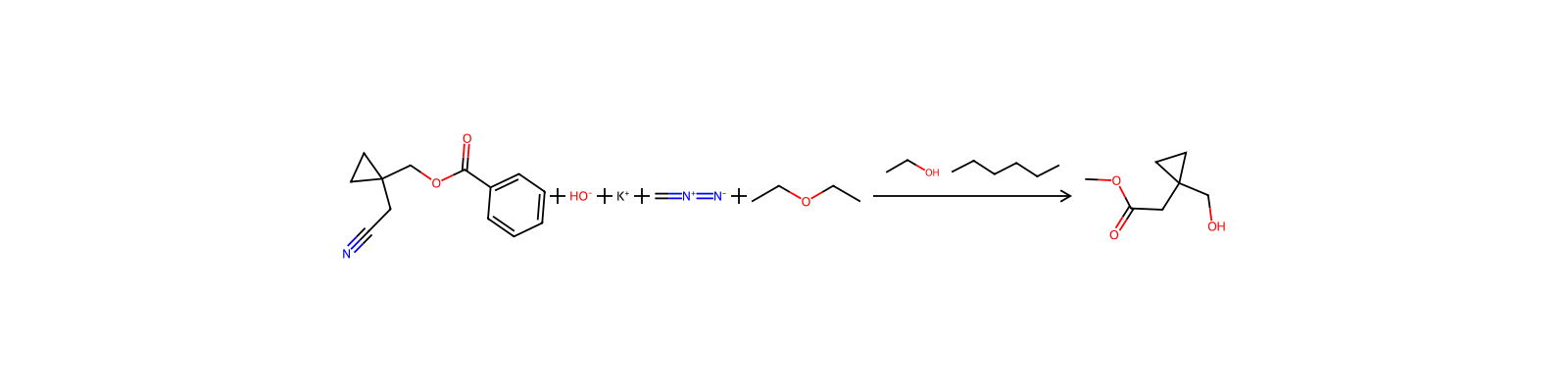
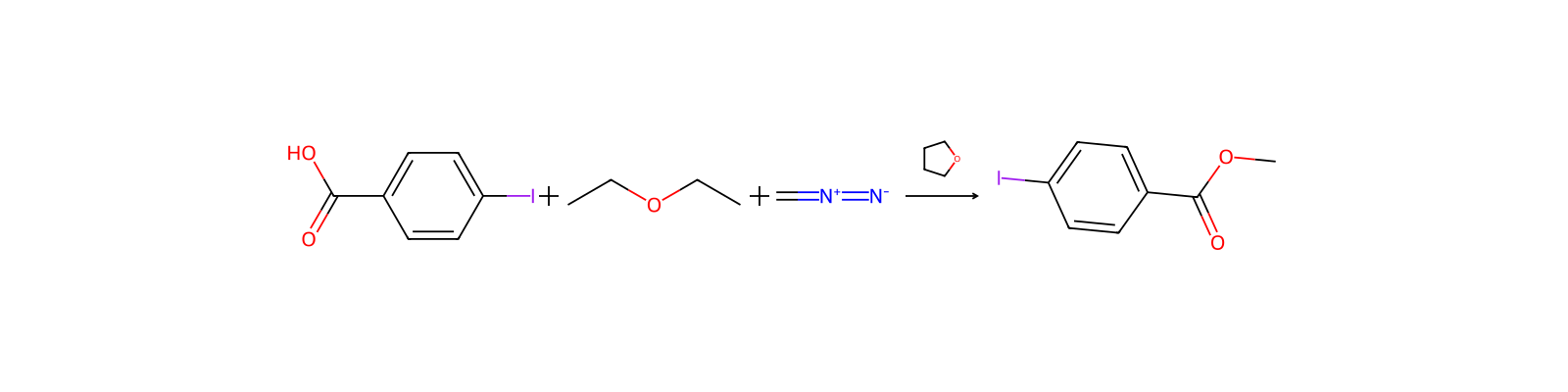
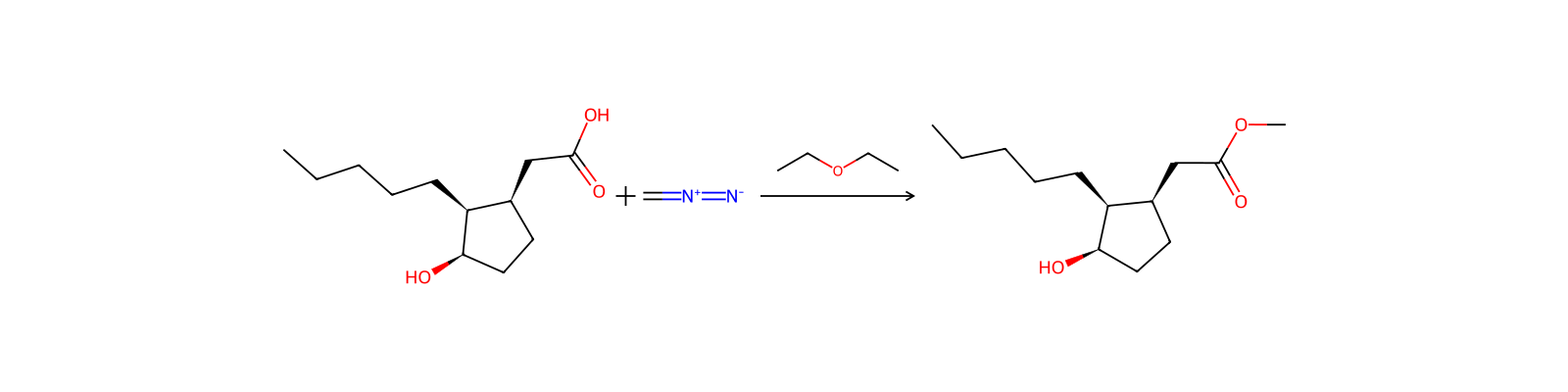
Diazomethane is used as a methylating agent for acidic compounds such as carboxylic acids, phenols, and enols.

Diazomethane is used as a methylating agent for acidic compounds. An explosive, it is not manufactured for distribution. [ACGIH] Because of its toxicity and its explosive nature, diazomethane is freshly prepared in situ and used in solution of ether or dioxane. [ICSC]

Powerful methylating agent for acidic compounds such as carboxylic acids, phenols, enols.

Methods of Manufacturing · 3건

REACTION OF N-NITROSOMETHYL-P-TOLUENESULFONAMIDE WITH AN ALKALI SUCH AS POTASSIUM HYDROXIDE OR POTASSIUM CARBONATE

Ether solns of diazomethane: From N-nitroso-beta-methylaminoisobutyl methyl ketone in ether and isopropanol by reaction with sodium isopropoxide or from the same ketone in ether by reaction with sodium cyclohexoxide; ... By potassium hydroxide saponification of nitrosomethylurea in ether; ... or of nitrosomethylurethan in ether. /Ether solutions of diazomethane/

Prepared from chloroform and hydrazine by reaction with potassium hydroxide; ... from potassium hydroxide and nitrosomethylurea. /Gaseous diazomethane/

General Manufacturing Information · 4건

Diazomethane generators are generally used to produce this compound in situ for laboratory use.

Because of its toxicity and its explosive nature, diazomethane is not manufactured for distribution and sale. When used as methylating agent in the laboratory, it is produced and used in situ. Thus, there is no available information on technical products and impurities.

In the laboratory diazomethane may be prepared most simply by the action of alkali on the commercially available N-methyl-N-nitroso-N'-nitroguanidine.

One USA company offers a self-contained reaction kit for generating ether solutions of diazomethane as needed without exposing the user to the diazomethane or to the N-nitrosomethyl-p-toluenesulfonamide.

응용 분야 · 2건

용도Powerful methylating agent for acidic Compounds such as carboxylic acids, phenols, enols. For syntheses with diazomethane see the reviews by Smith, Chem. Rev. 23, 193 (1938); Eistert, Z. Angew. Chem. 54, 99, 124 (1941) translated by Spangler in Newer Methods of Preparative Organic Chemistry (New York, 1948) p 513; J. S. Pizey, Synthetic Reagents vol. 2 (John Wiley, New York, 1974) pp 65-142.

관련 반응

1,661건
반응 기록 만들기
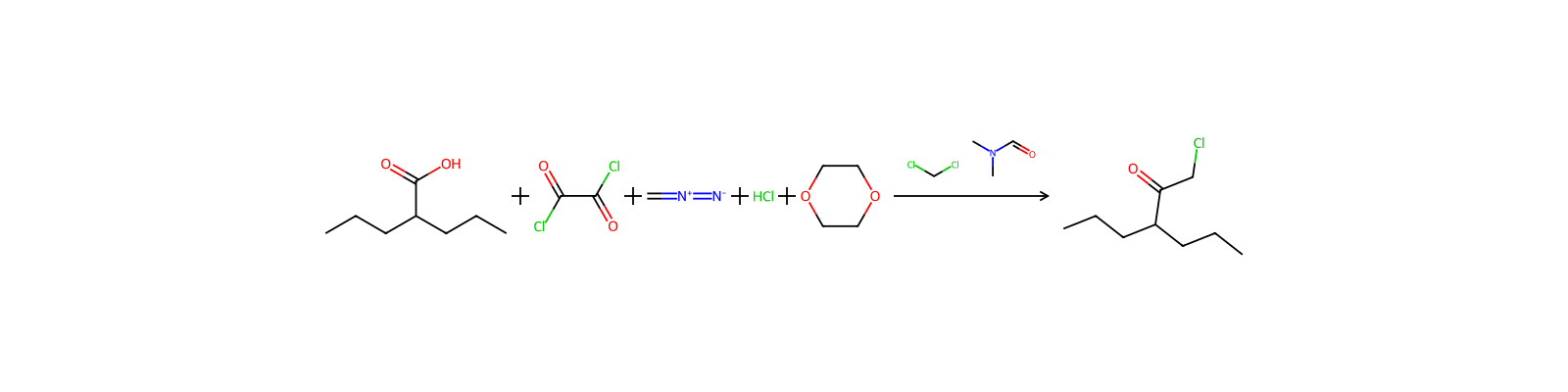
HRID 1729 반응식
HRID 1729반응물로uspto-grants-1998_03
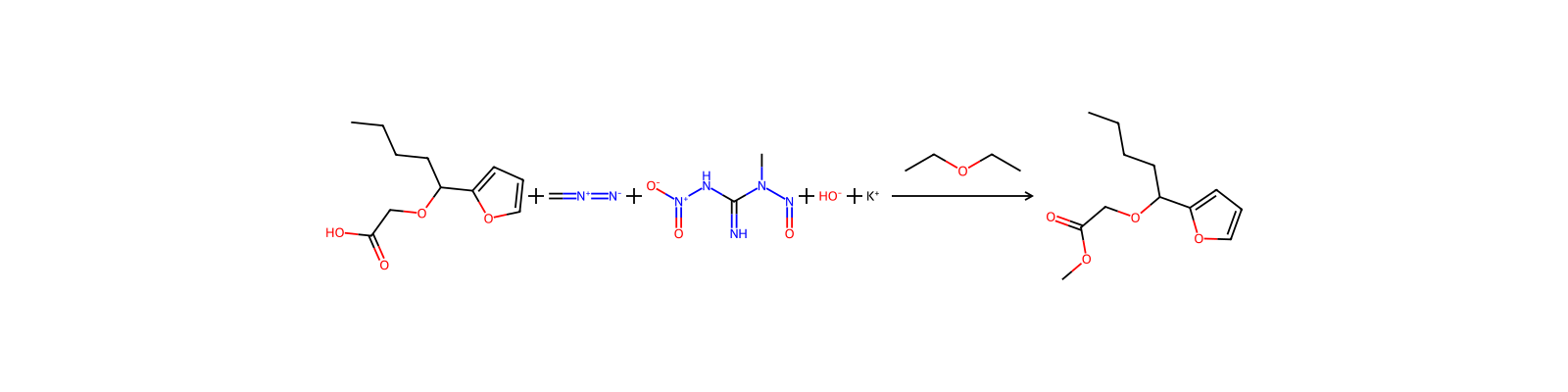
HRID 2370 반응식
HRID 2370반응물로uspto-grants-1998_03
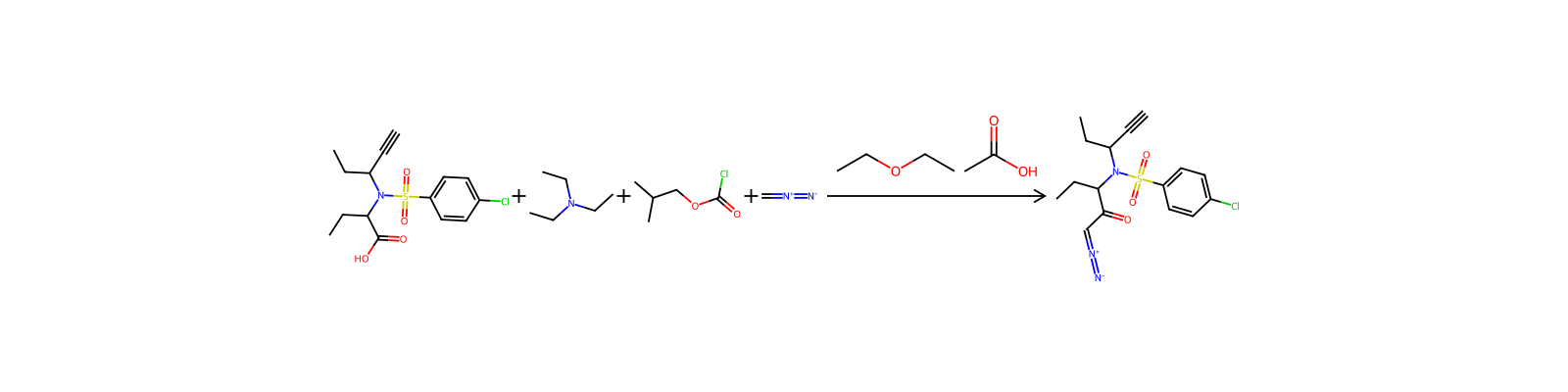
HRID 3002 반응식
HRID 3002반응물로uspto-grants-1998_03
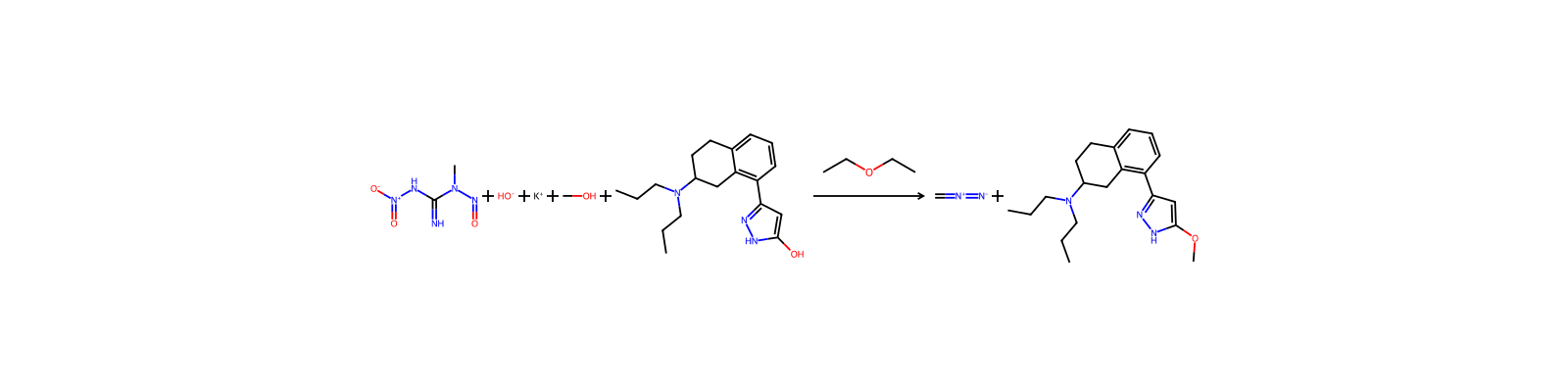
HRID 3777 반응식
HRID 3777반응물로uspto-grants-1988_02
HRID 5561 반응식
HRID 5561반응물로uspto-grants-1993_09
HRID 15727 반응식
HRID 15727반응물로uspto-grants-2010_06
HRID 22137 반응식
HRID 22137생성물로uspto-grants-1995_06
HRID 22427 반응식
HRID 22427반응물로uspto-grants-1995_06
1 / 208 페이지

화합물 노트

불러오는 중…

이 페이지에서기본 정보개요이름 및 식별자물성안전 및 규제화학 및 산업관련 반응화합물 노트
더보기
새 노트새 반응견적 요청하기

-9 °F at 760 mmHg (NIOSH, 2024)

-23 °C

-23 °C

-9 °F

-23 °C @760 [mm Hg]

-9 °F

Decomposition · 2건

WHEN HEATED TO DECOMPOSITION ... EMITS HIGHLY TOXIC FUMES OF /NITROGEN OXIDES./ SRP: DIAZOMETHANE DOES NOT NEED TO DECOMPOSE TO EMIT TOXIC FUMES.

Copper powder causes active decomposition with the evolution of nitrogen and the formation of insoluble white flakes of polymethylene.

Melting Point · 6건

-229 °F (NIOSH, 2024)

-145 °C

-145 °C

-229 °F

-145 °C

-229 °F

물리화학적 성질

녹는점
-145 ° · -145°
끓는 점
-23 ° · bp -23°
밀도
1.45 g/cm3 · 1.45 g/cm3
굴절률
1.418 · 1.4180 (estimate)
물리적 상태
황색가스
냄새
곰팡이 냄새(허용되는 임계값 없음)
비열
1.25 J/ · Cp(gas): 1.25 J/(g·K), at 25℃
EPA
Diazomethane (334-88-3)

화학적 성질

Diazomethane is a flammable, yellow gas or a liquid under pressure. Musty odor.

Reactive GroupAzo, Diazo, Azido, Hydrazine, and Azide Compounds
EC ClassificationSymbol: T; R: 45; S: 53-45
Reactivity AlertsExplosive
OSHA StandardsPermissible Exposure Limit: Table Z-1 8-hr Time Weighted Avg: 0.2 ppm (0.4 mg/cu m).
Reactivity Profile · 1건

DIAZOMETHANE undergoes violent thermal decomposition. Above 200 °C. the vapors may explode violently if rough glass surfaces are present. Explosions at low temperatures can occur if traces of organic matter are present. [J. Phys. Chem. 35:1403(1931)]. Produces explosions with alkali metals. Reacts with copper powder and to some extent all solid surfaces to produce nitrogen and solid white polymethylene. Reacts with dimethylaminodimethylarsine and trimethyltin in ether with vigorous foaming.

Atmospheric Standards · 1건

Listed as a hazardous air pollutant (HAP) generally known or suspected to cause serious health problems. The Clean Air Act, as amended in 1990, directs EPA to set standards requiring major sources to sharply reduce routine emissions of toxic pollutants. EPA is required to establish and phase in specific performance based standards for all air emission sources that emit one or more of the listed pollutants. Diazomethane is included on this list.

Chemical Dangers · 1건

May decompose explosively on shock, friction or concussion. May explode on heating at 100 °C or on contact with rough surfaces or if impurities or solids are present in the undiluted liquid or in the concentrated solutions or under high intensity lighting. Contact with alkali metals and calcium sulfate causes explosion.

안전 및 보호

Fire Fighting · 2건

Excerpt from ERG Guide 119 [Gases - Toxic - Flammable]:

Shut off supply; if not possible and no risk to surroundings, let the fire burn itself out. In other cases extinguish with powder, carbon dioxide. Combat fire from a sheltered position.

First Aid Measures · 4건

Fresh air, rest. Half-upright position. Artificial respiration may be needed. Refer immediately for medical attention.

ON FROSTBITE: rinse with plenty of water, do NOT remove clothes. Refer immediately for medical attention. Wear protective gloves when administering first aid.

First rinse with plenty of water for several minutes (remove contact lenses if easily possible), then refer for medical attention. Keep rinsing during transport for medical attention.

Unlikely under occupational conditions.

First Aid · 2건

Excerpt from NIOSH Pocket Guide for Diazomethane:

(General first aid procedures)

Safe StorageSolutions of diazomethane should not be stored.
Firefighting Hazards... Vapors may travel long distances to ignition sources and flashback. Vapors in confined areas may explode when exposed to fire. Containers may explode in fire. ...
Fire Fighting Procedures · 2건

If material /is/ on fire or involved in /a/ fire use dry chemical, dry sand, or carbon dioxide. Do not use water on material itself. If large quantities of combustibles are involved, use water in flooding quantities as spray and fog. Use water spray to knock-down vapors. Cool all affected containers with flooding quantities of water. Apply water from as far a distance as possible.

Fires involving diazomethane should be fought upwind from the maximum distance possible. Diazomethane will explode in a fire. The fire area should be evacuated immediately. Keep unnecessary people away; isolate the hazard area and deny entry. Vapors may travel to a source of ignition and flash back. Vapors are an explosion and poison hazard indoors, outdoors, or in sewers.

Storage Conditions · 3건

Diazomethane should be stored in a cool, dry, well-ventilated area in tightly sealed containers that are labeled in accordance with OSHA's Hazard Communication Standard. Containers of diazomethane should be protected from shock, heat, sparks, open flames and physical damage and should be stored separately from alkali metals, calcium sulfate, calcium chloride, boiling stones, or copper powder. Outside or detached storage is preferred. Empty containers of diazomethane should be handled appropriately.

Because of its toxicity and its explosive nature, diazomethane is freshly prepared in situ and used in solution of ether or dioxane. ...

... Diazomethane must be stored to avoid contact with alkali metals , such as lithium, sodium, or potassium; or drying agents such as calcium sulfate, since violent reactions occur. Safety barriers or shields should be used to protect workers from accidental explosions. ...

Cleanup Methods · 2건

In the event of a spill or leak involving diazomethane, persons not wearing protective equipment and clothing should be restricted from contaminated areas until cleanup has been completed. The following steps should be undertaken following a spill or leak: Notify safety personnel. Remove all sources of heat and ignition. Ventilate potentially explosive atmospheres. Provide and require the use of fully-encapsulating, vapor-protective clothing and equipment for cleanup personnel. If possible without risk, stop flow of gas. If source of leak is a cylinder and cannot be stopped in place, remove the leaking cylinder to a safe place in the open air, and repair leak or allow cylinder to empty. If the leak is in the liquid form, allow diazomethane to evaporate.

Decompose chemically with ceric ammonium nitrate under constant agitation and cooling.

Nonfire Spill ResponseExcerpt from ERG Guide 119 [Gases - Toxic - Flammable]:
Disposal Methods · 3건

SRP: The most favorable course of action is to use an alternative chemical product with less inherent propensity for occupational harm/injury/toxicity or environmental contamination. Recycle any unused portion of the material for its approved use or return it to the manufacturer or supplier. Ultimate disposal of the chemical must consider: the material's impact on air quality; potential migration in soil or water; effects on animal and plant life; and conformance with environmental and public health regulations.

SRP: Wastewater from contaminant suppression, cleaning of protective clothing/equipment, or contaminated sites should be contained and evaluated for subject chemical or decomposition product concentrations. Concentrations shall be lower than applicable environmental discharge or disposal criteria. Alternatively, pretreatment and/or discharge to a permitted wastewater treatment facility is acceptable only after review by the governing authority and assurance that "pass through" violations will not occur. Due consideration shall be given to remediation worker exposure (inhalation, dermal and ingestion) as well as fate during treatment, transfer and disposal. If it is not practicable to manage the chemical in this fashion, it must be evaluated in accordance with EPA 40 CFR Part 261, specifically Subpart B, in order to determine the appropriate local, state and federal requirements for disposal.

DIAZOMETHANE MAY BE DISPOSED OF BY BURNING AT SAFE LOCATION OR IN SUITABLE COMBUSTION CHAMBER EQUIPPED WITH AN APPROPRIATE EFFLUENT GAS CLEANING DEVICE.

Spillage DisposalEvacuate danger area! Consult an expert! Ventilation. Personal protection: complete protective clothing including self-contained breathing apparatus.
Preventive Measures · 5건

EXPLOSIVE (USE SAFETY SCREEN), INSIDIOUS POISON (WELL-VENTILATED HOOD IS ABSOLUTELY NECESSARY), AVOID VAPOR.

If material /is/ not on fire and not involved in /a/ fire, keep sparks, flames, and other sources of ignition away. Keep material out of water sources and sewers. Build dikes to contain flow as necessary. Use water spray to knock-down vapors. Do not use water on material itself. Neutralize spilled material with crushed limestone, soda ash, or lime.

Avoid breathing vapors. Keep upwind. Avoid bodily contact with the material. Do not handle broken packages unless wearing appropriate personal protective equipment. Wash away any material which may have contacted the body with copious amounts of water or soap and water. If contact with the material anticipated, wear appropriate chemical protective clothing.

If diazomethane contacts the skin, workers should flush the affected areas immediately with plenty of water, followed by washing with soap and water. Clothing contaminated with diazomethane should be removed immediately, and provisions should be made for the safe removal of the chemical from the clothing. Persons laundering the clothes should be informed of the hazardous properties of diazomethane, particularly its potential for causing severe irritation.

For more Preventive Measures (Complete) data for DIAZOMETHANE (9 total), please visit the HSDB record page.

독성 정보

InteractionsNO VANCOMYCIN WAS ADSORBED TO CELL WALLS /OF BACILLUS SUBTILIS W23/ THAT HAD BEEN ESTERIFIED BY TREATMENT WITH DIAZOMETHANE.
Target OrgansEyes, respiratory system
Environmental Fate · 3건

TERRESTRIAL FATE: Since diazomethane is a gas and undergoes rapid hydrolysis with water, volatilization from soil is not relevant. Similarly, adsorption to soil and biodegradation are not expected due to the rapid rate of decomposition under environmental conditions. (SRC)

AQUATIC FATE: Since diazomethane is a gas and undergoes rapid hydrolysis with water, volatilization from water is not relevant. Similarly, hydrolysis, adsorption to sediments, bioconcentration, and biodegradation are not expected due to the rapid rate of decomposition under environmental conditions. (SRC)

ATMOSPHERIC FATE: According to a model of gas/particle partitioning of semivolatile organic compounds in the atmosphere(1), diazomethane, which has an estimated vapor pressure of 3.94X10+3 mm Hg at 25 °C(SRC), determined from a fragment constant method(2), is expected to exist solely as a gas. Gas-phase diazomethane will undergo rapid hydrolysis with atmospheric water vapor but may also be degraded by reaction with photochemically-produced hydroxyl radicals at a much slower rate(SRC); the half-life for this reaction in air is estimated to be 16 days(SRC), calculated from its rate constant of 9.34X10⁻¹³ cu cm/molecule-sec at 25 °C(SRC) that was derived using a structure estimation method(3). The rate constant for the gas-phase reaction of diazomethane with ozone was 3.3X10⁻¹⁷ cu cm/molecule-sec(4). Diazomethane does not contain chromophores that absorb at wavelengths >290 nm(5), and therefore is not expected to be susceptible to direct photolysis by sunlight(SRC).

Adverse EffectsDermatotoxin - Skin burns.
Exposure Routes · 2건

The substance can be absorbed into the body by inhalation.

inhalation, skin and/or eye contact (liquid)

Signs and Symptoms · 4건

Sore throat. Headache. Laboured breathing. Shortness of breath. Nausea. Vomiting. Symptoms may be delayed.

Redness. Pain. Skin burns. Burning sensation. ON CONTACT WITH LIQUID: FROSTBITE.

Burning sensation. Redness. Pain. Burns. Loss of vision. ON CONTACT WITH LIQUID: FROSTBITE.

irritation eyes; cough, short breath; headache, lassitude (weakness, exhaustion); flush skin, fever; chest pain, pulmonary edema, pneumonitis; asthma; liquid: frostbite

EPA IRIS InformationDiazomethane
Medical Surveillance · 5건

Medical Screening: Workers who may be exposed to chemical hazards should be monitored in a systematic program of medical surveillance that is intended to prevent occupational injury and disease. The program should include education of employers and workers about work-related hazards, early detection of adverse health effects, and referral of workers for diagnosis and treatment. The occurrence of disease or other work-related adverse health effects should prompt immediate evaluation of primary preventive measures (e.g., industrial hygiene monitoring, engineering controls, and personal protective equipment). A medical surveillance program is intended to supplement, not replace, such measures. To detect and control work-related health effects, medical evaluations should be performed (1) before job placement, (2) periodically during the term of employment, and (3) at the time of job transfer or termination.

Pre-placement medical evaluation: Before a worker is placed in a job with a potential for exposure to diazomethane, a licensed health care professional should evaluate and document the worker's baseline health status with thorough medical, environmental, and occupational histories, a physical examination, and physiologic and laboratory tests appropriate for the anticipated occupational risks. These should concentrate on the function and integrity of the eyes, skin, and respiratory tract. Medical surveillance for respiratory disease should be conducted using the principles and methods recommended by the American Thoracic Society. A pre-placement medical evaluation is recommended to assess medical conditions that may be aggravated or may result in increased risk when a worker is exposed to diazomethane at or below the prescribed exposure limit. The health care professional should consider the probable frequency, intensity, and duration of exposure as well as the nature and degree of any applicable medical condition. Such conditions (which should not be regarded as absolute contraindications to job placement) include a history and other findings consistent with diseases of the eyes, skin, or respiratory tract.

Periodic medical evaluations: Occupational health interviews and physical examinations should be performed at regular intervals during the employment period, as mandated by any applicable Federal, State, or local standard. Where no standard exists and the hazard is minimal, evaluations should be conducted every 3 to 5 years or as frequently as recommended by an experienced occupational health physician. Additional examinations may be necessary if a worker develops symptoms attributable to diazomethane exposure. The interviews, examinations, and medical screening tests should focus on identifying the adverse effects of diazomethane on the eyes, skin, or respiratory tract. Current health status should be compared with the baseline health status of the individual worker or with expected values for a suitable reference population.

Termination medical evaluations: The medical, environmental, and occupational history interviews, the physical examination, and selected physiologic or laboratory tests that were conducted at the time of placement should be repeated at the time of job transfer or termination to determine the worker's medical status at the end of his or her employment. Any changes in the worker's health status should be compared with those expected for a suitable reference population.

Soil Adsorption/MobilityDiazomethane is a gas and undergoes rapid hydrolysis with water; therefore, adsorption is not expected to be an important environmental fate process. (SRC)
Human Toxicity Excerpts · 5건

/SIGNS AND SYMPTOMS/ ON SKIN ... /IT/ CAUSES SEVERE, DELAYED INFLAMMATORY REACTION.

/SIGNS AND SYMPTOMS/ ... Inhalation can cause severe lung damage with symptoms of coughing, chest pain, shortness of breath, fever and fatigue. Exposure to the gas or liquid can cause severe skin burns and eye damage. Contact with liquid can cause frostbite.

/SIGNS AND SYMPTOMS/ The toxic effects of diazomethane advance insidiously. Diazomethane exposure has caused irritation of the eyes, dizziness, denudation of mucus membranes, and sensitization in laboratory workers. Chest pain, fever, and sever asthmatic attacks have been reported

/SIGNS AND SYMPTOMS/ Inhalation of diazomethane by man, depending on degree of exposure caused chest pains, asthmatic symptoms, cough and fever, fulminating pneumonia, moderate cyanosis, shock and death.

For more Human Toxicity Excerpts (Complete) data for DIAZOMETHANE (12 total), please visit the HSDB record page.

Artificial Pollution Sources · 1건

Diazomethane's production and use as a powerful methylating agent for acidic compounds such as carboxylic acids, phenols, enols(1) used in synthetic organic transformations may result in its release to the environment through various waste streams(SRC).

Environmental BiodegradationDiazomethane is a gas and reacts rapidly with water; therefore biodegradation is not expected to be an important environmental fate process. (SRC)

규제 정보

Atmospheric Standards · 1건

Listed as a hazardous air pollutant (HAP) generally known or suspected to cause serious health problems. The Clean Air Act, as amended in 1990, directs EPA to set standards requiring major sources to sharply reduce routine emissions of toxic pollutants. EPA is required to establish and phase in specific performance based standards for all air emission sources that emit one or more of the listed pollutants. Diazomethane is included on this list.

CERCLA Reportable Quantities · 1건

Persons in charge of vessels or facilities are required to notify the National Response Center (NRC) immediately, when there is a release of this designated hazardous substance, in an amount equal to or greater than its reportable quantity of 100 lb or 45.4 kg. The toll free number of the NRC is (800) 424-8802. The rule for determining when notification is required is stated in 40 CFR 302.4 (section IV.D.3.b).

안전 데이터

OEB
C
OEL
TWA: 0.2 ppm (0.4 mg/m3)
IDLA
2 ppm
ridadr
1953
독성
LCLO inhal (cat) 175 ppm (10 min)PEL (OSHA) 0.2 ppm (0.4 mg/m3)TLV-TWA (ACGIH) 0.2 ppm (0.4 mg/m3)
risk_code
45
hazard_code
T
safety_code
53-45
위험 등급
2.3
기존화학 물질
KE-05-0438
자연 발화 온도
150 °C; impure material explodes at lower temperature
유해 물질 데이터
334-88-3(Hazardous Substances Data)

일반 설명Yellow gas with a musty odor. Highly toxic by inhalation Shipped as a liquid under pressure.

상·하류 제품 정보

하류 제품

Dacthal시클로프로필카르비놀2-Bromo-1-(4,6-dimethoxypyrimidin-2-yl)ethanone티디아주론1-클로로-3-페닐아세톤2-Methoxy-3-sec-butyl pyrazine티오요소

추가 설명

정의ChEBI: The simplest diazo compound, in which a diazo group is attached to a methylene group.

Biological monitoring: Biological monitoring involves sampling and analyzing body tissues or fluids to provide an index of exposure to a toxic substance or metabolite. No biological monitoring test acceptable for routine use has yet been developed for diazomethane.