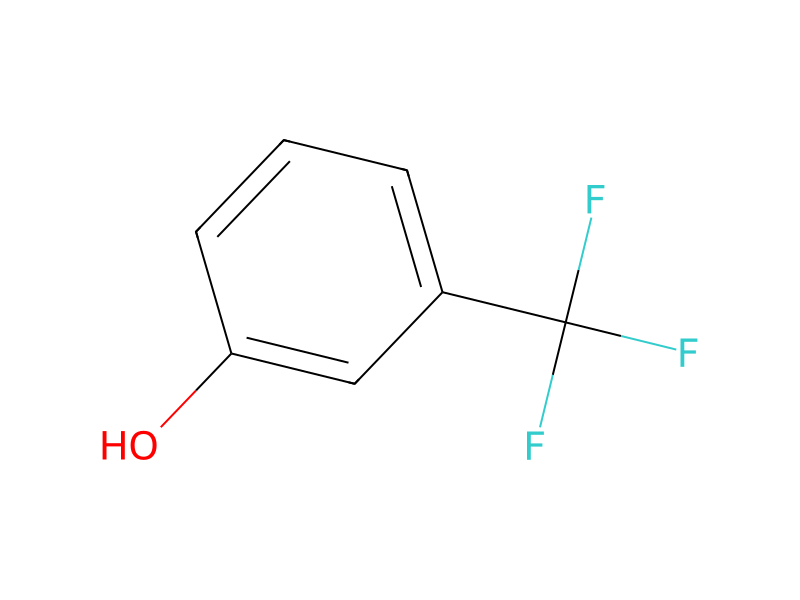
N-Diphenylmethyl-3-hydroxyazetidine hydrochloride (I) was prepared from benzhydrylamine and epichlorohydrin according to Anderson and Lok, J. Org. Chem., 37:3953 (1972). I (41.33 g, 0.15 mole) and triethylamine (42 ml, 0.30 mole) were stirred in toluene (250 ml) while methane sulfonylchloride (12 ml, 0.15 m) was added dropwise over 10 minutes with stirring and the temperature was maintained between 4° and 12° C. TLC (silica gel, 10% ethyl acetate in methylene chloride) at one hour showed all starting materials had reacted. The mixture was filtered to remove the triethylamine hydrochloride which was rinsed twice with toluene. The filtrate and washings combined to about 450 ml of solution. To this solution was added m-trifluoromethylphenol (27.5 g, 0.17 mole), tetrabutyl ammonium bromide (2.4 g), 50% sodium hydroxide (24 g, 0.3 mole) and water (24 ml) and the mixture was stirred vigorously and heated to reflux under nitrogen for 2.5 hr. The toluene layer of the mixture was separated and washed once with water, dried over sodium sulfate and evaporated to an oil. This oil was seeded and pumped on an oil pump overnight. A solid cake weighing 49.7 g was obtained. Some of this solid was dissolved in isopropanol with brief heating. Water was then added to cause slight cloudiness. The mixture was seeded and cooled to cause crystallization. The white solid was collected by filtration, washed with 50% aquous isopropanol, and dried under vacuum overnight. Proton NMR showed slight contamination by silicone oil, m.p. 82.5°-84° C.