반응식

C(O)(=O)C.C1(C=CC(O)=CC=1)O.C1(C=CC=C(O)C=1)O.C(OC(=O)CCCCCCC)(=O)CCCCCCC.C1(C=CC=C(O)C=1CCCCCCCC(O)=O)O.[C:58]([O:67][C:68]1[CH:73]=[CH:72][CH:71]=[C:70]([OH:74])[CH:69]=1)(=[O:66])[CH2:59][CH2:60][CH2:61][CH2:62][CH2:63][CH2:64][CH3:65]>C(OCC)(=O)C.CN(C)C1C=CN=CC=1.C(N(CC)CC)C>[C:58]([O:67][C:68]1[CH:73]=[CH:72][CH:71]=[C:70]([OH:74])[CH:69]=1)(=[O:66])[CH2:59][CH2:60][CH2:61][CH2:62][CH2:63][CH2:64][CH3:65]참가 물질
8
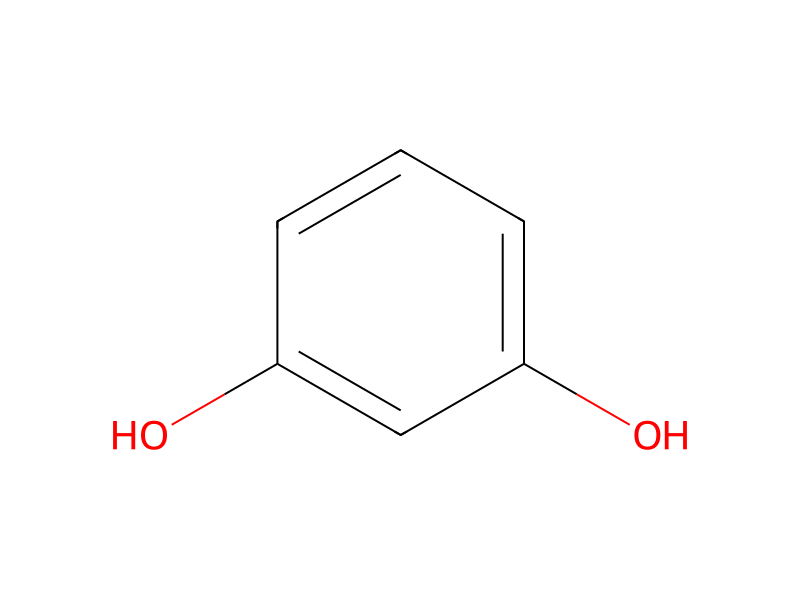





실험 절차
Adapting the method of synthesis disclosed in D. Johnston, "Preparation of Hydroquinone Monoacetate," Chemistry & Industry 24:1000 (1982) (which is incorporated herein by reference), it is expected that resorcinol may be combined with about an equimolar amount of dioctanoic acid anhydride, and ethyl acetate solvent, a non-nucleophilic solvent, in the presence of 4-dimethylaminopyridine, a catalyst, and a base, such as triethylamine, at room temperature, to produce the desired 1 octanoyloxy-3-hydroxy benzene (resorcinol monooctanoate).
후처리
- customthe method of synthesis
출처 및 근거
- ORD 기록
- ord-6ce8d7de2557459fa3c9e28bf34037b6
- 출처 데이터셋
- uspto-grants-1990_10
- 특허 번호
- US04964870
연결된 노트
불러오는 중…