반응식

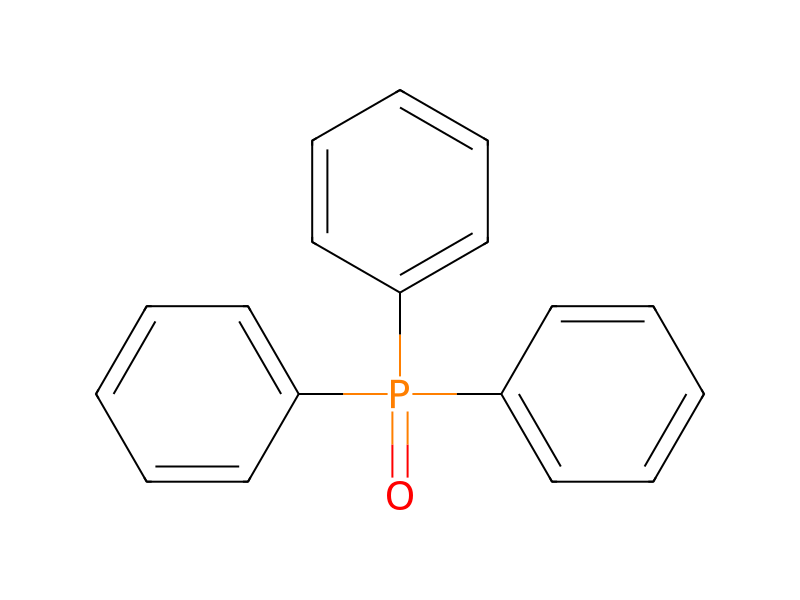
[C:1]1([P:7](=O)([C:14]2[CH:19]=[CH:18][CH:17]=[CH:16][CH:15]=2)[C:8]2[CH:13]=[CH:12][CH:11]=[CH:10][CH:9]=2)[CH:6]=[CH:5][CH:4]=[CH:3][CH:2]=1.C(Cl)(=O)C([Cl:24])=O.[C]=O.C(=O)=O>ClC1C=CC=CC=1>[Cl-:24].[Cl-:24].[C:14]1([P:7]([C:1]2[CH:2]=[CH:3][CH:4]=[CH:5][CH:6]=2)[C:8]2[CH:13]=[CH:12][CH:11]=[CH:10][CH:9]=2)[CH:15]=[CH:16][CH:17]=[CH:18][CH:19]=1참가 물질
6





실험 절차
In Example 1, 3.36 g (12 millimoles) of triphenylphosphine oxide and 1.54 g (12 millimoles) of oxalyl chloride were dissolved in 50 ml of monochlorobenzene, and the solution was left standing until the evolution of carbon monoxide and carbon dioxide from the solution was completed. A solution of 12 millimoles of triphenylphosphine dichloride in 50 ml of monochlorobenzene was obtained. That is, the conversion of triphenylphosphine oxide to triphenylphosphine dichloride was effected stoichiometrically.
후처리
- waitthe solution was left
출처 및 근거
- ORD 기록
- ord-85e2e41d84d5448dbd7d0bf27f7e2d13
- 출처 데이터셋
- uspto-grants-1981_11
- 특허 번호
- US04301301
연결된 노트
불러오는 중…