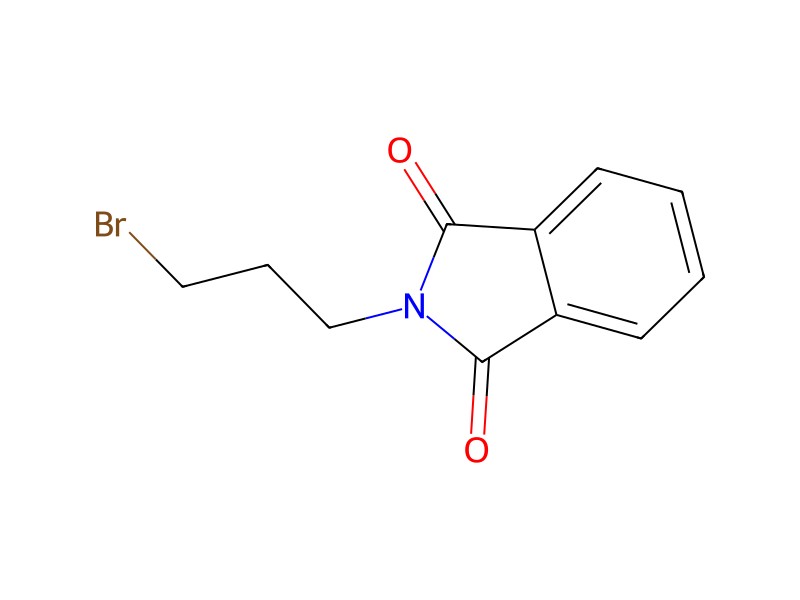
Combine 20.3 g (0.1 mol) N-[2-(cyclopentyl)ethyl] benzenemethanamine and 26.8 g (0.1 mol) of N-(3-bromopropyl)phthalimide in 100 mL of acetonitrile. Heat the reaction mixture at reflux and monitor the progress of the reaction by thin-layer chromatography on silica gel. At the completion of the reaction remove the solvent in vacuo. To the residue add 100 mL of ethanol and 15 g (0.3 mol) of hydrazine hydrate. Reflux the reaction mixture and follow the progress of the reaction by thin-layer chromatography on silica gel. At the completion of the reaction, cool the mixture and add 50 mL of 4N hydrochloric acid. Reflux the mixture for ca. 15 min. then cool to room temperature. Filter the resulting solid. Evaporate the filtrate in vacuo, then add 100 mL of 4N sodium hydroxide solution (pH 11). Extract the aqueous mixture with four 100 mL portions of methylene chloride. Combine the organic extracts and dry over anhydrous sodium sulfate. Remove the drying agent by filtration and evaporate the solvent in vacuo to obtain the title compound.