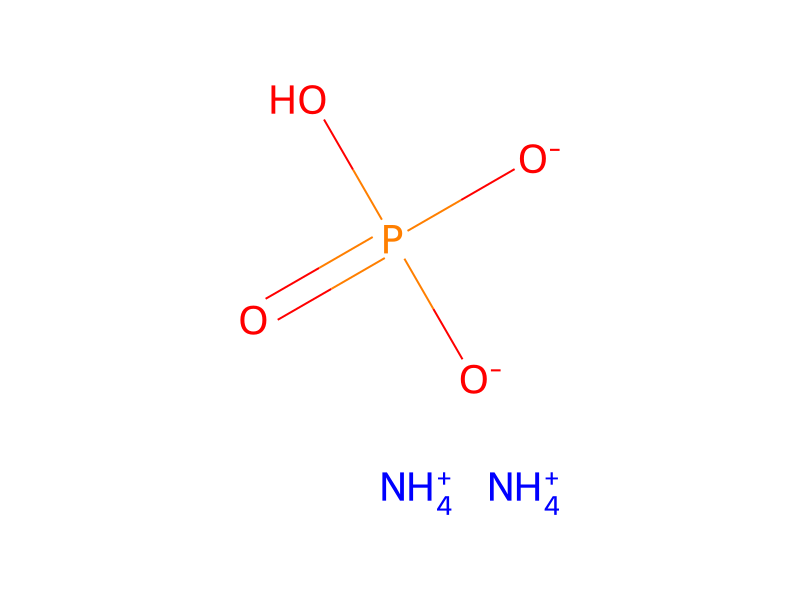
Diammonium hydrogen phosphate → 5-Bromo-3-cyanoindole
HRID 1177781
반응식

[Br:1][C:2]1[CH:3]=[C:4]2[C:8](=[CH:9][CH:10]=1)[NH:7][CH:6]=[C:5]2[CH:11]=O.P([O-])([O-])(O)=O.[NH4+:18].[NH4+]>[N+](CCC)([O-])=O.C(O)(=O)C>[Br:1][C:2]1[CH:3]=[C:4]2[C:8](=[CH:9][CH:10]=1)[NH:7][CH:6]=[C:5]2[C:11]#[N:18]참가 물질
5




실험 절차
A mixture of 5-bromo-indole-3-carboxaldehyde (5 g, 22.3 mmol), diammonium hydrogen phosphate (15.6 g, 31.8 mmol) in 1-nitropropane (66 mL) and acetic acid (22 mL) were heated at reflux for 16 h. After cooling to room temperature, the solvents were removed under reduced pressure and water added to the dark residue. After a short while, 5-bromo-1H-indole-3-carbonitrile precipitated rapidly. The solid was filtered, washed severally with water and dried for several hours to afford 4.3 g (86%) of the desired product. 1H-NMR (CD3OD) δ 7.40 (m, 2H), 7.77 (s, 1H), 7.97 (s, 1H). Mass spec.: 222.95 (MH)+.