L-Aspartic Acid → GlyTouCan:G36918VO
HRID 1198863
반응식

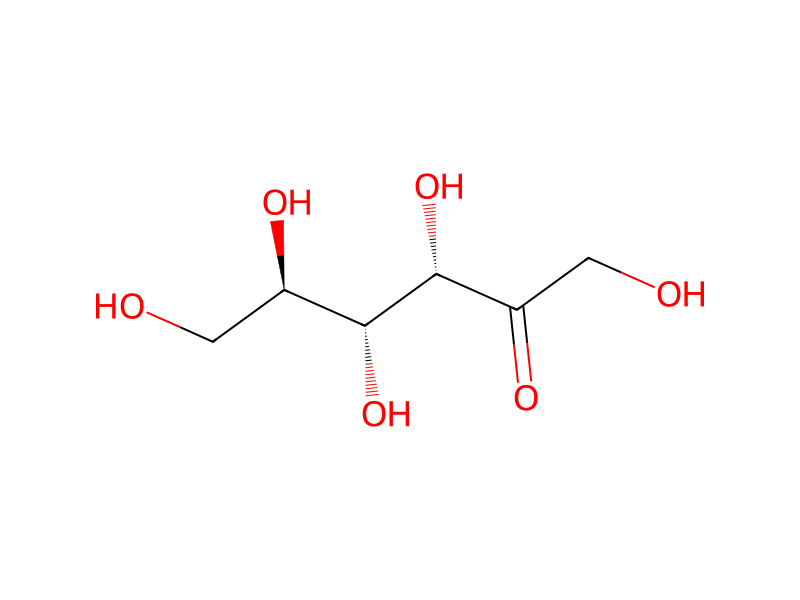
N[C@H](C(O)=O)CC(=O)O.C(O)(=O)CC(CC(O)=O)(C(O)=O)O.C([O-])(=O)CC(CC([O-])=O)(C([O-])=O)O.[Na+].[Na+].[Na+].[O:39]=[CH:40][C@@H:41]([C@H:43]([C@@H:45]([C@@H:47]([CH2:49][OH:50])[OH:48])[OH:46])[OH:44])[OH:42].[OH:51][CH2:52][C:53]([C@H:55]([C@@H:57]([C@@H:59]([CH2:61]O)[OH:60])[OH:58])[OH:56])=[O:54]>>[CH2:49]([OH:50])[C@H:47]1[O:48][C@H:40]([O:39][CH2:61][C@H:59]2[O:60][C:53]([OH:54])([CH2:52][OH:51])[C@@H:55]([OH:56])[C@@H:57]2[OH:58])[C@H:41]([OH:42])[C@@H:43]([OH:44])[C@@H:45]1[OH:46]참가 물질
5




실험 절차
6100 units of glucoamylase of Asp. niger origin were added to 5 ml of a reaction mixture of a citric acid-sodium citrate buffer (pH 4.5) containing 10% glucose and 30% fructose, and a reaction was carried out at 65° C. overnight. The yield of isomaltulose formed during the reaction was 46% in relation to the glucose added. Note, the isomaltulose was determined according to the following procedure: The reaction mixture was filtrated by a ultrafiltration membrane to eliminate proteins, and the filtrate was diluted 6 to 10 fold. One μl of the diluted sample was spotted on a thin layer Kiesel Gel 60F254 plate (Merck), and the plate was subjected to two-dimensional thin layer chromatography using, as a developing solution, a mixture of methyl ethyl ketone, 2-propanol, acetonitrile, 0.5 M boric acid, and 0.25 M isopropylamine dissolved in acetic acid (2:3:1:1), and a mixture of methyl ethyl ketone, dipropyl ether, 2-propanol, pyridine, water and pheny boric acid (2:1:3:1:2.4). The plate was then treated with a mixture of 2% diphenylamine and 2% aniline dissolved in acetone, and phosphoric acid (1:1:8.5) to detect the isomaltulose by color development. Further, the reaction mixture was analyzed by high performance liquid chromatography using Shodex DC 613 column or Shodex SZ 5532 column (Showa Denko, Japan)