반응식

[O:1]1[CH:6]=[CH:5][CH2:4][CH2:3][CH2:2]1.[C:7]([OH:11])(=[O:10])[CH:8]=[CH2:9]>C=CC1C=CN=CC=1.Cl.C1C2NC3C(=CC=CC=3)SC=2C=CC=1>[C:7]([O:11][CH:6]1[CH2:5][CH2:4][CH2:3][CH2:2][O:1]1)(=[O:10])[CH:8]=[CH2:9]참가 물질
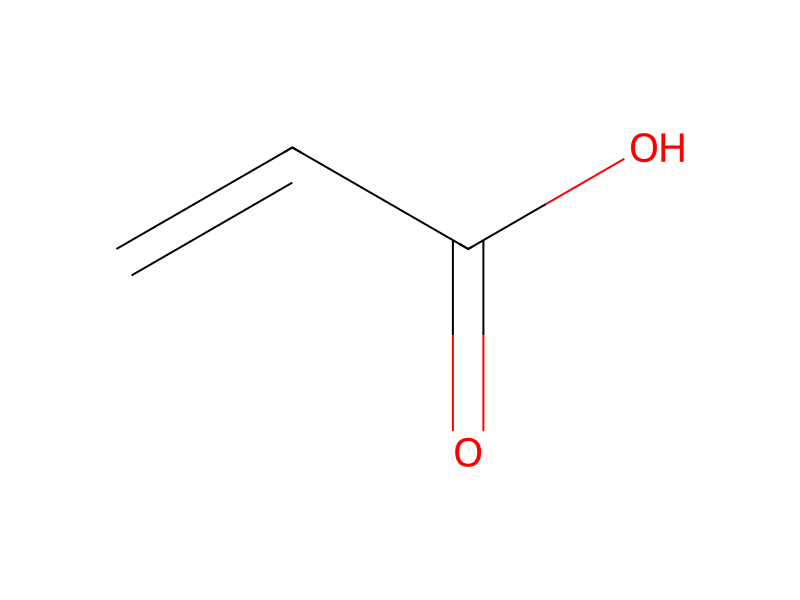


반응 조건
- 온도
- 65 °C
실험 절차
A mixture of 310 mL (2.75 mol) of 3,4-dihydro-2H-pyran, 99.1 g (94 mL, 1.38 mol) of acrylic acid, 5 g of crosslinked poly(4-vinylpyridine hydrochloride) (Fluka Chemical Corp., catalog number 82803, 6 meq/g), and 0.5 g of phenothiazine was warmed until an exothermic reaction caused the temperature to rise to 99° C. An ice bath was used to cool the mixture to 65° C., and the mixture was stirred at 65° C. for 18 hours. After cooling to room temperature, the mixture was filtered to remove the catalyst. NMR analysis of the filtrate showed the presence of 2-tetrahydropyranyl acrylate and 3,4-dihydro-2H-pyran with little or no acrylic acid. The mixture was stirred with anhydrous sodium carbonate and calcium hydride for 1 hour. After removal of excess 3,4-dihydro-2H-pyran in a rotary evaporator, distillation over calcium hydride, anhydrous sodium carbonate, and phenothiazine gave 136.6 g of 2-tetrahydropyranyl acrylate, b.p. 66°-70° C. (3.2 mm).
후처리
- temperaturewas warmed until an exothermic reaction
- customto rise to 99° C
- customAn ice bath was used
- temperatureAfter cooling to room temperature
- filtrationthe mixture was filtered
- customto remove the catalyst
- stirringThe mixture was stirred with anhydrous sodium carbonate and calcium hydride for 1 hour
- customAfter removal of excess 3,4-dihydro-2H-pyran
- customin a rotary evaporator, distillation over calcium hydride, anhydrous sodium carbonate, and phenothiazine
출처 및 근거
- ORD 기록
- ord-62514fc4013242ea8c0250cdb83885e9
- 출처 데이터셋
- uspto-grants-1991_12
- 특허 번호
- US05072029
연결된 노트
불러오는 중…