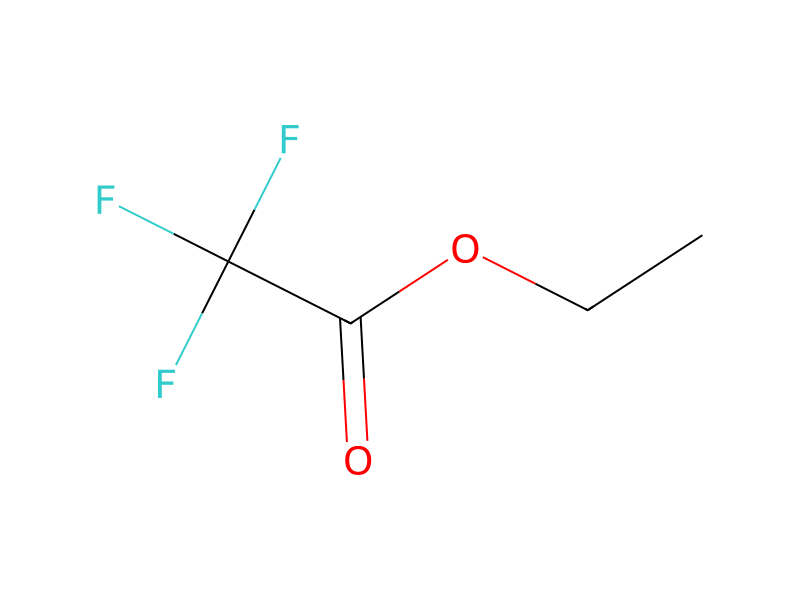
First, 1.8 g of ethyl trifluoroacetate and 50 mL of 1-butanol were put in a three-neck flask, and the air in the flask was replaced by nitrogen. After that, the mixture was stirred at 0° C. for 10 minutes, and 0.397 g of hydrazine monohydrate was dripped to the mixed solution. This mixed solution was stirred at 0° C. for 20 minutes, and then stirred at room temperature for 1 hour to be reacted. After the reaction, 3.0 g of N-[(ethylsulfanyl)phenylmethylidene]aniline was further added to the mixed solution, and the solution was heated and stirred at 120° C. for 5 hours to be reacted. The mixed solution after the reaction was cooled down to room temperature and filtered, so that filtrate was obtained. The obtained filtrate was concentrated to give a solid. This solid was washed with hexane, so that the triazole derivative HCF3ptz was prepared (yield: 26%). The synthesis scheme of Step 1 is shown by (a-2).