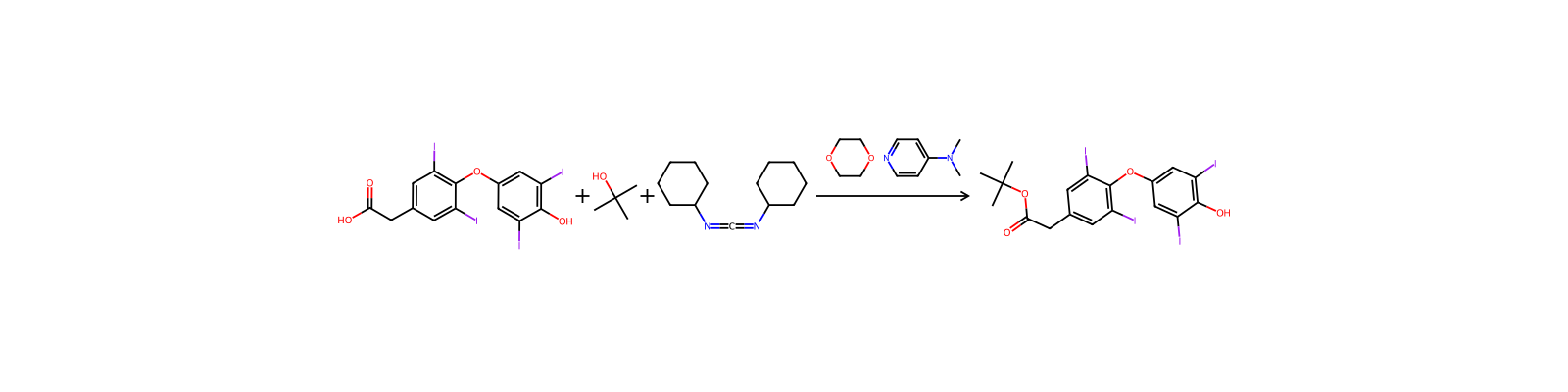
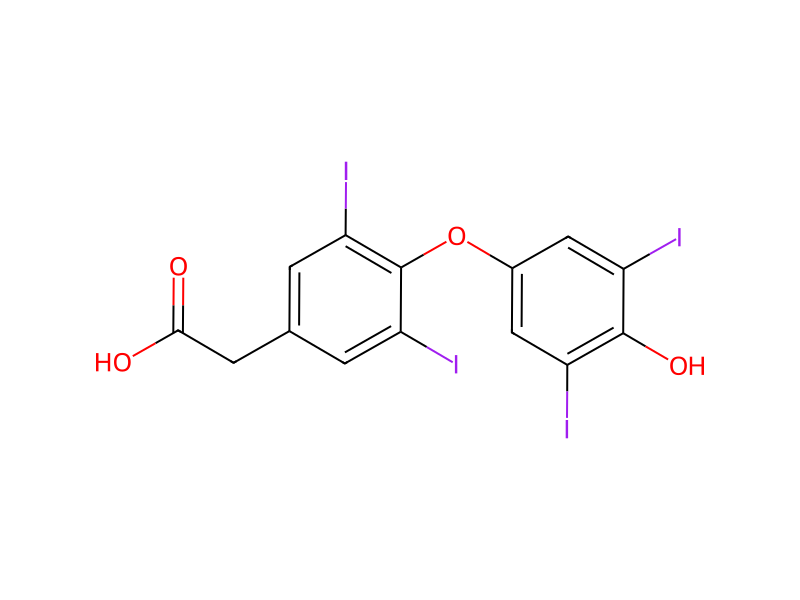
In anhydrous conditions, Tetrac (30.0 g, 40.1 mmol, 1.0 eq.) was dissolved in anhydrous dioxane (200 mL). Tert-butyl alcohol (11.4 mL, 120.3 mmol, 3.0 eq.) and 4-dimethylaminopyridine (3.9 g, 32.1 mmol, 0.8 eq.) were then added. The solution was stirred and dicyclohexylcarbodiimide (9.1 g, 44.1 mmol, 1.1 eq.) was added over a 5 minutes period. The mixture was stirred for 3 hours at room temperature. The cyclohexylurea that has precipitated was removed by filtration through a fritted Büchner funnel, and the filtrate was washed with 10% potassium bicarbonate solution (2×100 mL). During this procedure, some additional cyclohexylurea precipitated and was removed by filtration of both layers to facilitate their separation. The organic solution was then dried over magnesium sulfate, filtered and then evaporated with a rotary evaporator to obtain the crude product as a yellow powder which was purified by column chromatography (DCM/cyclohexane 90/10) to yield tert-butyl-2-(4-(4-hydroxy-3,5-diiodophenoxy)-3,5-diiodophenyl)acetate (3.2 g, 4.0 mmol) as a solid.