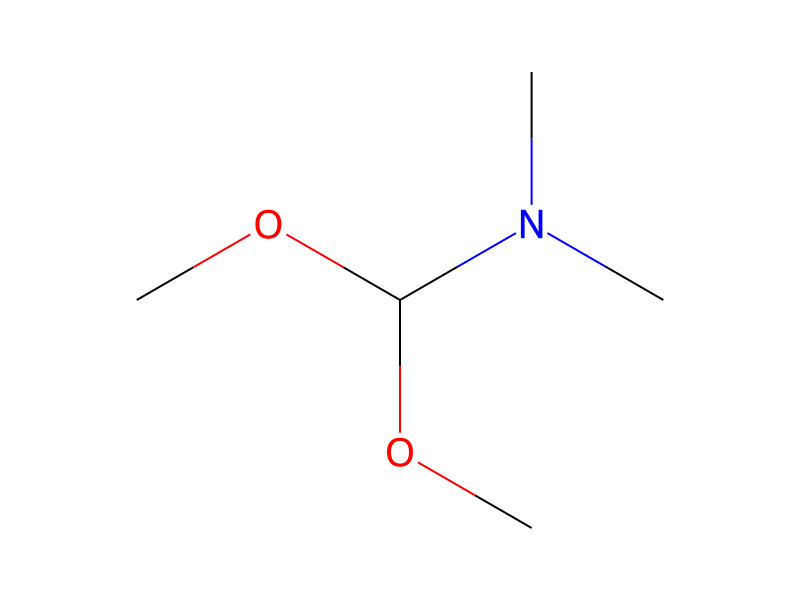
15.9 g (133.5 mmol) of dimethylformamide-dimethylacetal (under nitrogen) is added to 20.0 g (116.1 mmol) of 1,4,7,10-tetraazacyclododecane in 200 ml of absolute toluene. It is refluxed slowly and the solvent is distilled off in this way. Then, it is concentrated by evaporation under reduced pressure. The residue is cooled to 0° C. 16.6 g (139.32 mmol) of phenyl isocyanate is instilled under a nitrogen atmosphere and heated slowly to 100° C. It is stirred for 12 hours at this temperature. It is cooled to room temperature and a mixture of 160 ml of ethanol/40 ml of water is added. Then, it is stirred for 10 minutes at room temperature. Then, 18.58 g (464.4 mmol) of sodium hydroxide is added and it is stirred for 24 hours at 40° C. It is evaporated to dryness in a vacuum and the residue is taken up in 400 ml of water. The aqueous phase is extracted 5 times with 200 ml of methylene chloride, the organic phase is dried on magnesium sulfate and concentrated by evaporation in a vacuum. The residue is chromatographed on silica gel (mobile solvent=methyl-tert-butyl ether/methanol/conc. aqu. ammonia=6/3/1).