반응식

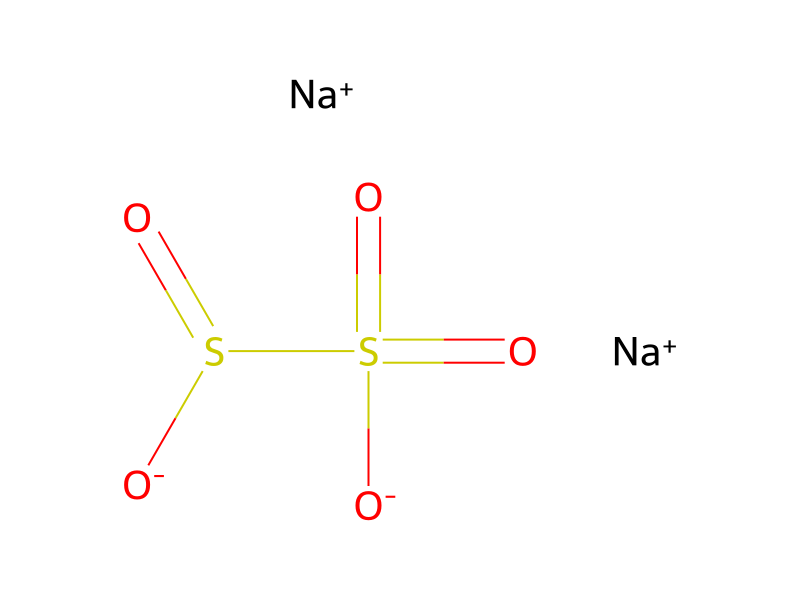
[Na].[SH:2][C:3]1[CH:8]=[CH:7][CH:6]=[CH:5][N+:4]=1[O-:9].S(S([O-])=O)([O-])(=O)=O.[Na+].[Na+].S([O-])([O-])(=O)=O.[Zn+2:24].[CH:25]1[CH:31]=[CH:30][N:29]([O-:32])[C:27](=[S:28])[CH:26]=1.[Na+]>>[CH:7]1[CH:6]=[CH:5][N:4]([O-:9])[C:3](=[S:2])[CH:8]=1.[CH:25]1[CH:31]=[CH:30][N:29]([O-:32])[C:27](=[S:28])[CH:26]=1.[Zn+2:24]참가 물질




반응 조건
- 온도
- 61.5 °C
실험 절차
A 12.0% aqueous solution of the sodium salt of 2-mercaptopyridine N-oxide (sodium pyrithione) containing 0.5% DARVAN 1 and 0.15% sodium meta bisulfite was heated to 58 to 65° C. This solution was fed continuously into a laboratory scale Nearfield Acoustical Processor (“NAP” Model NAP-1808) available commercially from Advanced Sonic Processing Systems, Woodbury, Conn.) at a rate of about 156 grams per minute. A second solution of 20% zinc sulfate at room temperature was fed into the acoustical processor at a rate of about 56 grams per minute to achieve a stoichiometric reaction with the sodium pyrithione solution. As the reactants moved through the acoustical unit, sonic energy having 16 kHz and 20 kHz and a power level of about 500 watts was applied to mix the reactants as they form the zinc pyrithione product. The resulting solid particles were isolated by filtration. After filtration, the particles were washed with cold water until free of contaminating salt as measured by conductivity.
후처리
- customat room temperature
- additionto mix the reactants as they
출처 및 근거
- ORD 기록
- ord-60fd8cd13088453786fe2ec90f825d1d
- 출처 데이터셋
- uspto-grants-2004_01
- 특허 번호
- US06682724B2
연결된 노트
불러오는 중…