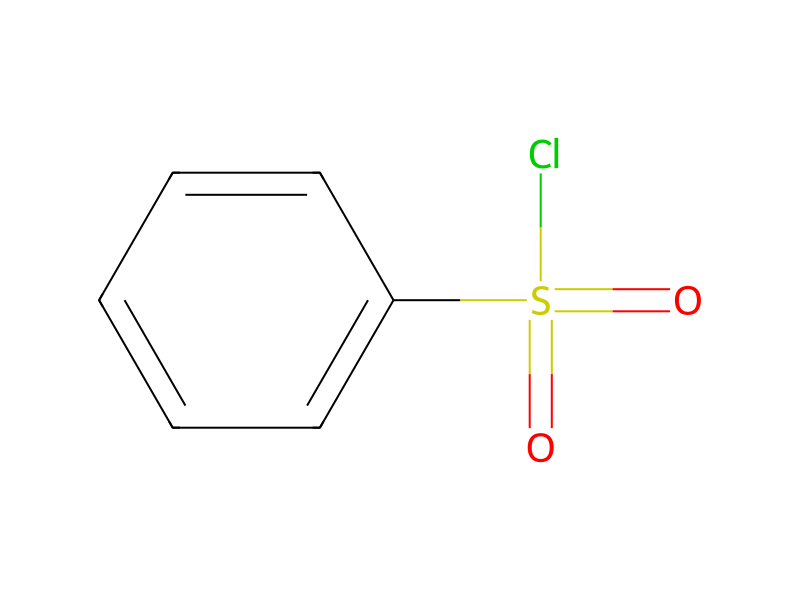
Cl.[NH2:2][CH2:3][CH2:4][C:5]1[CH:11]=[CH:10][C:8]([NH2:9])=[CH:7][CH:6]=1.Cl.O.[C:14]1([S:20](Cl)(=[O:22])=[O:21])[CH:19]=[CH:18][CH:17]=[CH:16][CH:15]=1>O1CCOCC1.N1C=CC=CC=1>[NH2:2][CH2:3][CH2:4][C:5]1[CH:11]=[CH:10][C:8]([NH:9][S:20]([C:14]2[CH:19]=[CH:18][CH:17]=[CH:16][CH:15]=2)(=[O:22])=[O:21])=[CH:7][CH:6]=1A solution of 4-(2-aminoethyl)aniline hydrochloride salt (10.0 g, 78 mmol) was dissolved in dioxane (200 mL) followed by the addition of 5 M HCl (14.6 ml) and water (25 ml). The solution was cooled in an ice bath and was treated quickly with benzenesulfonyl chloride (10.3 ml, 81 mmol). Pyridine (10 ml) was added and the solution stirred at ambient temperature for 16 h. The solvent was removed under reduced pressure and the residue was dissolved in water (300 ml) and washed with 3 portions of diethylether. The aqueous solution was treated with 80 ml of 5 N sodium hydroxide and was washed again with 3 portions of diethylether. The aqueous phase was adjusted to a pH of approximately 9 by the addition of 40 ml of 5N HCl. The solids were collected and dried. NMR, MS, EA.