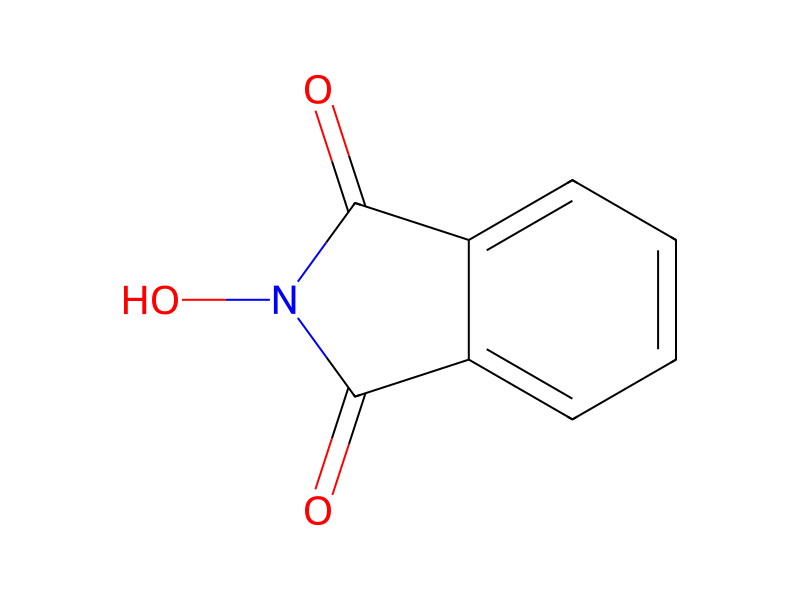
N(C(OC(C)C)=O)=NC(OC(C)C)=O.[CH2:15]([C:18]1[N:19]([CH2:31][CH2:32][CH2:33][OH:34])[C:20]2[C:29]3[N:28]=[CH:27][CH:26]=[CH:25][C:24]=3[N:23]=[CH:22][C:21]=2[N:30]=1)[CH2:16][CH3:17].C1(P(C2C=CC=CC=2)C2C=CC=CC=2)C=CC=CC=1.O[N:55]1[C:59](=[O:60])[C:58]2=[CH:61][CH:62]=[CH:63][CH:64]=[C:57]2[C:56]1=[O:65]>O1CCCC1.C(OCC)(=O)C.ClCCl>[CH2:15]([C:18]1[N:19]([CH2:31][CH2:32][CH2:33][O:34][N:55]2[C:59](=[O:60])[C:58]3[C:57](=[CH:64][CH:63]=[CH:62][CH:61]=3)[C:56]2=[O:65])[C:20]2[C:29]3[N:28]=[CH:27][CH:26]=[CH:25][C:24]=3[N:23]=[CH:22][C:21]=2[N:30]=1)[CH2:16][CH3:17]Diisopropyl azodicarboxylate (8.10 mL, 48.4 mmol) was added dropwise over ten minutes to a stirred solution of 3-(2-propyl-1H-imidazo[4,5-c][1,5]naphthyridin-1-yl)propan-1-ol (10.9 g, 40.3 mmol), triphenylphosphine (12.7 g, 48.4 mmol), and N-hydroxyphthalimide (7.89 g, 48.4 mmol) in tetrahydrofuran (160 mL) at 0° C. The reaction was allowed to warm to room temperature and was stirred overnight. The solvent was removed under reduced pressure to afford an oil that was dissolved in ethyl acetate (200 mL) and extracted with 2 M HCl (3×100 mL). The aqueous layers were combined, and solid sodium bicarbonate was added to adjust the pH to 7. A precipitate formed that was isolated by filtration and dissolved in dichloromethane (300 mL). The solution was dried over magnesium sulfate, filtered, and concentrated to afford 17.38 g of 2-[3-(2-propyl-1H-imidazo[4,5-c][1,5]naphthyridin-1-yl)propoxy]-1H-isoindole-1,3(2H)-dione as a tan solid.
불러오는 중…