Isoprene → Squalene
반응식

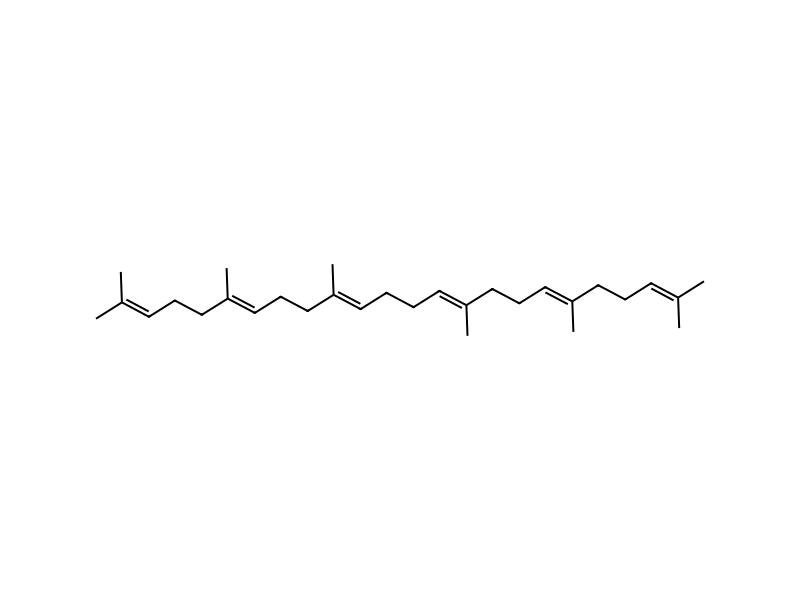
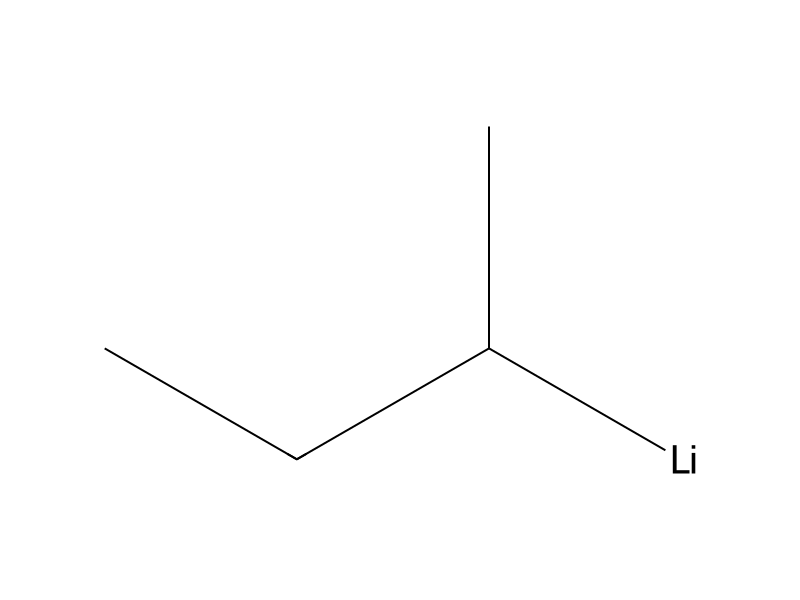
C=CC(=C)C.[CH3:6][CH:7]([CH2:9][CH2:10][CH2:11][CH:12]([CH2:14][CH2:15][CH2:16][CH:17]([CH2:19][CH2:20][CH2:21][CH2:22][CH:23]([CH2:25][CH2:26][CH2:27][CH:28]([CH2:30][CH2:31][CH2:32][CH:33]([CH3:35])[CH3:34])[CH3:29])[CH3:24])[CH3:18])[CH3:13])[CH3:8]>C([Li])(CC)C.C1C=C2C(C=C(C([O-])=O)C=C2)=CC=1.C1C=C2C(C=C(C([O-])=O)C=C2)=CC=1.[Ni+2].[Ni].C1CCCCC1>[CH3:35][C:33](=[CH:32][CH2:31][CH2:30]/[C:28](=[CH:27]/[CH2:26][CH2:25]/[C:23](=[CH:22]/[CH2:21][CH2:20]/[CH:19]=[C:17](/[CH2:16][CH2:15]/[CH:14]=[C:12](/[CH2:11][CH2:10][CH:9]=[C:7]([CH3:8])[CH3:6])\[CH3:13])\[CH3:18])/[CH3:24])/[CH3:29])[CH3:34]참가 물질





실험 절차
As the oligomer (D) represented by the formula: ##STR2## When m is 0 and R is ##STR3## is a hydrogenated product of polyisoprene. For obtaining a hydrogenated product of polyisoprene, it can be easily produced by carrying out anion polymerization of isoprene in a cyclohexane solution under the copresence of sec-butyl lithium catalyst and then hydrogenating the polymer in the presence of a nickel naphthenate catalyst. On the other hand, when m is 1, n and pare 2, and R is ##STR4## it is squalane obtained by hydrogenation of squalene with a nickel catalyst. Squalene which is a starting material of squalane is contained in liver oil of a deep sea shark, and it can be obtained by subjecting the unsaponified product of shark liver oil to fractional distillation, deacidification and further to fractional distillation in the presence of metallic sodium, or condensing farnesyl chloride or farnesyl bromide in the presence of metallic magnesium, or carrying out Wittig reaction on transgeraniol acetone.
후처리
- customcan be easily produced
출처 및 근거
- ORD 기록
- ord-0ae9cfcf42f54576a5cd4a03a0b92817
- 출처 데이터셋
- uspto-grants-1991_05
- 특허 번호
- US05018828
반응 노트
불러오는 중…