반응식

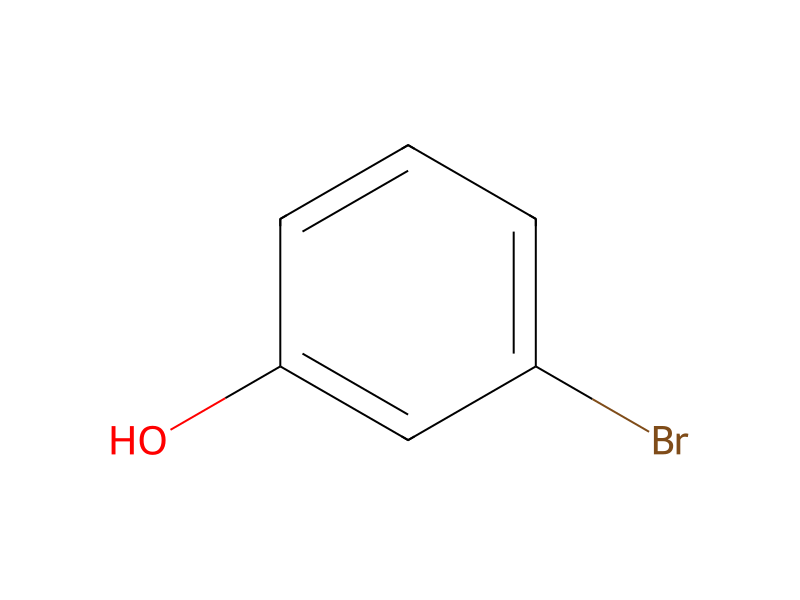
[Br:1][C:2]1[CH:3]=[C:4]([OH:8])[CH:5]=[CH:6][CH:7]=1.C[C:10](C)=[CH:11][C:12](O)=[O:13].[H-].[Na+].[C:18]1([O:24][C:25](=[O:28])[CH:26]=[CH2:27])[CH:23]=[CH:22][CH:21]=[CH:20][CH:19]=1>[Al+3].[Cl-].[Cl-].[Cl-].C(Cl)Cl.O1CCCC1>[Br:1][C:2]1[CH:3]=[C:4]2[C:5]([CH2:10][CH2:11][C:12](=[O:13])[O:8]2)=[CH:6][CH:7]=1.[O:28]=[C:25]1[CH2:26][CH2:27][C:23]2[C:18](=[CH:19][CH:20]=[CH:21][CH:22]=2)[O:24]1참가 물질







실험 절차
Thus, in accordance with Reaction Scheme 6, 3-bromo phenol, or a 3-bromo phenol substituted in the 4 (para) position by an alkyl substituent (Compound 7) is acylated with an acylating agent, such as the acid chloride (Compound 11) derived from 3,3-dimethylacrylic acid or from another appropriately substituted acrylic acid (R1 ' and R2 ' is either H or lower alkyl). The acylation of the 3-bromo-phenol (Compound 7) with the acid chloride (Compound 11) is preferably conducted in the presence of a strong base (e.g. sodium hydride) in an inert solvent (such as tetrahydrofuran). The resulting phenyl-acrylate (Compound 12) is ring closed under Friedel-Crafts type reaction conditions (e.g. AlCl3 catalyst, in an inert solvent such as methylene chloride) to provide two positional isomers (Compound 13) and (Compound 14) of the 2-oxo-chroman derivative, each of which bears, in the 4-position, the CH2R1 ' and CH2R2 ' substituents and where R5 is hydrogen or lower alkyl. As described previously for Reaction Scheme 5, the mixture is then separated by conventional means to obtain the desired 7-bromo-2-oxo-chroman (Compound 13). It should be noted that as also described previously in connection with Reaction Scheme 5 the 7-bromo-2-oxo chroman (Compound 13) can be separated from the potential regio-isomeric impurities at the carboxylic acid stage or at the final coupling stage. The 2-oxo-7-bromo-chroman (Compound 13) is thereafter reduced with lithium aluminum hydride or an appropriate reducing agent to provide the 7-bromo-diol (Compound 15). The diol (Compound 15) is then mono-mesylated at the primary alcohol position followed by intramolecular nucleophilic displacement of a mesyl leaving group, to give the 7-bromo-chroman (Compound 8) which bears the desired CH2 --R1 ', CH2R2 ' and R5 substituents. The carboxylic acid function is introduced into the 7-position in the same manner as described previously in Reaction Scheme 5 to give the 7-carboxy chroman (Compound 10).
출처 및 근거
- ORD 기록
- ord-dfa6204d1d014f7aa592ba96c8e7b8ee
- 출처 데이터셋
- uspto-grants-1994_09
- 특허 번호
- US05348975
연결된 노트
불러오는 중…