Hydrochloric Acid → N-Acetyl-3,4-dimethoxyphenethylamine
반응식

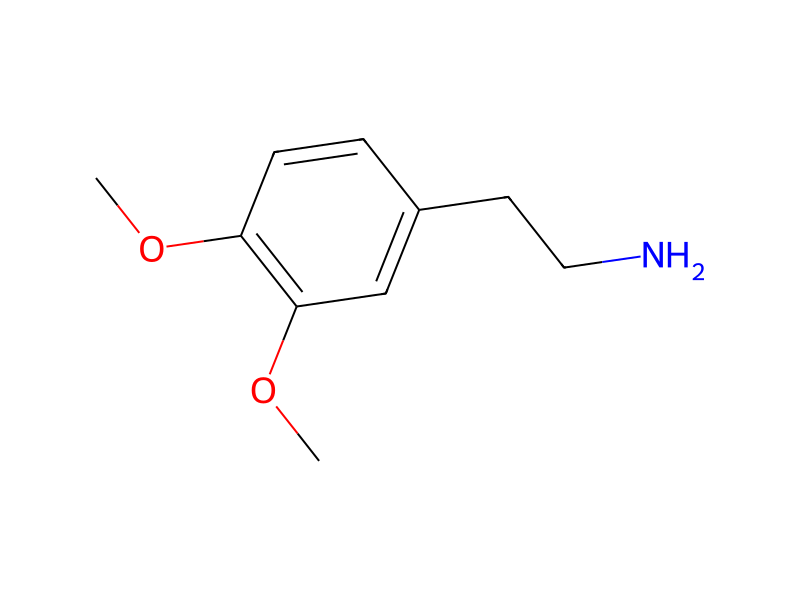
[CH2:1]([NH2:13])[CH2:2][C:3]1[CH:12]=[CH:11][C:8]([O:9][CH3:10])=[C:5]([O:6][CH3:7])[CH:4]=1.[C:14](OC(=O)C)(=[O:16])[CH3:15].Cl>N1C=CC=CC=1>[C:14]([NH:13][CH2:1][CH2:2][C:3]1[CH:12]=[CH:11][C:8]([O:9][CH3:10])=[C:5]([O:6][CH3:7])[CH:4]=1)(=[O:16])[CH3:15]참가 물질
5




실험 절차
After dissolving 5 g of homoveratrylamine in 20 ml of pyridine, 5.6 g of acetic anhydride was added and reacted at 65°-70° C. with stirring for 2 hours. The reaction mixture was poured into 150 ml of ice water and then made weakly acidic by adding 50 ml of a 6N aqueous hydrochloric acid solution. The resultant solution was extracted three times with 50 ml of chloroform. The extracted solution was combined, washed with an aqueous sodium hydrogen carbonate solution and dried over anhydrous sodium sulfate. The solvent was distilled off under reduced pressure. Ether was added to the residue and precipitated crystals were filtered. N-acetylhomoveratrylamine having a melting point of 101°-102° C. was obtained as colorless crystals. The yield was 5.7 g.