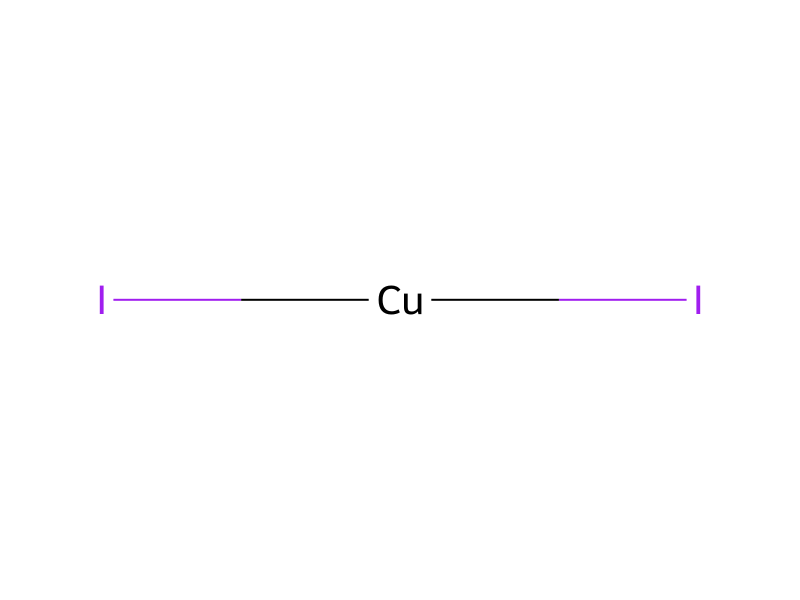
[Br:1][C:2]1[CH:3]=[N:4][C:5](I)=[N:6][CH:7]=1.[CH2:9]([N:13]1[CH:17]=[CH:16][N:15]=[N:14]1)[CH2:10][C:11]#[CH:12].C(N(CC)CC)C.C(Cl)(Cl)Cl>CN(C=O)C.[Cu](I)I.[Pd](Cl)Cl.C1(P(C2C=CC=CC=2)C2C=CC=CC=2)C=CC=CC=1.C1(P(C2C=CC=CC=2)C2C=CC=CC=2)C=CC=CC=1>[Br:1][C:2]1[CH:3]=[N:4][C:5]([C:12]#[C:11][CH2:10][CH2:9][N:13]2[CH:17]=[CH:16][N:15]=[N:14]2)=[N:6][CH:7]=15-Bromo-2-iodo-pyrimidine (1.14 g, 4.0 mmol), 1-but-3-ynyl-1H-[1,2,3]triazole (0.533 g, 4.4 mmol) and triethyl amine (NEt3) (2 ml) are dissolved in DMF (1 ml) and copper iodide (CuI) (0.38 g, 0.2 mmol) is added under stirring. After passing a stream of argon through the mixture for 10 min bis(triphenylphosphine) palladium(II) dichloride (0.140 g, 0.2 mmol) is added and stirring is continued for 3 h at r.t. Chloroform (300 ml) is added; the mixture is washed with 1N HCl and water, dried over MgSO4 and concentrated in vacuo. The residue is purified by flash column chromatography (chloroform (100%)->ethyl acetate (100%)) yielding 5-bromo-2-(4-[1,2,3]triazol-1-yl-but-1-ynyl)-pyrimidine as a beige solid. Yield 0.96 g (86%).