Phosphoric Acid → Quinacridone
반응식

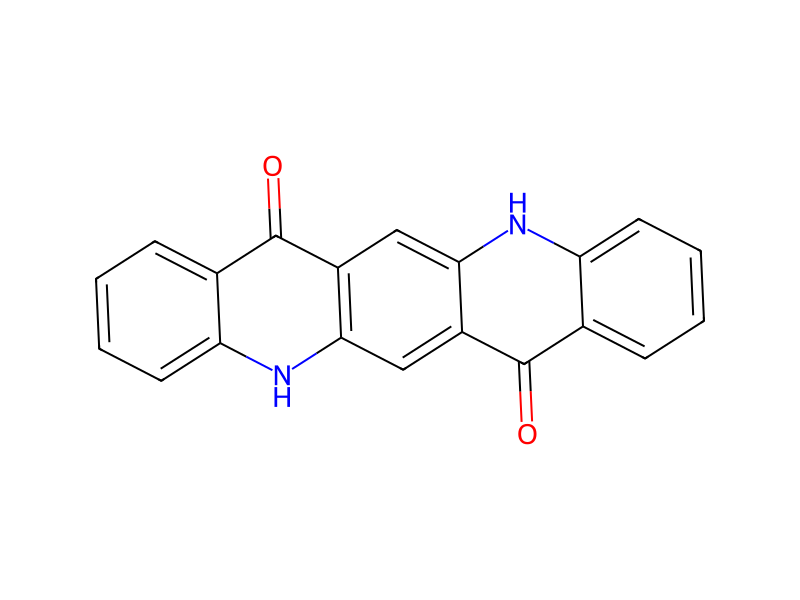
[NH:1]([C:8]1[CH:16]=[C:15]([C:17]([OH:19])=[O:18])[C:14]([NH:20][C:21]2[CH:26]=[CH:25][CH:24]=[CH:23][CH:22]=2)=[CH:13][C:9]=1[C:10]([OH:12])=[O:11])[C:2]1[CH:7]=[CH:6][CH:5]=[CH:4][CH:3]=1.P(=O)(O)(O)O>O>[CH:24]1[CH:25]=[C:26]2[C:17]([C:15]3[C:14]([NH:20][C:21]2=[CH:22][CH:23]=1)=[CH:13][C:9]1[C:10]([C:7]2[C:2]([NH:1][C:8]=1[CH:16]=3)=[CH:3][CH:4]=[CH:5][CH:6]=2)=[O:11])=[O:18].[NH:1]([C:8]1[CH:16]=[C:15]([C:17]([OH:19])=[O:18])[C:14]([NH:20][C:21]2[CH:22]=[CH:23][CH:24]=[CH:25][CH:26]=2)=[CH:13][C:9]=1[C:10]([OH:12])=[O:11])[C:2]1[CH:3]=[CH:4][CH:5]=[CH:6][CH:7]=1참가 물질
5



실험 절차
It is important to drive the reaction far enough to react all of the 2,5-dianilinoterephthalic acid. Generally this takes about 1 hour at about 85° C., at which point the reaction is stopped by cooling and combining the mixture with water. The resulting solid, suspended in the dilute aqueous phosphoric acid, is filtered and washed with water until neutral. However, even under optimized conditions for cyclization, a minor amount of quinacridone, the by-product formed by double cyclization of the 2,5-dianilinoterephthalic acid, is obtained, i.e. ##STR6##