반응식
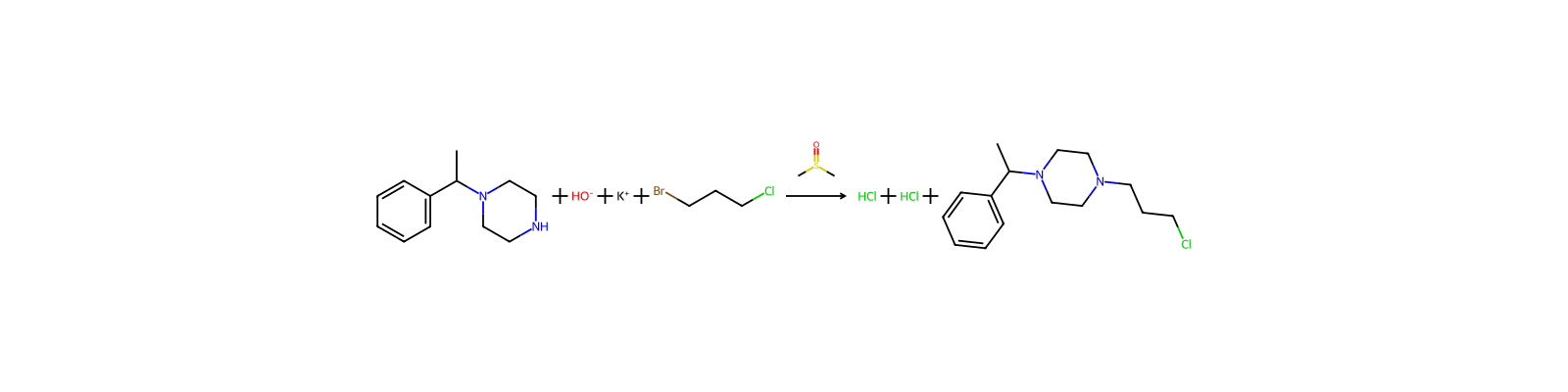
[C:1]1([CH:7]([N:9]2[CH2:14][CH2:13][NH:12][CH2:11][CH2:10]2)[CH3:8])[CH:6]=[CH:5][CH:4]=[CH:3][CH:2]=1.[OH-].[K+].Br[CH2:18][CH2:19][CH2:20][Cl:21]>CS(C)=O>[ClH:21].[ClH:21].[C:1]1([CH:7]([N:9]2[CH2:10][CH2:11][N:12]([CH2:18][CH2:19][CH2:20][Cl:21])[CH2:13][CH2:14]2)[CH3:8])[CH:6]=[CH:5][CH:4]=[CH:3][CH:2]=1참가 물질
5





실험 절차
The procedure described in Example 17(a) was followed, using 16.5 g of 1-(1-phenylethyl)piperazine, 8.0 g of potassium hydroxide, 125 ml of dimethyl sulfoxide and 9.5 g of 1-bromo-3-chloropropane. Work-up, as described above, gave 28.0 g (96% of theory) of 1-(1-phenylethyl)-4-(3-chloropropyl)piperazine dihydrochloride as a white crystalline solid.
출처 및 근거
- ORD 기록
- ord-93cf949e00b544a7b8fbd151bc44a719
- 출처 데이터셋
- uspto-grants-1988_02
- 특허 번호
- US04722926
연결된 노트
불러오는 중…