홈MCP워크벤치Skills
홈워크벤치알림마이페이지
llms.txt · MCP 가이드개인정보처리방침 · 이용약관 · 지원v1.8.0
  1. 홈
  2. /화합물

1-브로모-3-클로로프로페인

1-Bromo-3-chloropropane

HCID 8006
새 노트새 반응견적 요청하기
인쇄 미리보기

데이터를 보충하는 중입니다. 잠시 후 페이지를 새로 고치면 최신 내용을 볼 수 있습니다

기본 정보개요이름 및 식별자물성안전 및 규제화학 및 산업관련 반응화합물 노트
부분 구조 검색유사 구조 찾기

기본 정보

CAS
109-70-6
표준 SMILES
ClCCCBr
InChIKey
MFESCIUQSIBMSM-UHFFFAOYSA-N
분자식
C3H6BrCl
평균 분자량
157.44 g/mol
단동위원소 질량
155.93414

개요

1-Bromo-3-Chloropropane can cause cancer according to California Labor Code.

이름 및 식별자

우선 이름
1-Bromo-3-chloropropane
IUPAC
1-bromo-3-chloropropane
현지명
1-브로모-3-클로로프로페인
영어명
1-Bromo-3-chloropropane
분자식
C3H6BrCl
분자량
157.44

이름 및 동의어

1-BROMO-3-CHLOROPROPANE109-70-6Trimethylene chlorobromidePropane, 1-bromo-3-chloro-3-Bromopropyl chloride3-Chloropropyl bromide1-Chloro-3-bromopropane3-Chloro-1-bromopropane3-Bromo-1-chloropropaneTrimethylene bromide chlorideomega-ChlorobromopropaneKA4WR2LS00
이름 더 보기
1-브로모-3-클로로프로판1-브로모-3-클로로프로페인1-클로로-3-브로모프로페인3-브로모-1-클로로프로페인3-브로모프로필 염화물3-브로모프로필 클로라이드3-클로로프로필 브로마이드3-클로로프로필 브롬화물w-클로로브로모프로페인오메가-클로로브로모프로판오메가-클로로브로모프로페인트라이메틸렌 클로로브로마이드트리메틸렌 브롬화물 염화물트리메틸렌 클로로브롬화물프로판, 1-브로모-3클로로-프로페인, 1-브로모-3-클로로-BROMOCHLOROPROPANE1,3-BCPCHLOROBROMOPROPANENSC 9183
NSC-9183DTXSID1051565RefChem:75105DTXCID5030117203-697-1I-BCP1,3-ChbpTrimethylene bromochloride

데이터베이스 식별자

CAS
109-70-6
PubChem CID
8006
DTXSID
DTXSID1051565
ChEMBL
CHEMBL156560
ChEBI
CHEBI:189106
UNII
KA4WR2LS00
EC Number
203-697-1
Nikkaji
J29.156K

물성

구조 계산 물성보충 중

XLogP
1.9
극성 표면적
0 Ų
수소 결합 공여자 수
0
수소 결합 수용자 수
0
회전 가능 결합 수
2
무거운 원자 수
5
형식 전하
0
복잡도
16.4

실험 및 물리화학적 성질

Chemical ClassesOther Classes -> Halogenated Aliphatics, Saturated
SpringerMaterials PropertiesSchoenflies notation
LogP · 3건

Log P = 2.18

2.18

2.18

Density · 2건

1.5969 @ 20 °C/4 °C

Relative density (water = 1): 1.6

Color/FormCOLORLESS LIQUID
Solubility · 5건

Very sol in alc, ether, chloroform

SOL IN METHANOL

Soluble in oxygenated and chlorinated solvents.

In water = 2240 mg/l at 25 °C.

Solubility in water, g/100ml at 25 °C: 0.224

Flash Point · 2건

57 °C

57 °C

Boiling Point · 2건

143.3 °C @ 760 MM HG

143.3 °C

Melting Point · 2건

-58.90 °C

-58.9 °C

Vapor Density

안전 및 규제

안전 정보는 참고용이며, 공급업체의 물질안전보건자료(SDS), 관련 법규 및 전문가 평가를 대체하지 않습니다.

GHS 분류

GHS Classification · 6건

Danger

H226 (28.6%): Flammable liquid and vapor [Warning Flammable liquids]

P203, P210, P233, P240, P241, P242, P243, P261, P264, P264+P265, P270, P271, P273, P280, P301+P317, P302+P352, P303+P361+P353, P304+P340, P305+P351+P338, P316, P317, P318, P319, P321, P330, P332+P317, P337+P317, P362+P364, P370+P378, P403+P233, P403+P235, P405, and P501 (click each P-code to see the statement)

Aggregated GHS information provided per 189 reports by companies from 26 notifications to the ECHA C&L Inventory. Each notification may be associated with multiple companies.

Danger

H226: Flammable liquid and vapor [Warning Flammable liquids]

유해성 정보

Regulatory Information · 6건

Chemical: Propane, 1-bromo-3-chloro-

Hazard Traits - Carcinogenicity

Propane, 1-bromo-3-chloro- is listed on the EPA's Chemical Data Reporting (CDR) system. Manufacturers and importers of Propane, 1-bromo-3-chloro- are required to report information about their production and use of this chemical to the EPA under the Toxic Substances Control Act (TSCA). (40 eCFR Part 711)

REACH registered substance: 1-bromo-3-chloropropane (EC: 203-697-1)

1-Bromo-3-chloropropane: Does not have an individual approval but may be used under an appropriate group standard

The New Jersey Worker and Community Right to Know Act requires public and private employers to provide information about hazardous substances at their workplaces. (N.J.S.A. 34:5A-1 et. seq.)

Other Safety InformationEvaluation - 1-bromo-3-chloropropane and 1,3-dibromopropane
DOT LabelPoison
Fire Hazards · 3건

Excerpt from ERG Guide 159 [Substances (Irritating)]:

· Some of these materials may burn, but none ignite readily.

Flammable. Gives off irritating or toxic fumes (or gases) in a fire. Above 57 °C explosive vapour/air mixtures may be formed.

화학 및 산업

약리 정보

Mechanism of Action · 1건

The present study examines how variations in position, number, and type of halogen substituents affect renal and testicular necrosis, renal and testicular DNA damage, and the tissue distribution of the halogenated propanes. Groups of five male MOL:WIST rats were given single ip injections, ranging from 85 to 3000 um/kg of 1,2-dibromo-3-chloropropane (DBCP), 1,2,3-tribromopropane (TBP), 1,3-dichloro-2-bromopropane (DB2CP), or 1-bromo-2,3-dichloropropane (B2,3DCP), 1,3-dibromopropane, 1,2-dibromopropane, 1,2,3-trichloropropane or 1-bromo-3-chloropropane. The most potent in causing organ damage in both kidney and testes were DBCP and TBP. DB2CP was less organ toxic than DBCP or TBP, but induced more organ damage than B2,3DCP and DC2BP. The ability of the halogenated propanes to induce DNA damage in vivo correlated well with their ability to induce organ damage. However, DNA damage occurred at lower doses and after a shorter period of exposure. DNA damage may be an initial event in the development of organ necrosis by halogenated propanes in general. Testicular DNA damage induced by the halogenated propanes in vivo correlated well with the DNA damage observed in isolated testicular cells in vitro, showing that toxicity was due to in situ activation. The findings established a good relationship between in vivo organ necrogenic effects and DNA damage for a series of halogenated propanes. Both the type, the number, and the position of the halogens affected the toxic potential. The most toxic of the halogenated propanes contained three halogens with at least two vicinal bromines.

용도 및 제조

Uses · 6건

Used as a chemical intermediate for organic synthesis (i.e. pharmaceuticals); [HSDB]

IN ORGANIC SYNTHESIS; IN PHARMACEUTICALS

CHEM INT FOR PHARMACEUTICALS-EG, ACETOPHENAZINE MALEATE

CHEM INT FOR ORG SYNTH, EG, DIALKYLAMINOPROPYL CHLORIDES

Used as a chemical intermediate for the synthesis of cyclomethycaine; fluphenazine; opipramol; pentoxifylline; perphenazine; piperocaine; prochlorperazine; propentofylline; reproterol; trazodone; trifluoperazine; urapidil; verapamil.

1-Bromo-3-chloropropane is a useful reaction intermediate to prepare gamma-chloropropyl derivatives...for example, the cyanide displacement of 1-bromo-3-chloropropane forms gamma-chlorobutyronitrile, an intermediate used for the production of herbicides, pesticides, pharmaceuticals, and other commercial products.

관련 반응

2,573건
반응 기록 만들기
HRID 3789 반응식
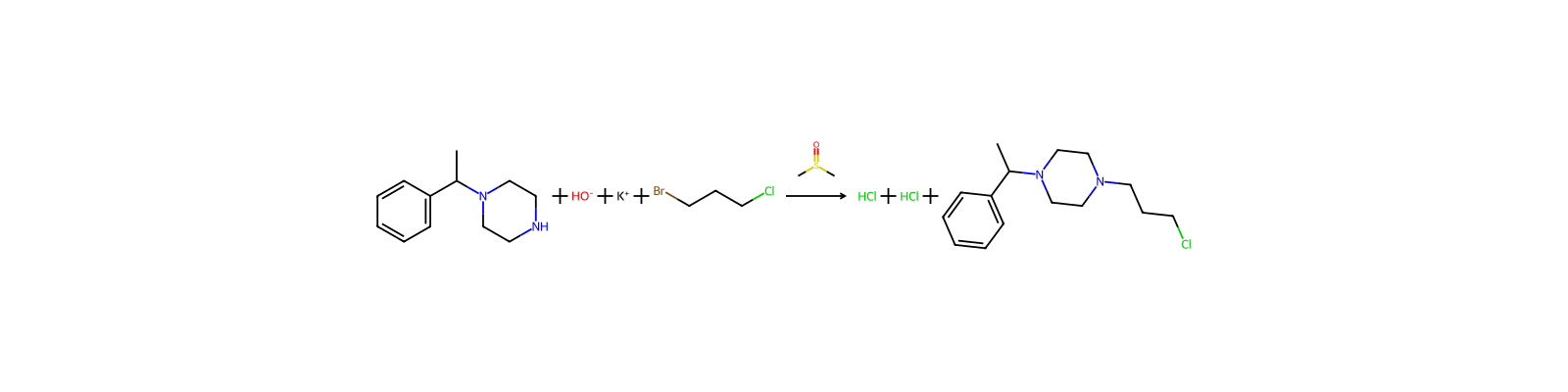
HRID 3789반응물로uspto-grants-1988_02
HRID 3792 반응식
HRID 3792반응물로uspto-grants-1988_02
HRID 3807 반응식
HRID 3807반응물로uspto-grants-1988_02
HRID 3810 반응식
HRID 3810반응물로uspto-grants-1988_02
HRID 3812 반응식
HRID 3812반응물로uspto-grants-1988_02
HRID 3815 반응식
HRID 3815반응물로uspto-grants-1988_02
HRID 3818 반응식
HRID 3818반응물로uspto-grants-1988_02
HRID 3824 반응식
HRID 3824반응물로uspto-grants-1988_02
1 / 322 페이지

화합물 노트

불러오는 중…

이 페이지에서기본 정보개요이름 및 식별자물성안전 및 규제화학 및 산업관련 반응화합물 노트
더보기
새 노트새 반응견적 요청하기
Relative vapor density (air = 1): 5.4
Vapor Pressure · 2건

6.38 [mmHg]

Vapor pressure, kPa at 25 °C: 0.85

Refractive IndexINDEX OF REFRACTION: 1.4864 @ 20 °C/D

물리화학적 성질

녹는점
-59 °C · -59 °C
끓는 점
144 · 144-145 °C (lit.)
밀도
1.592 g/mL · 1.592 g/mL at 25 °C (lit.)
증기압
7.5 hPa · 7.5 hPa (20 °C)
굴절률
20 · n20/D 1.486(lit.)
인화점
81 °C · 81 °C
저장 조건
room temp
용해도
2.24 g/l · 2.24g/l 불용성
물리적 상태
액체
색상
투명한 액체
폭발한계
3.2 · 3.2-8.6%(V)
수용성
불용성
BRN
605278 · 605278
Henry's Law Constant
3.9 · 3.9×10-2 mol/(m3Pa) at 25℃, HSDB (2015)
안정성
휘발성 물질
InChI
1S/C3H6BrCl/c4-2-1-3-5/h1-3H2
InChIKey
MFESCIUQSIBMSM-UHFFFAOYSA-N
SMILES
ClCCCBr
NIST
1 · Propane, 1-bromo-3-chloro-(109-70-6)
EPA
1 · Propane, 1-bromo-3-chloro- (109-70-6)

화학적 성질

It is a clear and colorless liquid that is soluble in ethanol, ether, and chloroform but insoluble in water.

Health Hazards · 2건

Excerpt from ERG Guide 159 [Substances (Irritating)]:

· Inhalation of vapors or dust is extremely irritating.

Hazards Summary · 1건

May cause CNS effects and liver injury; [ICSC] No significant adverse gross or histopathological changes observed with regard to body weight, kidneys, or male reproductive organs in two week feeding study with rats; Emergency medical treatment: see Dibromochloropropane; [HSDB] A strong eye and respiratory tract irritant; [CAMEO] Observations in four hour inhalation study with rats include pulmonary hemorrhages, fatty degeneration of the liver and heart, albuminoid degeneration of the kidney, and edema and swelling of brain neural tissue; No gross or histopathological changes observed in another inhalation study; Classified as not irritating to skin and eyes of rabbits (some corneal opacity and conjunctival irritation/redness observed, but cleared by day 8 in all studies); Observations in 24 day study with rats include liver degeneration, increased frequency of chromosomal aberrations in bone marrow, and decrease in testicular weight coefficient and spermatozoa motility; Not mutagenic to various Salmonella typhimurium strains; No significant adverse effects to male reproductive system observed in five week feeding or two week gavage studies with rats; [IUCLID]

DOT ID and Guide2688 159
Reactive GroupHalogenated Organic Compounds
UN ClassificationUN Hazard Class: 6.1; UN Pack Group: III
Reactivity Profile · 1건

Halogenated aliphatic compounds, such as 1-BROMO-3-CHLOROPROPANE, are moderately or very reactive. Halogenated organics generally become less reactive as more of their hydrogen atoms are replaced with halogen atoms. Materials in this group are incompatible with strong oxidizing and reducing agents. Also, they are incompatible with many amines, nitrides, azo/diazo compounds, alkali metals, and epoxides.

Chemical DangersDecomposes on burning. This produces toxic and corrosive gases including hydrogen bromide (see ICSC 0282) and hydrogen chloride (see ICSC 0163).
Packaging and LabellingDo not transport with food and feedstuffs.

안전 및 보호

Fire Fighting · 2건

Excerpt from ERG Guide 159 [Substances (Irritating)]:

Use water spray, powder, foam, carbon dioxide. In case of fire: keep drums, etc., cool by spraying with water.

First Aid Measures · 4건

Fresh air, rest. Refer for medical attention.

Remove contaminated clothes. Rinse and then wash skin with water and soap.

Rinse with plenty of water for several minutes (remove contact lenses if easily possible).

Rinse mouth. Refer for medical attention .

Accidental Release Measures · 2건

· CALL 911. Then call emergency response telephone number on shipping paper. If shipping paper not available or no answer, refer to appropriate telephone number listed on the inside back cover.

· Do not touch or walk through spilled material.

First Aid · 2건

Excerpt from ERG Guide 159 [Substances (Irritating)]:

General First Aid:

Safe StorageSeparated from food and feedstuffs. Well closed. Store in an area without drain or sewer access.
Exposure Control and Personal Protection· Wear positive pressure self-contained breathing apparatus (SCBA).
Nonfire Spill ResponseExcerpt from ERG Guide 159 [Substances (Irritating)]:
Disposal Methods · 1건

SRP: At the time of review, criteria for land treatment or burial (sanitary landfill) disposal practices are subject to significant revision. Prior to implementing land disposal of waste residue (including waste sludge), consult with environmental regulatory agencies for guidance on acceptable disposal practices.

Spillage Disposal · 1건

Personal protection: filter respirator for organic gases and vapours adapted to the airborne concentration of the substance. Do NOT let this chemical enter the environment. Collect leaking and spilled liquid in sealable containers as far as possible. Absorb remaining liquid in sand or inert absorbent. Then store and dispose of according to local regulations.

Preventive MeasuresAVOID INHALATION OF FUMES.
Isolation and Evacuation · 2건

Excerpt from ERG Guide 159 [Substances (Irritating)]:

Immediate precautionary measure

Eye PreventionWear safety spectacles.

독성 정보

Environmental Fate · 3건

TERRESTRIAL FATE: Based on a recommended classification scheme(1), an estimated Koc value of 63(SRC), determined from a measured water solubility(2) and a regression-derived equation(3,SRC), indicates that 1-bromo-3-chloropropane will have high mobility in soil(SRC). Volatilization of 1-bromo-3-chloropropane may be important from moist soil surfaces(SRC) given an estimated Henry's Law constant of 2.5X10⁻⁴ atm-cu m/mole(SRC), determined using a fragment constant estimation method(4). Volatilization from dry soil surfaces(SRC) is expected based on an extrapolated vapor pressure of 6.4 mm Hg(5,SRC). Based on limited data, this compound is expected to be resistant to aerobic biodegradation(SRC); 1-bromo-3-chloropropane, inoculated with effluent from a biological waste treatment plant, reached 3% of the theoretical BOD in 5 days(6).

AQUATIC FATE: Based on a recommended classification scheme(1), an estimated Koc value of 63(SRC), determined from a measured water solubility(2) and a regression-derived equation(1,SRC), indicates that 1-bromo-3-chloropropane should not adsorb to suspended solids and sediment in water(SRC). 1-Bromo-3-chloropropane should volatilize from water surfaces(1,SRC) given an estimated Henry's Law constant of 2.5X10⁻⁴ atm-cu m/mole(SRC), developed using a fragment constant estimation method(3). Estimated half-lives for a model river and model lake are 8 hours and 6 days, respectively(1,SRC). According to a classification scheme(5), an estimated BCF value of 27(1,SRC), from a measured log Kow(4), suggests that bioconcentration in aquatic organisms is low(SRC). Based on limited data, this compound is expected to be resistant to aerobic biodegradation(SRC); 1-bromo-3-chloropropane, inoculated with effluent from a biological waste treatment plant, reached 3% of the theoretical BOD in 5 days(6).

ATMOSPHERIC FATE: According to a model of gas/particle partitioning of semivolatile organic compounds in the atmosphere(1), 1-bromo-3-chloropropane, which has an extrapolated vapor pressure of 6.4 mm Hg at 25 °C(2,SRC), will exist solely as a vapor in the ambient atmosphere. Vapor-phase 1-bromo-3-chloropropane is degraded in the atmosphere by reaction with photochemically-produced hydroxyl radicals(SRC); the half-life for this reaction in air is estimated to be about 18 days(3,SRC).

Adverse EffectsNeurotoxin - Other CNS neurotoxin
Exposure RoutesThe substance can be absorbed into the body by inhalation of its vapour and by ingestion.
Signs and Symptoms · 2건

Tremor. Drowsiness.

See Inhalation.

ICSC Environmental DataThe substance is harmful to aquatic organisms.
Soil Adsorption/Mobility · 1건

The Koc of 1-bromo-3-chloropropane is estimated as approximately 63(SRC), using a measured water solubility of 2240 mg/l at 25 °C(1) and a regression-derived equation(2,SRC). According to a recommended classification scheme(3), this estimated Koc value suggests that 1-bromo-3-chloropropane has high mobility in soil(SRC).

TSCA Test Submissions · 1건

Toxicity of 1-chloro-3-bromopropane (CBP) with respect to testicular changes was evaluated in male albino Wistar rats (10/treated group, 20 in arachis oil vehicle control group) exposed orally to CBP by gavage at dosage levels of 40 or 160 mg/kg/day for 14 days. On day 15, the animals were sent for pathological examination. Significant differences between treated and control animals were not observed at any dose level. No significant differences between treated and control animals were observed in the following: body weights, body weight gain, testes weights, morphology, or detailed macroscopic and microscopic examination of the kidneys, testes, epididymides, ductuli efferentes, and vasa deferentes.

Atmospheric Concentrations · 1건

URBAN/SUBURBAN: Source-dominated air samples contained 1-bromo-3-chloropropane at a median concentration of 2 parts/trillion(1). Air samples collected from a geographic area associated with the bromine industry in Arkansas contained 1-bromo-3-chloropropane at unreported concentrations(2). Ambient concentrations of 1-bromo-3-chloropropane in air surrounding the Ethyl Corporation, Magnolia, AK in July 1977 ranged from trace levels to 1,688 ng/cu m(3). Ambient concentrations of 1-bromo-3-chloropropane in air surrounding the Great Lakes Corporation and the Michigan Chemical Corporation in El Dorado, AK in July 1977 ranged from not detected to trace levels and trace to 63 ng/cu m, respectively(3).

Human Toxicity Excerpts · 2건

Mortality rates in workers exposed to brominated chemicals in manufacturing research facilities from 1935 to 1976 were investigated epidemiologically. These workers were potentially exposed to 1,2-dibromo-3-chloropropane, polybrominated biphenyls, tris(2,3-dibromopropyl)phosphate, trimethylene chlorobromide, and DDT as well as various organic and inorganic bromides. Data was collected from personnel records and death certificates. Standardized mortality ratios were calculated for comparison against rates for American white males. In all, 2,806 male workers were identified as living, 578 workers were identified as deceased. Almost half of the cohort had worked less than 6 mo. The average term of employment was 3 yr 9 mo. Overall, the standardized mortality ratio for workers was lower than that of American white males. Deaths from diabetes mellitus occurred more frequently in these workers, with rates more than twice the number expected. Overall cancer death rates were comparable among the workers and the comparison population. Stomach cancer rates were lower among workers than expected; otherwise, differences in site specific cancer deaths were not statistically significant. The workers showed lower than expected death rates for diseases of the circulatory and digestive systems and pneumonia. There was no incr trend in mortality with length of employment. /Results indicate/ that this study has identified a number of potential health problems and should be continued with a longer observation period to establish mortality trends.

A historical prospective mortality study was conducted for 3579 white male workers employed between 1935 and 1976 at four Vesicol Chemical Corporation facilities. The members of the study cohort were potentially exposed to brominated compounds including 1,2-dibromo-3-chloropropane (DBCP), tris(2,3-dibromopropyl)phosphate, trimethylene chlorobromide. Some were exposed to DDT, polybrominated biphenyls (PBB) and others to radiation from rare earths process. Overall mortality was lower than expected, particularly in diseases of the circulatory system, nonmalignant respiratory diseases and diseases of the digestive system. No significant overall or cause specific mortality excess was noted among those potentially exposed to either TRIS or DDT. No cancer death was noted among the rare earth employees. Mortality from diabetes mellitus was significantly elevated among the maintenance workers hired in the early 1940's. A significant mortality excess due to diseases of the circulatory system was observed among workers potentially exposed to DBCP and or rare earth process. Mortality from testicular cancer was significantly higher in those exposed to organic bromides. The common potential exposure of the testicular cancer decedents was methyl bromide. A number of other cause specific mortality excesses were also noted.

Artificial Pollution Sources1-Bromo-3-chloropropane's production and use in organic syntheses and in the production of pharmaceuticals(1) may result in its release to the environment through various waste streams(SRC).
Environmental Biodegradation1-Bromo-3-chloropropane, inoculated with effluent from a biological waste treatment plant, reached 3% of the theoretical BOD in 5 days(1).
Carcinogen Classification · 5건

1-Bromo-3-chloropropane

Group 2B: Possibly carcinogenic to humans

Volume 125: (2020) Some Industrial Chemical Intermediates and Solvents

2020 online

2019

안전 데이터

wgk
3
tsca
TSCA listed
rtecs
TX4113000
ridadr
UN 2688
독성
LD50 orally in Rabbit: 1100 - 1200 mg/kg LD50 dermal Rat > 2000 mg/kg
HS 번호
29034980
risk_code
10-22-36/37/38-20/21/22-20/22-68-52/53-37
hazard_code
Xn
safety_code
16-45-36/37/39-26
포장분류
III
위험 등급
6.1
기존화학 물질
KE-03643
Hazard Classifications
Acute Tox. 3 InhalationAcute Tox. 4 OralAquatic Chronic 3Muta. 2STOT SE 3
스토리지 클래스
6.1C - Combustible acute toxic Cat.3toxic compounds or compounds which causing chronic effects
유해 물질 데이터
109-70-6(Hazardous Substances Data)
U.S. Production · 2건

2023: <50,000 lb

(1978) PROBABLY GREATER THAN 2.27X10+6 GRAMS

Industry UsesIntermediate
Methods of Manufacturing · 2건

1-Bromo-3-chloropropane is virtually always produced by the free-radical addition of anhydrous hydrogen bromide to allyl chloride.

1-Bromo-3-chloropropane can be made from ethylene and methylene chlorobromide.

General Manufacturing Information · 3건

All Other Basic Organic Chemical Manufacturing

Propane, 1-bromo-3-chloro-: ACTIVE

The yield of crude product, which typically consists of 95% primary and 5% secondary bromochloropropanes, is about 95% based on converted allyl chloride. The minor isomer can easily be separated by distillation if product specifications call for higher purity.

응용 분야 · 3건

개요1-Bromo-3-chloropropane is a halogenated alkane compound containing one bromine atom and one chlorine atom in its structure. Due to the high electronegativity of halogens, the molecule of 1-Bromo-3-chloropropane is highly electrophilic and is easily attacked by electrophilic reagents such as nucleophilic reagents, Lewis acid, etc., which undergoes nucleophilic substitution reactions. The compound is relatively stable at room temperature, but is susceptible to elimination reactions at high temperatures or in the presence of strong acids or bases. In addition, prolonged exposure to air should be avoided because 1-Bromo-3-chloropropane molecules contain halogen atoms that are susceptible to reaction by oxygen and moisture in the air to produce products such as alcohols and aldehydes.

용도1-Bromo-3-chloropropane is used in the preparation active pharmaceutical ingredient intermediate such as gemfibrozil and reproterol. It is also involved in the preparation of cardiovascular diseases and analgesic drugs materials. It is utilized as a phase separation reagent for the isolation of ribonucleic acid (RNA) in high quality. It is considered as a replacement of chloroform in nucleic acid separations.

일반 설명1-bromo-3-chloropropane appears as a colorless liquid. Insoluble in water and denser than water. May be toxic by inhalation, ingestion or skin absorption. Used to make pharmaceuticals and other chemicals.

제조 방법

The most common method for producing 1-Bromo-3-chloropropane is through the free-radical addition of anhydrous hydrogen bromide to allyl chloride. Alternatively, it can be prepared by reacting ethylene with methylene chlorobromide.

상·하류 제품 정보

상류 원료

과산화 벤조일브롬화수소염화알릴

하류 제품

1-(3-클로로페닐)-4-(3-클로로프로필)피페라진염산염클로르프로마진 수화염화물1,1-Cyclobutanedicarboxylic acidACETOPHENAZINE MALEATE (200 MG)5-클로로-2-(3,4-디메톡시페닐)-2-이소프로필발레로니트릴JulolidineOxatomide3-ETHOXYCARBONYL-5,6-DIHYDRO-2-METHYL-4H-PYRAN로미필린네파조돈CyclobutanemethanolAzetidine클로로부틸로니트릴(4-)(Bromomethyl)cyclobutane1-브로모-5-헥사논1-(3-(pyrrolidin-1-yl)propyl)hydrazinePentoxifylline페르페나진염산디페니돌SEMOTIADIL아제티딘염산염Tirofiban(3-MORPHOLIN-4-YL-PROPYL)-히드라진1-(3-Hydrazinylpropyl)pyrrolidin-2-one
추가 설명 · 1건

정의ChEBI: 1-Bromo-3-chloropropane (I-BCP or 109-70-6) is an organochlorine compound that can be used as a safer and equally effective alternative to chloroform. It serves as a phase-separation agent for the one-step method of RNA isolation from biological samples like animal and plant tissue. I-BCP can replace CHCl3 in RNA phase separations.