반응식

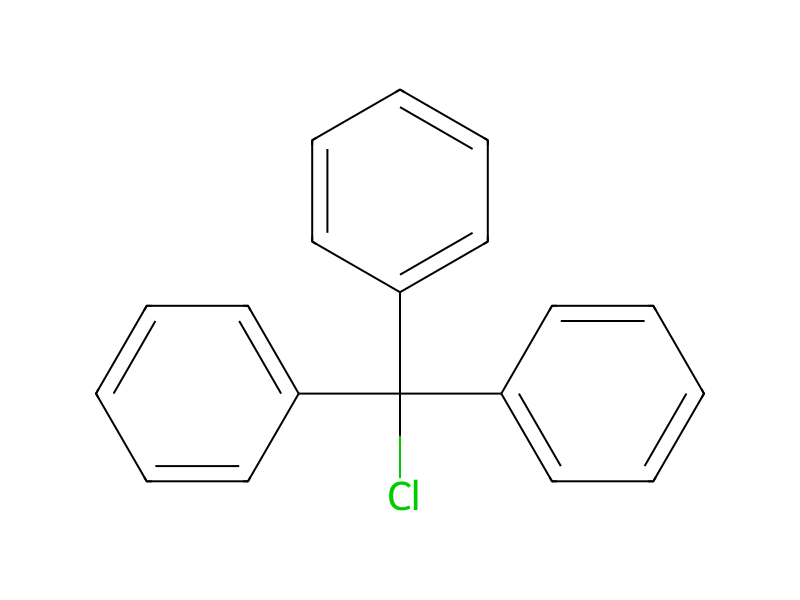
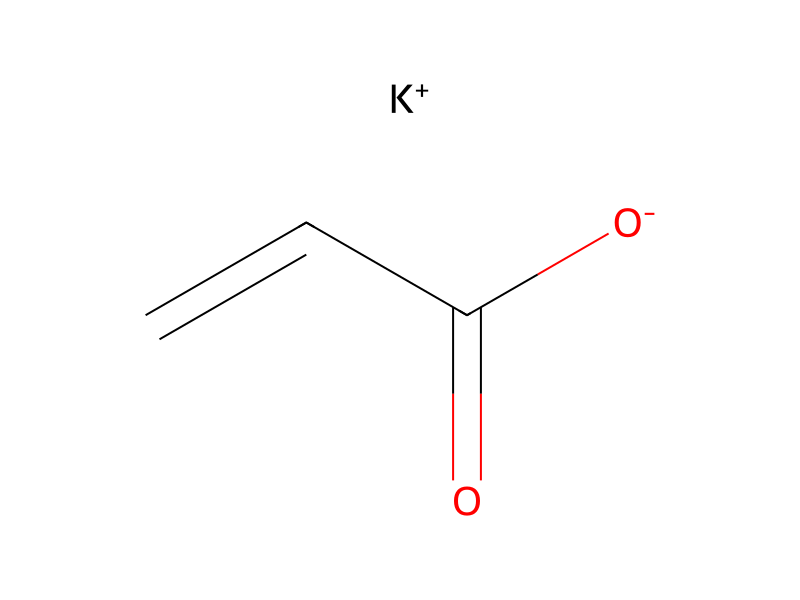
[C:1]1([C:7]([C:15]2[CH:20]=[CH:19][CH:18]=[CH:17][CH:16]=2)([C:9]2[CH:14]=[CH:13][CH:12]=[CH:11][CH:10]=2)Cl)[CH:6]=[CH:5][CH:4]=[CH:3][CH:2]=1.[C:21]([O-:25])(=[O:24])[CH:22]=[CH2:23].[K+].C1(C=CC(O)=CC=1)O>CN(C)C=O>[C:21]([O:25][C:7]([C:15]1[CH:20]=[CH:19][CH:18]=[CH:17][CH:16]=1)([C:9]1[CH:14]=[CH:13][CH:12]=[CH:11][CH:10]=1)[C:1]1[CH:6]=[CH:5][CH:4]=[CH:3][CH:2]=1)(=[O:24])[CH:22]=[CH2:23]참가 물질
5



실험 절차
1 mole triphenylchloromethane was stirred with 1.5 moles potassium acrylate in 998 g dimethyl formamide in the presence of 0.14 g hydroquinone under the conditions described in Example 1. The precipitated potassium chloride was filtered off and the triphenyl methyl acrylate solution was concentrated by rotary evaporation at 65° to 100° C. and reduced to produce liquid triphenylmethyl acrylate. This was dissolved at 70 percent in xylene and filtered.
후처리
- filtrationThe precipitated potassium chloride was filtered off
- concentrationthe triphenyl methyl acrylate solution was concentrated by rotary evaporation at 65° to 100° C.
출처 및 근거
- ORD 기록
- ord-7e5b6cf23b4a4a57b26e02bf28097737
- 출처 데이터셋
- uspto-grants-1988_06
- 특허 번호
- US04752629
연결된 노트
불러오는 중…