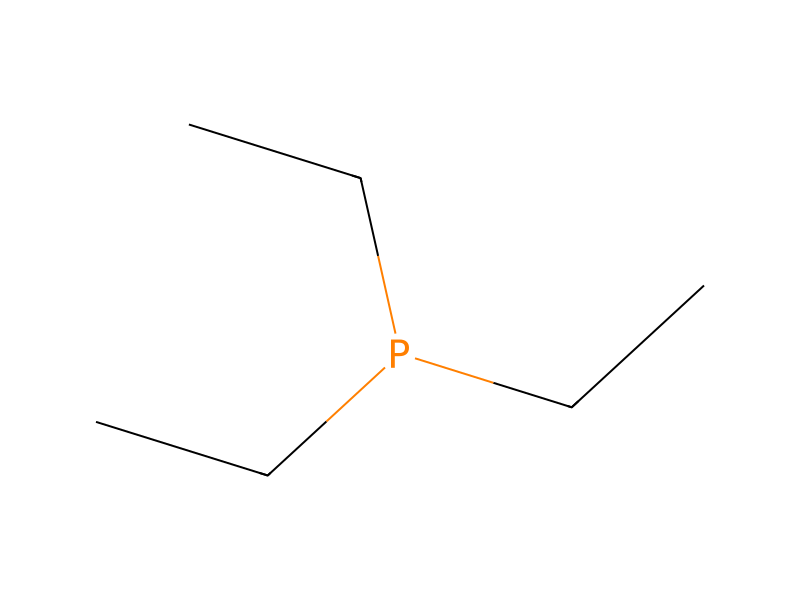
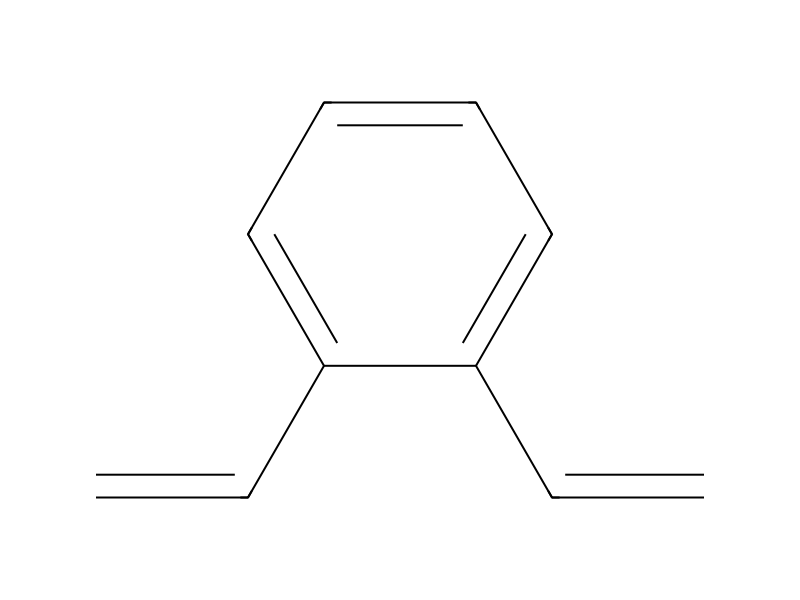
The catalyst of this example was prepared from a cross-linked copolymer of a 2:1 molar ratio of styrene and p-bromo styrene and 2% by weight, based on the above monomers, of divinyl monomers. The latter in this instance was divinyl benzene. The Br of the polymer was replaced with Li and then the Li was converted to --(CH2)3OH by reaction with trimethylene oxide. The OH of the --(CH2)3OH was converted to the iodide with I2 in the presence of triphenyl phosphine. The cross-linked polymer having a plurality of --(CH2)3I groups was then reacted with triethyl phosphine to form the corresponding triethyl n-propyl phosphonium iodide. The iodide was converted to the acetate with sodium acetate and the acetate was converted to --OC2H5 /OH- by reaction with an 80-20 ethanol-water mixture (by volume) containing 3.7 g. Na in 200 ml. of the ethanol-water mixture. This catalyst had a plurality of ##STR3##