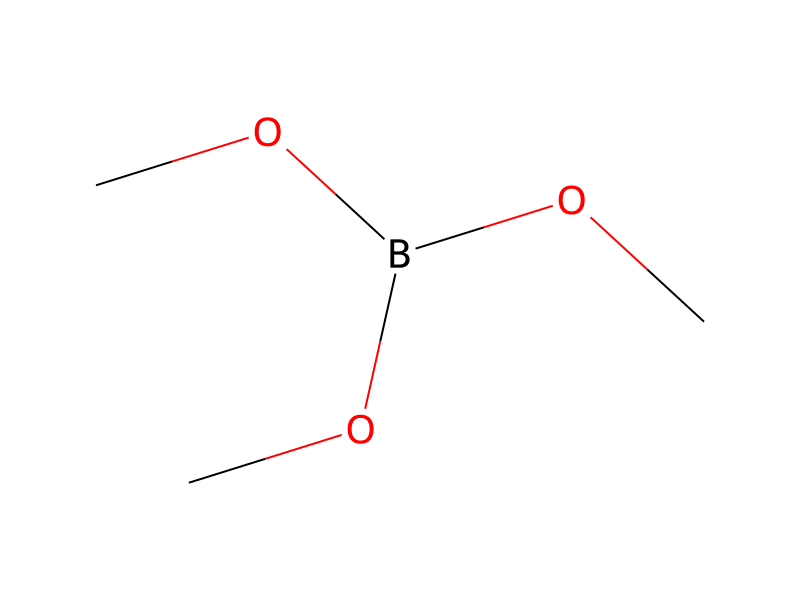
3.4 g of 4-propylphenylboric acid (obtained by reacting a Grignard reagent prepared from 1-bromo-4-propylbenzene with trimethyl borate, and then subjecting the product to hydrolysis with hydrochloric acid) and 25.5 g of 6-bromo-2-naphthol were dissolved in a mixture of 92 ml of toluene, 46 ml of ethanol and 92 ml of water. To the solution were then added 25.5 g of potassium carbonate and 1.3 g of tetrakis(triphenylphosphine)palladium (0). The reaction mixture was then stirred at a temperature of 75° C. for 7 hours. To the reaction solution were then added water and toluene. To the reaction solution was then added diluted hydrochloric acid until the aqueous phase became weakly acidic. The reaction solution was then extracted with toluene. The material thus extracted and the organic phase were together washed with water and then with saturated brine, and then dried over anhydrous sodium sulfate. The solvent was then distilled off under reduced pressure to obtain 41.4 g of 6-(4-propylphenyl)naphthalene-2-ol. 12.7 g of 6-(4-propylphenyl)naphthalene-2-ol was then dissolved in 50 ml of dichloromethane. To the solution was then added 13.1 g of N-fluoro-5-trifluoromethoxypyridinium-2-sulfonate. The reaction mixture was then stirred at room temperature for 18hours. The reaction mixture was post-treated in the same manner as mentioned above to obtain an oily matter which was then purified through silica gel column chromatography (hexane/ethyl acetate=9/1) to obtain 10 g of 1-fluoro-6-(4-propylphenyl)naphthalene-2-ol. The product was converted to S-ethyl dithiocarbonate which was then trifluoromethoxylated in the same manner as in Example 1 to obtain 2.3 g of the titled 1-fluoro-2-trifluoromethoxy-6-(4-propylphenyl)naphthalene.