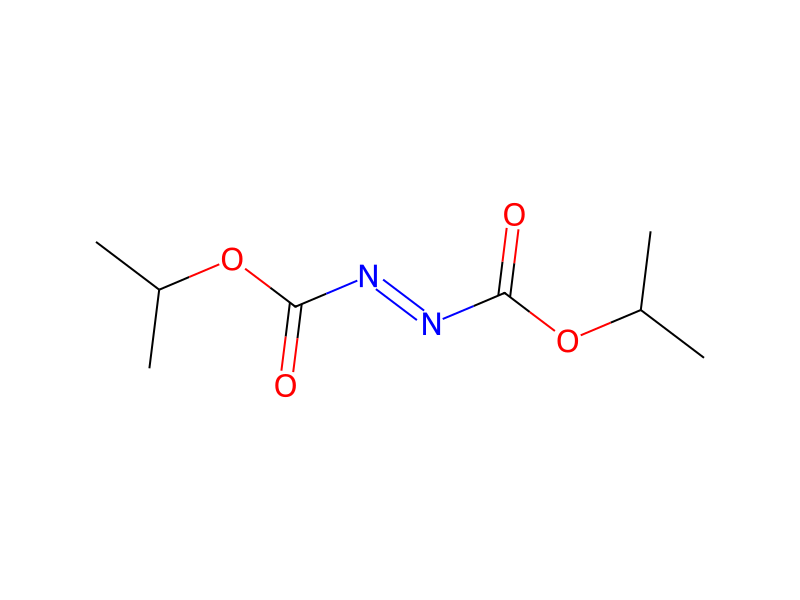
Compound 103 (73.7 mg, 0.17 mmol) was dissolved in anhydrous THF (5 mL). PPh3 (173 mg, 0.64 mmol) and 2-Dimethylamino ethanol (65.5 μL, 0.63 mmol) were then added to the solution, and the reaction was stirred at room temperature. After stirring for five minutes, DIAD (127 μL, 0.64 mmol) was added to the reaction dropwise. The reaction was found to be complete by TLC and LC/MS after 30 minutes. The solvent was then removed under reduced pressure. The residue was purified twice by flash chromatography (Biotage, SiO2, Dichloromethane/Methanol gradient elution) and twice by HPLC to afford 26.4 mg (31%) of Compound 123 as a light brown oil: LCMS m/z (%)=496 (M+H81Br, 100), 494 (M+H79Br, 94). 1H NMR (400 MHz, DMSO-d6) δ 8.99 (s, 1H), 8.44 (s, 1H), 8.07-8.01 (m, 1H), 7.59 (s, 1H), 7.52 (dd, J1=8 Hz, J2=4 Hz, 1H), 7.35 (d, J=4, 1H), 7.32-7.26 (m, 1H), 7.17 (d, J=12 Hz, 1H), 7.05-7.00 (m, 1H), 4.11 (dm, 2H), 3.65 (s, 3H), 2.58 (dm, 2H), 2.11 (s, 6H).