Pyridine → 4-(3-Isopropyl-1H-indol-5-yloxy)-3,5-dichlorobenzyl bromide
Reaction equation
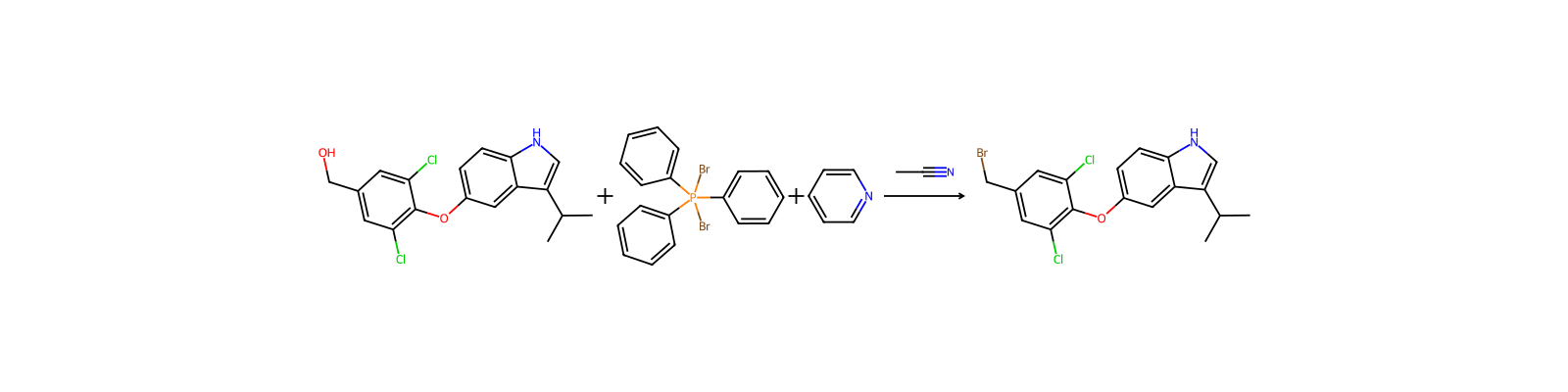
[CH:1]([C:4]1[C:12]2[C:7](=[CH:8][CH:9]=[C:10]([O:13][C:14]3[C:21]([Cl:22])=[CH:20][C:17]([CH2:18]O)=[CH:16][C:15]=3[Cl:23])[CH:11]=2)[NH:6][CH:5]=1)([CH3:3])[CH3:2].[Br:24]P(Br)(C1C=CC=CC=1)(C1C=CC=CC=1)C1C=CC=CC=1.N1C=CC=CC=1>C(#N)C>[CH:1]([C:4]1[C:12]2[C:7](=[CH:8][CH:9]=[C:10]([O:13][C:14]3[C:21]([Cl:22])=[CH:20][C:17]([CH2:18][Br:24])=[CH:16][C:15]=3[Cl:23])[CH:11]=2)[NH:6][CH:5]=1)([CH3:3])[CH3:2]Participants
5




Procedure
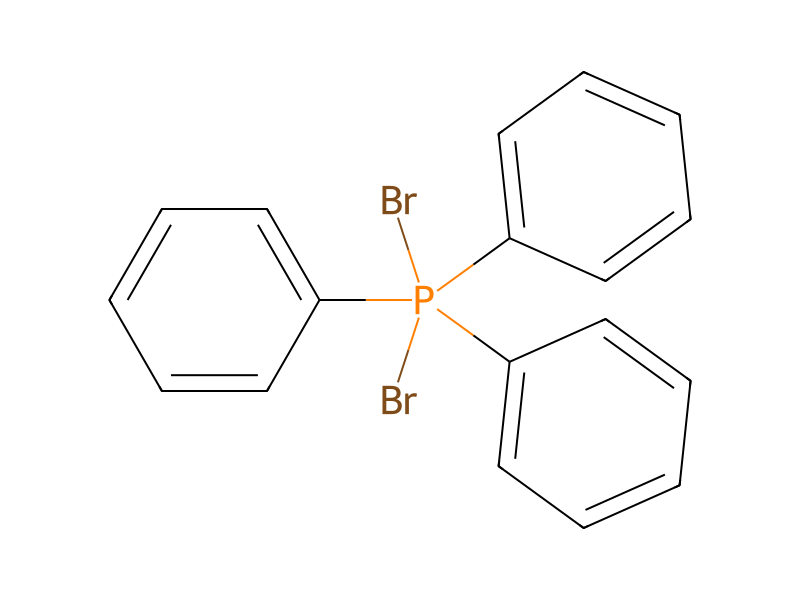
Analogously to the procedure of Example VII, 4.8 g (12.66 mmol) of benzyl alcohol derivative from Example XVII are reacted with 6.95 g (16.46 mmol) of dibromotriphenylphosphorane and 1.6 g (20.26 mmol) of pyridine in 80 ml of acetonitrile.
Sources & evidence
- ORD record
- ord-ef6325c587d84de9b88dfe3628878e82
- Source dataset
- uspto-grants-2004_09
- Patent number
- US06794406B2
Reaction notes
Loading…