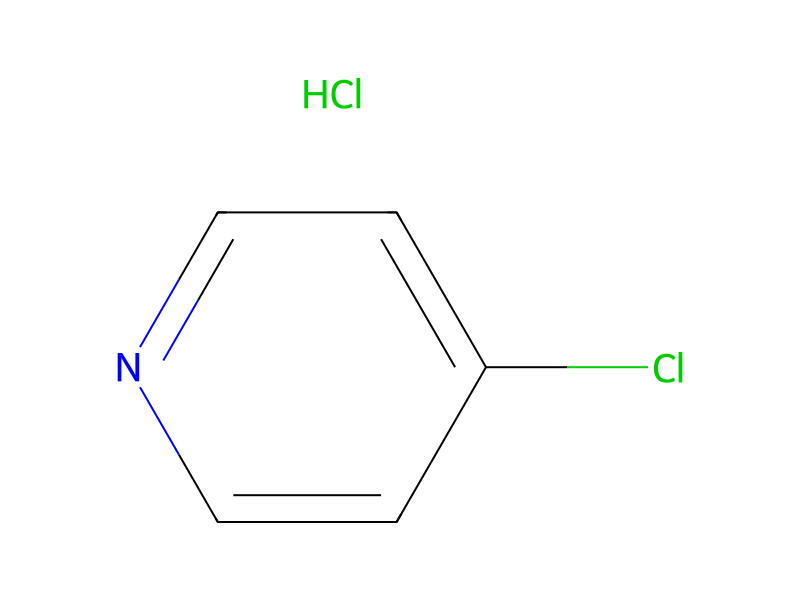
4-Chloropyridine hydrochloride → HCID 21936897, compound
Reaction equation

C([N:8]1[CH2:13][CH2:12][CH:11]([OH:14])[CH2:10][CH2:9]1)(OC(C)(C)C)=O.Cl.Cl[C:17]1[CH:22]=[CH:21][N:20]=[CH:19][CH:18]=1.CC(C)([O-])C.[K+]>CS(C)=O.O1CCCC1.C(OCC)C>[N:8]1[CH:9]=[CH:10][C:11]([O:14][N:20]2[CH2:21][CH2:22][CH2:17][CH2:18][CH2:19]2)=[CH:12][CH:13]=1Participants
7
Reactant 3


Product 1

Reagents, catalysts & solvents 3



Procedure
Part A: To a solution of N-BOC-4-hydroxypiperidine (3.00 g, 14.9 mmol) in dimethylsulfoxide (10 mL) are sequentially added 4-chloropyridine hydrochloride (2.35 g, 15.6 mmol) and potassium-t-butoxide (30.5 mL of a 1.0 M solution in tetrahydrofuran, 30.5 mmol). After 16 hours at ambient temperature, the reaction mixture is diluted with diethyl ether (100 mL) and washed with water (3×) and brine, and then dried over sodium sulfate. Concentration of the organic solution gives the desired 4-pyridyloxypiperidine (4.24 g, 100%) as a white solid. Analytical calculation for C15H22N2O3: C, 64.73; H, 7.97; N, 10.06. Found: C, 64.48; H, 8.14; N, 9.82.
Workup
- washwashed with water (3×) and brine
- dry with materialdried over sodium sulfate
Sources & evidence
- ORD record
- ord-3d799ce9c04d4b48a28b354f99666b81
- Source dataset
- uspto-grants-2004_09
- Patent number
- US06794511B2
Reaction notes
Loading…