Dichloromethane → HCID 178511896, compound
Reaction equation

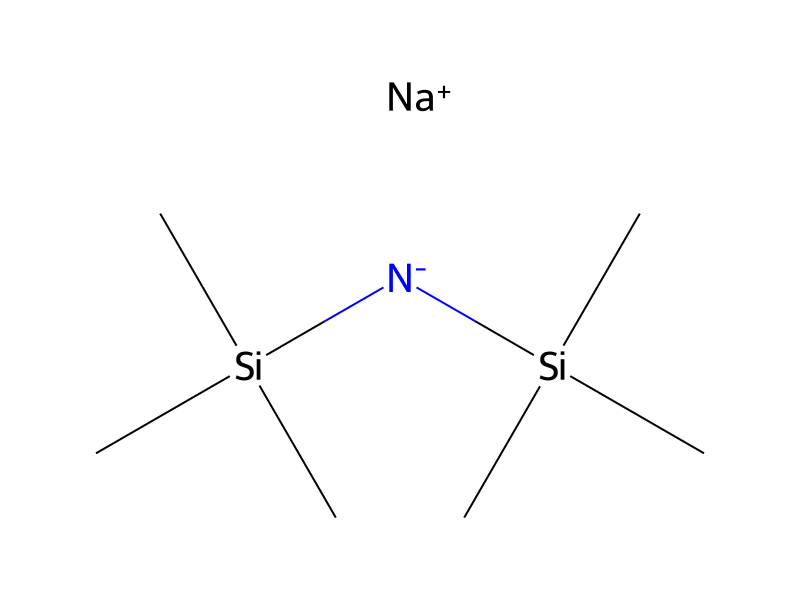
[O:1]1[C:6]2[CH:7]=[CH:8][C:9]([NH2:11])=[CH:10][C:5]=2[O:4][CH2:3][CH2:2]1.C[Si]([N-][Si](C)(C)C)(C)C.[Na+].[F:22][C:23]1[CH:30]=[CH:29][C:26]([C:27]#[N:28])=[CH:25][CH:24]=1.ClCCl>O1CCCC1.[Cl-].[Na+].O>[O:1]1[C:6]2[CH:7]=[CH:8][C:9]([NH:11][C:27]([C:26]3[CH:29]=[CH:30][C:23]([F:22])=[CH:24][CH:25]=3)=[NH:28])=[CH:10][C:5]=2[O:4][CH2:3][CH2:2]1Participants






Procedure
To a solution of 2.39 g (15.8 mmol) of 1,4-benzodioxan-6-amine in 30 mL of tetrahydrofuran at ambient temperature was added 8.7 mL (17.4 mmol) of 2.0 M (in tetrahydrofuran) sodium bis(trimethylsilyl)amide and the resulting solution was stirred for 20 min. To this reaction mixture was added 1.91 g (15.8 mmol) of 4-fluorobenzonitrile all at once. The resulting mixture was stirred at ambient temperature overnight and then poured into brine (50 mL) and dichloromethane (150 mL). The organic layer was separated and the aqueous layer was extracted with dichloromethane (50 mL). The combined organic layers were dried over sodium sulfate; filtered and concentrated in vacuo to yield the title compound as yellow solid which was used without further purification. LC/MS 273.2 (M+1).
Workup
- stirringThe resulting mixture was stirred at ambient temperature overnight
- customThe organic layer was separated
- extractionthe aqueous layer was extracted with dichloromethane (50 mL)
- dry with materialThe combined organic layers were dried over sodium sulfate
- filtrationfiltered
- concentrationconcentrated in vacuo
Sources & evidence
- ORD record
- ord-cf6fb552ba344c968d2b31a8c0a0d5d7
- Source dataset
- uspto-grants-2011_07
- Patent number
- US07977339B2
Reaction notes
Loading…