Potassium Carbonate → HCID 15712183, compound
Reaction equation

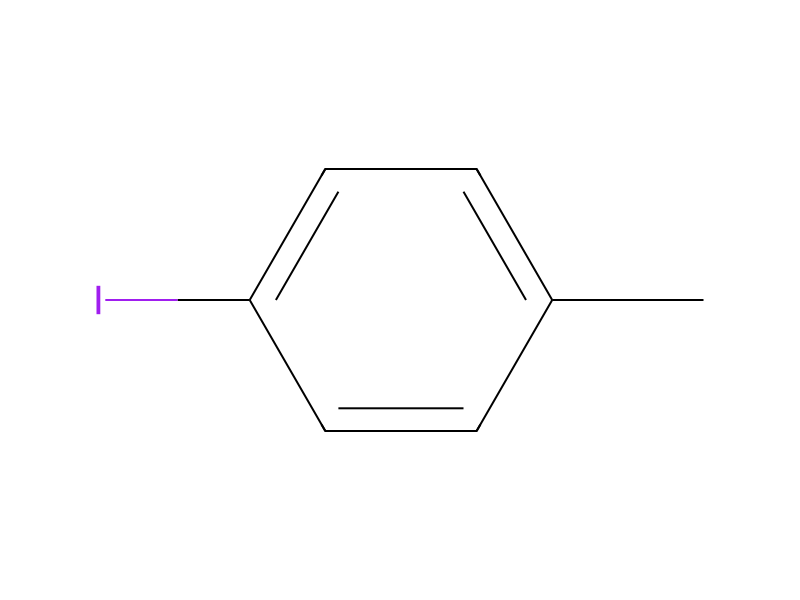
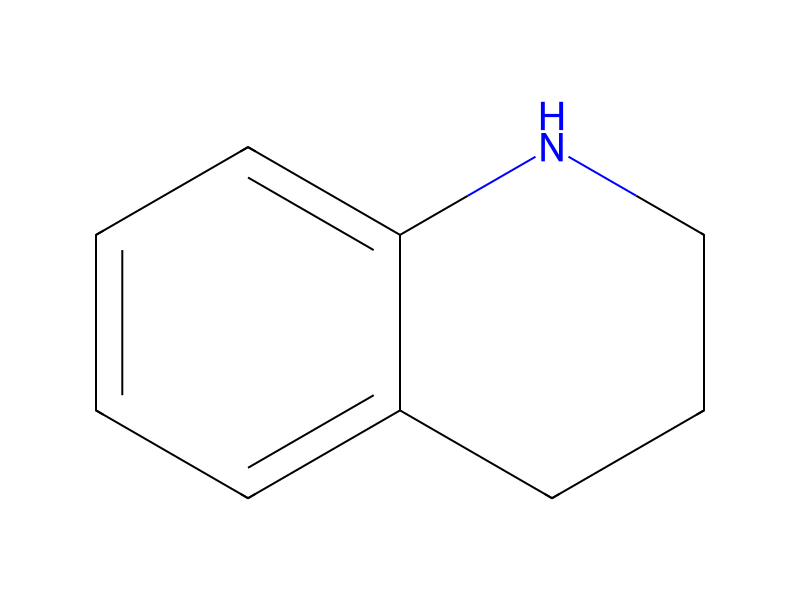
[NH:1]1[C:10]2[C:5](=[CH:6][CH:7]=[CH:8][CH:9]=2)[CH2:4][CH2:3][CH2:2]1.I[C:12]1[CH:17]=[CH:16][C:15]([CH3:18])=[CH:14][CH:13]=1.C(=O)([O-])[O-].[K+].[K+]>[Cu].CN(C)C=O>[C:15]1([CH3:18])[CH:16]=[CH:17][C:12]([N:1]2[C:10]3[C:5](=[CH:6][CH:7]=[CH:8][CH:9]=3)[CH2:4][CH2:3][CH2:2]2)=[CH:13][CH:14]=1Participants
Reactant 3

Product 1

Reagents, catalysts & solvents 2


Procedure
Under the atmosphere of nitrogen, 4 parts of 1,2,3,4-tetrahydroquinoline, 20 parts of 4-iodotoluene, 20 parts of dimethylformamide (DMF), 10 parts of potassium carbonate, and 1 part of copper powder (200 mesh) were stirred at 160° C. for 10 hours. After the reaction, the resultant was extracted with water/ethyl acetate, and the ethyl acetate phase was dried over magnesium sulfate. Ethyl acetate was distilled off, and the residue was separated and purified by column chromatography to yield 5 parts of a precursor of the compound (303), 1,2,3,4-tetrahydro-1-p-tolylquinoline as a colorless crystal. Next, 1.7 parts of phosphorus oxychloride were dropwise added to 10 parts of chloroform and 1 part of N,N-dimethylacrolein, the temperature of which was adjusted to 5° C., while the temperature of the reaction solution was kept at 10° C. or lower. The reaction solution was then stirred at 5° C. for 1 hour. Thereafter, 2.0 parts of 1,2,3,4-tetrahydro-1-p-tolylquinoline described above were added thereto, and then the reactive components were caused to react at 25° C. for 1 hour. The reaction solution was then stirred at 70° C. for 1 hour. Thereafter, a 20% solution of sodium hydroxide in water was added to the reaction solution until the pH turned to 12. The precipitated crystal was filtrated, and the resultant crystal was washed with water. The crystal was then separated by column chromatography (hexane/ethyl acetate), and recrystallized from ethanol to yield 1.8 parts of the compound (303) as a yellow crystal.
Workup
- customAfter the reaction
- extractionthe resultant was extracted with water/ethyl acetate
- dry with materialthe ethyl acetate phase was dried over magnesium sulfate
- distillationEthyl acetate was distilled off
- customthe residue was separated
- custompurified by column chromatography
Sources & evidence
- ORD record
- ord-792833655a284ef98f92621548d6c672
- Source dataset
- uspto-grants-2011_07
- Patent number
- US07977570B2
Reaction notes
Loading…