2-Methyltetrahydrofuran → 9H-Fluoren-9-YL acrylate
Reaction equation

[OH:1][CH:2]1[C:14]2[CH:13]=[CH:12][CH:11]=[CH:10][C:9]=2[C:8]2[C:3]1=[CH:4][CH:5]=[CH:6][CH:7]=2.C[CH:16]1[CH2:20][CH2:19]C[O:17]1.C(N(CC)CC)C.C(Cl)(=O)C=C>>[CH:13]1[C:14]2[CH:2]([O:1][C:16](=[O:17])[CH:20]=[CH2:19])[C:3]3[C:8](=[CH:7][CH:6]=[CH:5][CH:4]=3)[C:9]=2[CH:10]=[CH:11][CH:12]=1Participants
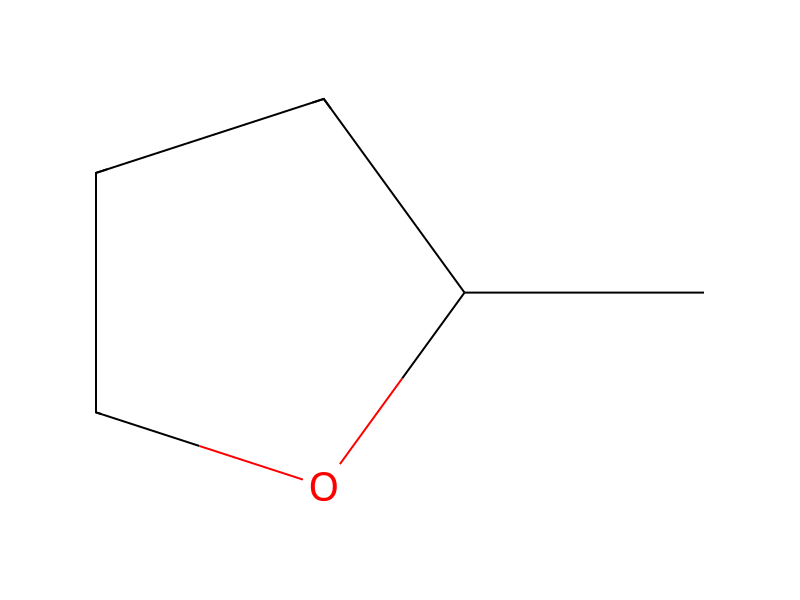
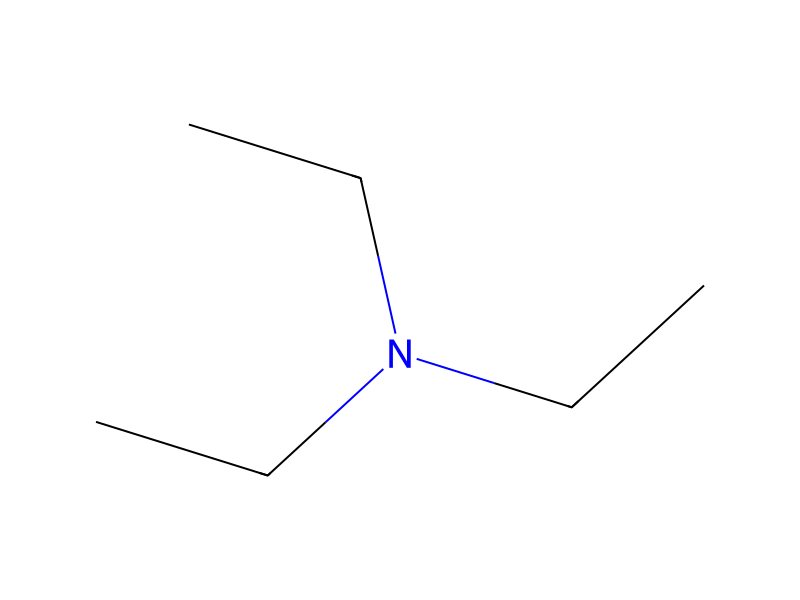
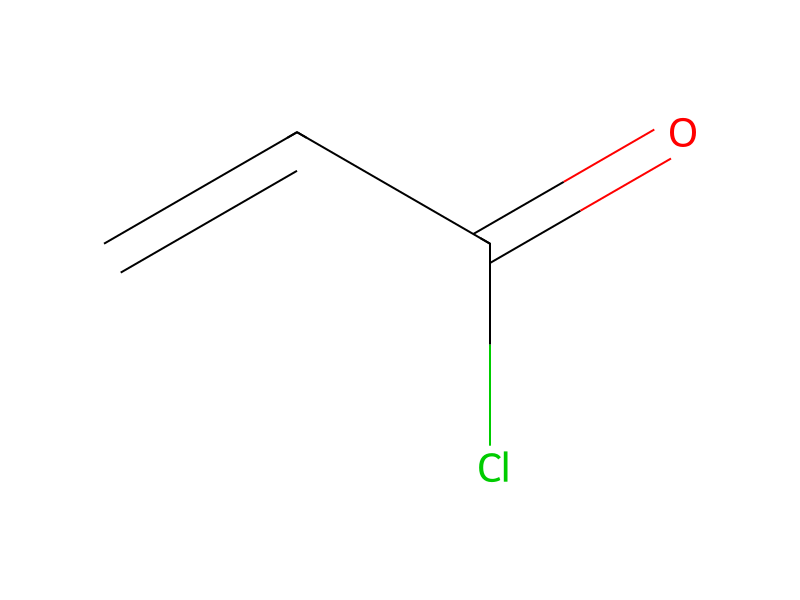


Procedure
To a 250 ml 3 neck round bottom was added 9-Hydroxyfluorene (5 g, 0.027 mole, 1.0 equivalent), 2-methyltetrahydrofuran (50 g), triethylamine (3.3 g, 0.03 mole, 1.2 equivalents) and cooled in an ice bath. The cooled solution was treated with acryloyl chloride (2.7 g, 0.03 mole, 1.1 equivalents) dropwise over 1 hour. Analysis by gas chromatography indicated 60/40 mixture. The reaction was washed two times with sodium chloride brine (25 ml, 20% aqueous solution), concentrated invacuo to recover a solid. The material was dissolved in chloroform (50 ml) and added to a silica gel column containing 500 g silica gel and eluted with hexane/ethyl acetate at varying concentrations of 1-2.5% (ethyl acetate). The product was eluted first and was recovered by concentrating invacuo. Recovered 2.5 g of a pale yellow oil, which quickly solidified, having a melting point of 64-65 C. Polymerizable Resin Composition 1: 40 parts of FA-1 (with a refractive index of 1.613), 50 parts CN120 (epoxy acrylate available from Sartomer Company, Exton, Pa., reported by Sartomer to have a viscosity of 2150 cps at 65° C., a refractive index of 1.5556 and a Tg of 60° C.), 10 parts SR339(2-phenoxyethyl acrylate available form Sartomer), and 0.3 parts Darocur 4265 (available from Ciba Specialty Chemicals, Tarrytown, N.Y.) were mixed together thoroughly in an amber jar. Optical Film Sample Preparation: Brightness enhancing films samples were made using Polymerizable Resin Composition 1. About 3 grams of warm resin was applied to a 2 mil primed PET (polyester) film, available from DuPont under the trade designation “Melinex 623” and placed against a microstructured tool with a 90/24 pattern similar to the commercially available Vikuiti TBEF-90/24. The PET, resin and tool were passed through a heated laminator set at approximately 150° F. to create a uniformly thick sample. The tool containing the film and coated resin sample was passed at 50 fpm through a Fusion UV processor containing two 600 W/in D-bulbs. The PET and cured resin were removed from the tool and cut into samples. Gain Test Method
Workup
- temperaturecooled in an ice bath
- washThe reaction was washed two times with sodium chloride brine (25 ml, 20% aqueous solution)
- concentrationconcentrated invacuo
- customto recover a solid
- dissolutionThe material was dissolved in chloroform (50 ml)
- additionadded to a silica gel column
- additioncontaining 500 g silica gel
- washeluted with hexane/ethyl acetate
- washThe product was eluted first
- customwas recovered
- concentrationby concentrating invacuo
- customRecovered 2.5 g of a pale yellow oil, which
- customat 65° C.
- additiona refractive index of 1.5556 and a Tg of 60° C.), 10 parts SR339(2-phenoxyethyl acrylate available form Sartomer), and 0.3 parts Darocur 4265 (available from Ciba Specialty Chemicals, Tarrytown, N.Y.) were mixed together thoroughly in an amber jar
- customOptical Film Sample Preparation
- customset at approximately 150° F.
- additionThe tool containing the film and coated resin sample
- additioncontaining two 600 W/in D-bulbs
- customwere removed from the tool
Sources & evidence
- ORD record
- ord-709ab6109fe349a7bfcbca75174c4a5f
- Source dataset
- uspto-grants-2011_07
- Patent number
- US07981986B2
Reaction notes
Loading…