Triethylamine → 2-Acryloyl-6-(methyloxy)-7-nitro-1,2,3,4-tetrahydroisoquinoline
Reaction equation

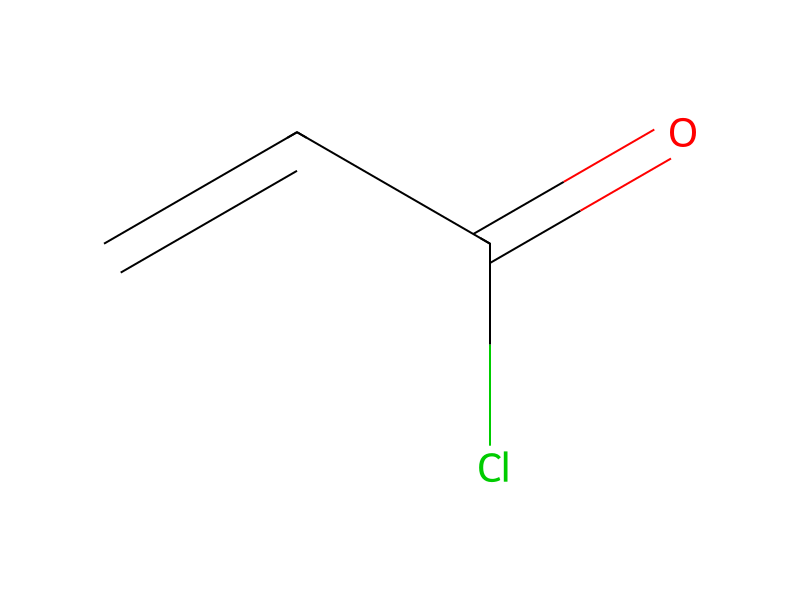
[CH3:1][O:2][C:3]1[CH:4]=[C:5]2[C:10](=[CH:11][C:12]=1[N+:13]([O-:15])=[O:14])[CH2:9][NH:8][CH2:7][CH2:6]2.[C:16](Cl)(=[O:19])[CH:17]=[CH2:18].C(N(CC)CC)C>ClCCl.CN(C)C1C=CN=CC=1.O>[C:16]([N:8]1[CH2:7][CH2:6][C:5]2[C:10](=[CH:11][C:12]([N+:13]([O-:15])=[O:14])=[C:3]([O:2][CH3:1])[CH:4]=2)[CH2:9]1)(=[O:19])[CH:17]=[CH2:18]Participants
Reactant 3


Product 1

Reagents, catalysts & solvents 3



Procedure
A solution of 6-(methyloxy)-7-nitro-1,2,3,4-tetrahydroisoquinoline (1.6 g, 7.7 mmol) in dichloromethane (30 mL) was treated with acryloyl chloride (1.9 mL, 23 mmol, TCl), triethylamine (3.2 mL, 23 mmol, Aldrich), and catalytic 4-dimethylaminopyridine (50 mg 0.41 mmol, Aldrich). The mixture was stirred for 16 h, diluted with excess water, and extracted with ethyl acetate. The organic layer was separated, dried over magnesium sulfate, filtered, and concentrated to provide 2-acryloyl-6-(methyloxy)-7-nitro-1,2,3,4-tetrahydroisoquinoline (1.7 g, 84%). 1H NMR (400 MHz, DMSO-d6) is complicated due to amide rotomers δ ppm 2.86-2.95 (two triplets at 2.88 and 2.93, 2 H), 3.72-3.82 (two triplets at 3.74 and 3.80, 2 H), 3.89 (m, 3 H), 4.63-4.80 (two singlets at 4.65 and 4.77, 2 H), 5.73 (app d, J=10.3 Hz, 1 H), 6.16 (dd, J=16.7, 2.4 Hz, 1 H), 6.89 (dd, J=16.9, 10.3 Hz, 1 H), 7.21 (s, 1 H), 7.78-7.84 (two singlets at 7.79 and 7.83, 1 H); ESIMS (M+H)+=263.
Workup
- extractionextracted with ethyl acetate
- customThe organic layer was separated
- dry with materialdried over magnesium sulfate
- filtrationfiltered
- concentrationconcentrated
Sources & evidence
- ORD record
- ord-8cc9bedb7beb4f339b8310f7a67bc626
- Source dataset
- uspto-grants-2011_07
- Patent number
- US07981903B2
Reaction notes
Loading…