Acetonitrile → HCID 58416506, compound
Reaction equation

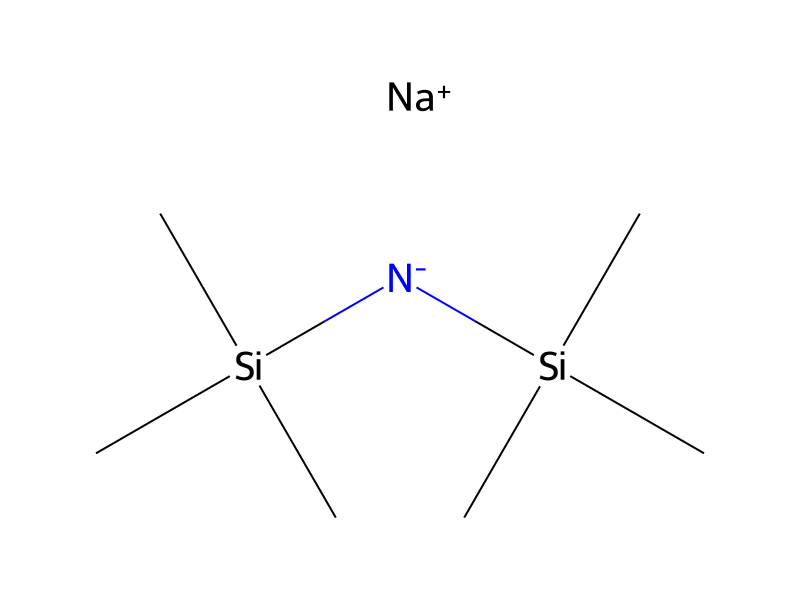
Cl[C:2]1[C:7]([C:8]2([CH3:13])[O:12][CH2:11][CH2:10][O:9]2)=[CH:6][CH:5]=[CH:4][N:3]=1.[C:14](#[N:16])[CH3:15].C[Si]([N-][Si](C)(C)C)(C)C.[Na+].[NH4+].[Cl-]>C1COCC1>[CH3:13][C:8]1([C:7]2[C:2]([CH2:15][C:14]#[N:16])=[N:3][CH:4]=[CH:5][CH:6]=2)[O:12][CH2:11][CH2:10][O:9]1Participants





Conditions
- Temperature
- 0 °C
Procedure
A solution of 2-chloro-3-(2-methyl-[1,3]dioxolan-2-yl)-pyridine (2.19 g, 11.0 mmol, 1.0 equiv) and acetonitrile (577 μL, 11.0 mmol, 1.0 equiv) in THF (75 mL) is cooled to 5° C. under nitrogen atmosphere. 2M Sodium bis(trimethylsilyl)amide solution in THF (11.0 mL, 21.9 mmol, 2.0 equiv) is added within 1 minute. This results in a bright yellow solution which turns orange over time. Stirring at 0° C. is continued for exact 1 h. According to TLC there is complete conversion. Saturated NH4Cl solution (50 mL) is added. The organic layer is separated and concentrated in vacuo. The residue is combined with the water layer and extracted with ethyl acetate (75 mL). The organic layer is washed three times with sat. NH4Cl solution, dried over Na2SO4 and evaporated in vacuo. The residue is purified by flash column chromatography (10% to 50% ethyl acetate in heptane) and gave 540 mg of the title compound as an oil.
Workup
- customThis results in a bright yellow solution which
- customThe organic layer is separated
- concentrationconcentrated in vacuo
- extractionextracted with ethyl acetate (75 mL)
- washThe organic layer is washed three times with sat. NH4Cl solution
- dry with materialdried over Na2SO4
- customevaporated in vacuo
- customThe residue is purified by flash column chromatography (10% to 50% ethyl acetate in heptane)
Sources & evidence
- ORD record
- ord-ad1a29dd34574242b721d6330267458c
- Source dataset
- uspto-grants-2011_07
- Patent number
- US07985753B2
Reaction notes
Loading…