Pyrrolidine → 3-[1-(t-Butoxycarbonyl)-1,2,3,6-tetrahydro-4-pyridinyl]-7-fluoroindole
Reaction equation

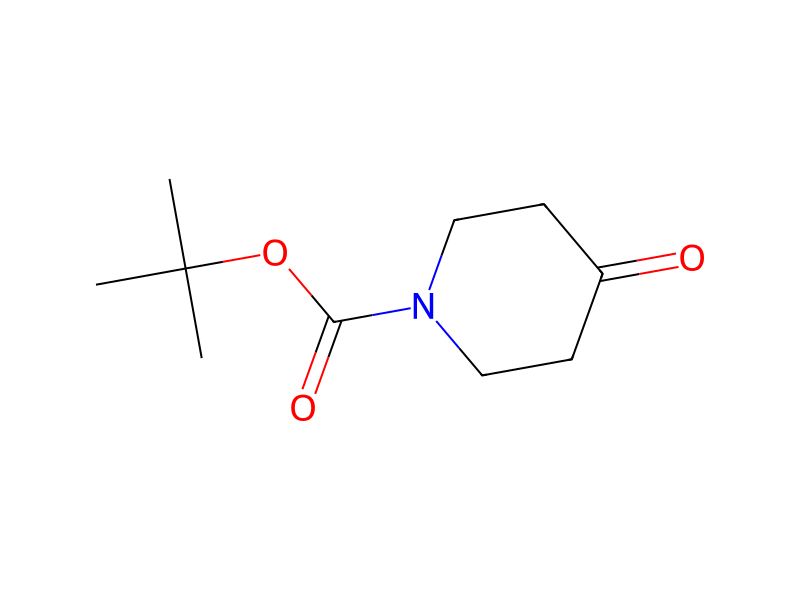
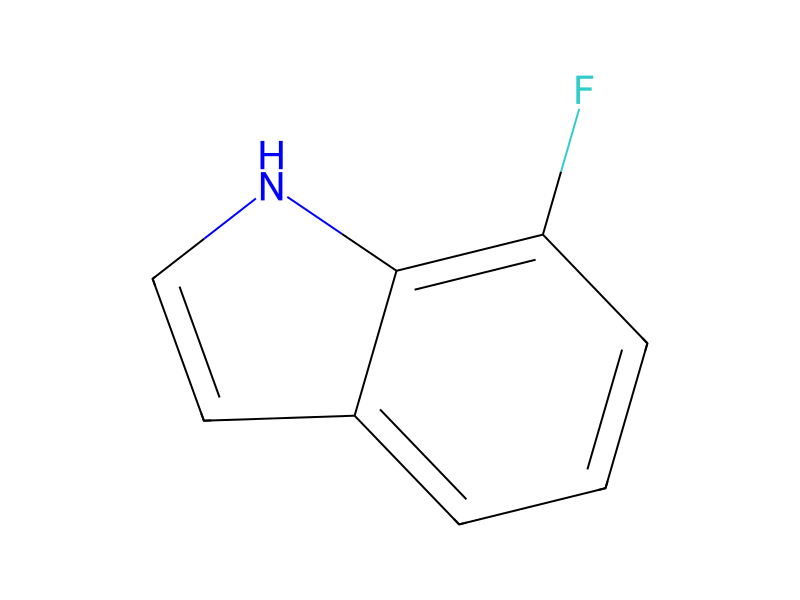
[F:1][C:2]1[CH:3]=[CH:4][CH:5]=[C:6]2[C:10]=1[NH:9][CH:8]=[CH:7]2.[C:11]([O:15][C:16]([N:18]1[CH2:23][CH2:22][C:21](=O)[CH2:20][CH2:19]1)=[O:17])([CH3:14])([CH3:13])[CH3:12].N1CCCC1>C(O)C>[C:11]([O:15][C:16]([N:18]1[CH2:19][CH:20]=[C:21]([C:7]2[C:6]3[C:10](=[C:2]([F:1])[CH:3]=[CH:4][CH:5]=3)[NH:9][CH:8]=2)[CH2:22][CH2:23]1)=[O:17])([CH3:14])([CH3:12])[CH3:13]Participants
5



Procedure
A stirred solution of 7-fluoroindole (400 mg, 3.0 mmol), t-butyl-4-oxo-1-piperidinecarboxylate (650 mg, 3.3 mmol), and pyrrolidine (0.62 mL, 7.4 mmol) in ethanol (10 mL) was heated at reflux for 16 hours. Solvent was evaporated and the residue subjected to chromatography on silica gel with 20% ethyl acetate/hexanes to afford a yellow solid (620 mg, 66%).
Workup
- temperatureat reflux for 16 hours
- customSolvent was evaporated
Sources & evidence
- ORD record
- ord-fb1f4423f6b64a30ab3c5e59e911692e
- Source dataset
- uspto-grants-2002_11
- Patent number
- US06476051B2
Reaction notes
Loading…