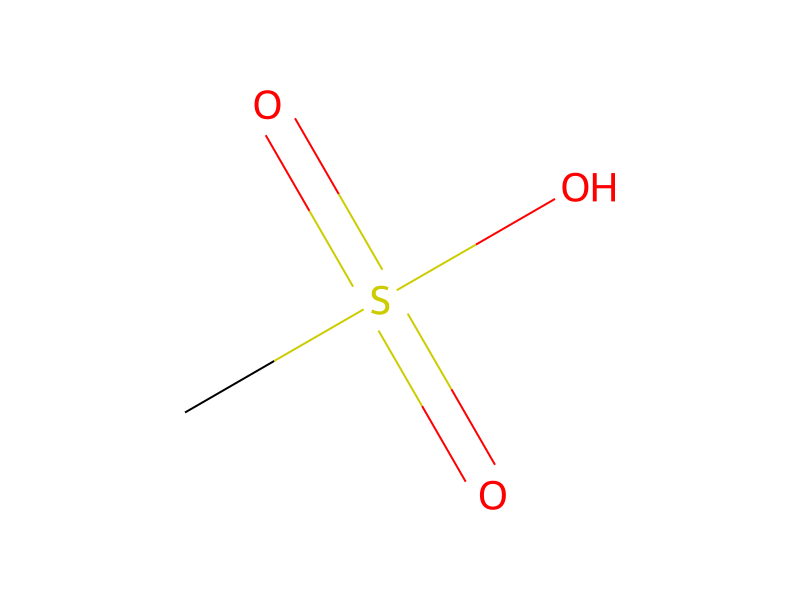
Methanesulfonic Acid → HCID 18407230, compound
Reaction equation

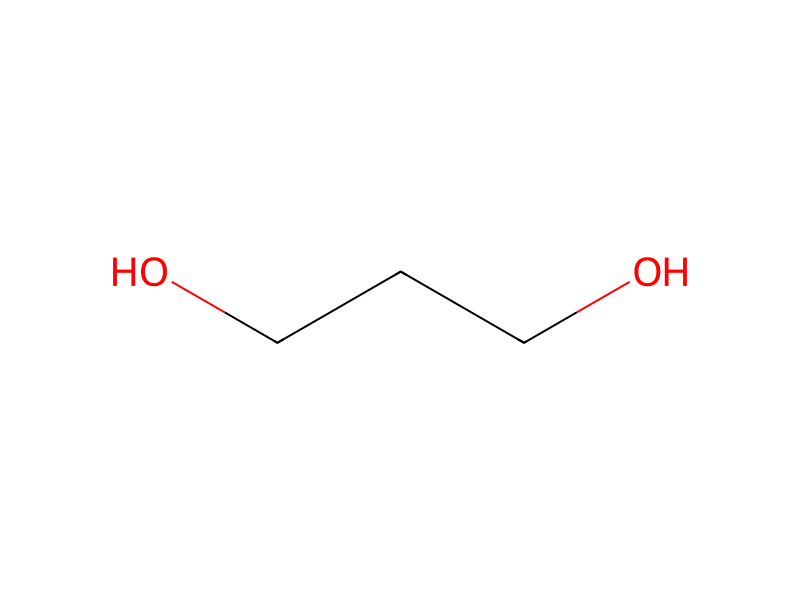
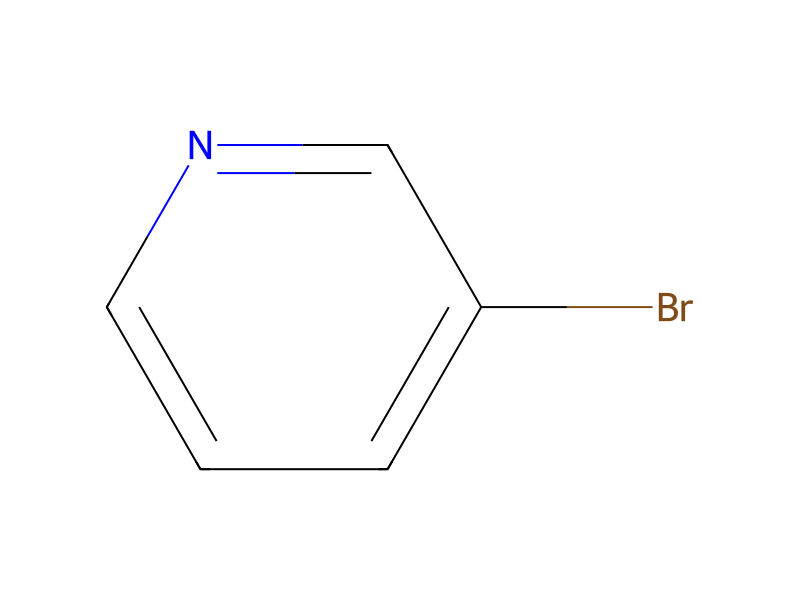
Br[C:2]1[CH:3]=[N:4][CH:5]=[CH:6][CH:7]=1.[CH2:8]([Li])[CH2:9][CH2:10][CH3:11].B([O:18][CH3:19])(OC)OC.[CH2:20](O)[CH2:21][CH2:22]O.[CH3:25]S(O)(=O)=O>C(OCC)C.CCCCCC>[N:4]1[CH:5]=[CH:6][CH:7]=[C:2]([C:20]2[CH:8]=[C:9]3[C:25](=[CH:22][CH:21]=2)[C:19](=[O:18])[CH2:11][CH2:10]3)[CH:3]=1Participants





Conditions
- Temperature
- -60 °C
Procedure
13.26 g of 3-bromopyridine are dissolved in 160 ml of diethyl ether and cooled to −60° C. To this solution are added dropwise over the course of 30 minutes 52 ml of a 1.6 molar solution of n-butyllithium in n-hexane. The solution is allowed to warm to −30° C. and, at this temperature, 9.5 ml of trimethyl borate are added dropwise with stirring. The reaction mixture is subsequently heated under reflux for 3 hours and then cooled to 0° C., and 6.1 ml of 1,3-propanediol are added dropwise. This mixture is stirred at 0° C. for 30 minutes before adding 5.46 ml of methanesulfonic acid dropwise and stirring for a further 30 minutes. Then 20 g of Celite are added, the mixture is warmed to room temperature and filtered, the filtrate is concentrated, the residue is stirred in 700 ml of toluene and, after renewed filtration, the solvent is removed by distillation in vacuo. 4.1 g of the residue (3[1,3,2]dioxaborinan-2-ylpyridine) are dissolved, without further purification, together with 4.22 g of 5-bromo-1-indanone and 4.24 g of sodium carbonate in a mixture of 100 ml of toluene with 20 ml of ethanol and 20 ml of water. The solution is degassed with argon and then 112 mg of palladium(II) acetate and 262 mg of triphenylphosphine are added. The reaction mixture is boiled under reflux for 4 hours and cooled to room temperature, and the ethanol content in the mixture is removed by distillation in vacuo. Then 50 ml of a 0.5 N sodium hydroxide solution are added with stirring, the organic phase is separated off and the aqueous phase is extracted by shaking with toluene. The combined organic phases are extracted by shaking successively with water and saturated brine, dried over magnesium sulfate, concentrated in vacuo and purified by chromatography on silica gel with 1/1 ethyl acetate/n-heptane. 5-Pyridin-3-yl-1-indanone is obtained with a melting point of 103-106° C.
Workup
- additionare added dropwise
- temperatureThe reaction mixture is subsequently heated
- temperatureunder reflux for 3 hours
- temperaturecooled to 0° C.
- stirringThis mixture is stirred at 0° C. for 30 minutes
- stirringstirring for a further 30 minutes
- additionThen 20 g of Celite are added
- temperaturethe mixture is warmed to room temperature
- filtrationfiltered
- concentrationthe filtrate is concentrated
- stirringthe residue is stirred in 700 ml of toluene
- filtrationfiltration
- customthe solvent is removed by distillation in vacuo
- dissolution4.1 g of the residue (3[1,3,2]dioxaborinan-2-ylpyridine) are dissolved, without further purification, together with 4.22 g of 5-bromo-1-indanone and 4.24 g of sodium carbonate in a mixture of 100 ml of toluene with 20 ml of ethanol and 20 ml of water
- customThe solution is degassed with argon
- addition112 mg of palladium(II) acetate and 262 mg of triphenylphosphine are added
- temperatureunder reflux for 4 hours
- temperaturecooled to room temperature
- customthe ethanol content in the mixture is removed by distillation in vacuo
- additionThen 50 ml of a 0.5 N sodium hydroxide solution are added
- stirringwith stirring
- customthe organic phase is separated off
- extractionthe aqueous phase is extracted
- stirringby shaking with toluene
- extractionThe combined organic phases are extracted
- stirringby shaking successively with water and saturated brine
- dry with materialdried over magnesium sulfate
- concentrationconcentrated in vacuo
- custompurified by chromatography on silica gel with 1/1 ethyl acetate/n-heptane
Sources & evidence
- ORD record
- ord-838a5a9d3daf438fba4c2066aa68de4e
- Source dataset
- uspto-grants-2002_11
- Patent number
- US06476059B1
Reaction notes
Loading…