Triethylamine → HCID 135678277, compound
Reaction equation

C(N(CC)CC)C.[CH:8]#[C:9][CH2:10][CH2:11][CH2:12][CH3:13].[NH2:14][C:15]1[NH:16][C:17](=[O:33])[C:18]2[C:23](I)=[CH:22][N:21]([C@@H:25]3[O:30][C@H:29]([CH2:31][OH:32])[C@@H:27]([OH:28])[CH2:26]3)[C:19]=2[N:20]=1>[Cu](I)I>[NH2:14][C:15]1[NH:16][C:17](=[O:33])[C:18]2[C:23]([C:8]#[C:9][CH2:10][CH2:11][CH2:12][CH3:13])=[CH:22][N:21]([C@@H:25]3[O:30][C@H:29]([CH2:31][OH:32])[C@@H:27]([OH:28])[CH2:26]3)[C:19]=2[N:20]=1Participants
Reactant 3



Product 1

Reagents, catalysts & solvents 1
Procedure
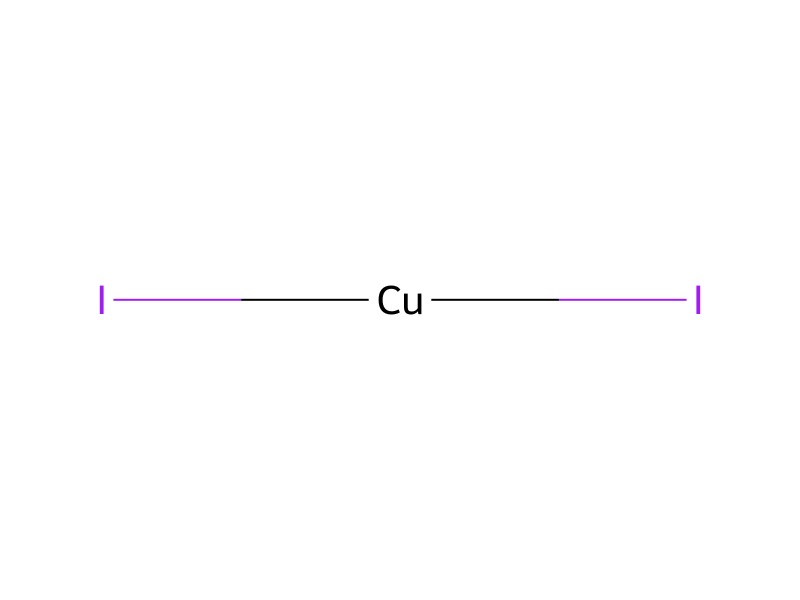
Copper iodide (38.1 mg, 0.2 mmol), triethylamine (2.8 ml, 2 mmol), tetrakis(triphenylphsophine)palladium(0) (40.5 mg, 0.1 mmol) and 1-hexyne (492 mg, 6 mmol) are added to an argon-flushed solution of compound (58) (390 mg, 1 mmol in 5 ml of dried DMF), and the solution is stirred at room temperature for 24 h. It is then evaporated and the residue is loaded onto a silica gel column (5×25 cm). Title compound (65) is obtained following stepwise elution with 5%, 10% and 20% MeOH in CH2Cl2. Recrystallization from MeCN affords a colorless solid (120 mg, 35%). 1H-NMR ([(D6] DMSO): δ=0.94 (m, CH3), 1.49, 2.38 (m, CH2), 2.0 (M, Hα—C(2′)), 2.35 (m, Hβ—C(2′)), 3.50 (m, H2—C(5′)), 3.76 (m, H—C(4′)), 4. (m, H—C(3′)), 4.88 (t, 5′-OH), 5.18 (d, J=3.5, 3′-OH), 6.27 (m, H—C(1′) +NH2), 7.13 (s, H—C(6)), 10.34 (br., NH). MS: m/e 346 (M+).
Workup
- customIt is then evaporated
Sources & evidence
- ORD record
- ord-d223583dae1645c8a08ff5e4c0995c23
- Source dataset
- uspto-grants-2002_11
- Patent number
- US06479651B1
Reaction notes
Loading…