3,4-Dichlorophenol → HCID 18402082, compound
Reaction equation

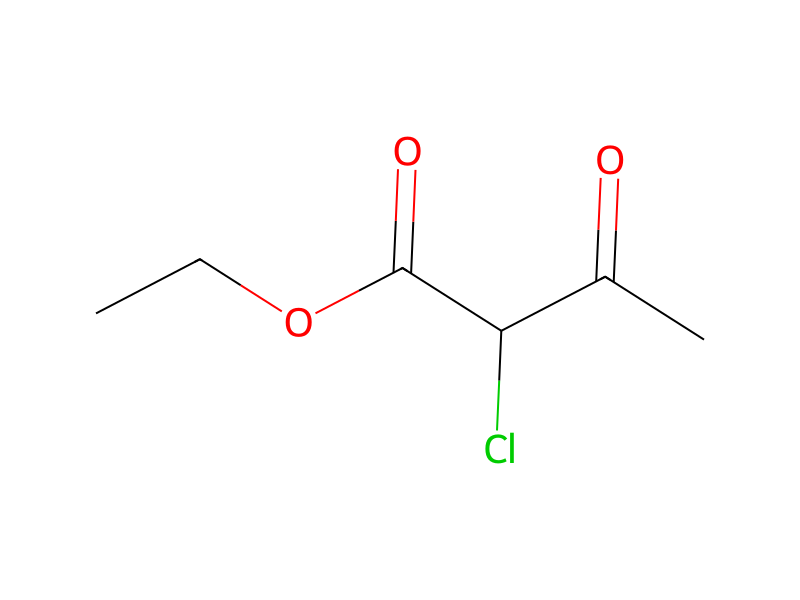
[Cl:1][C:2]1[CH:3]=[C:4]([OH:9])[CH:5]=[CH:6][C:7]=1[Cl:8].C(=O)([O-])[O-].[K+].[K+].Cl[CH:17]([C:23]([CH3:25])=[O:24])[C:18]([O:20][CH2:21][CH3:22])=[O:19]>CC(C)=O>[Cl:1][C:2]1[CH:3]=[C:4]([CH:5]=[CH:6][C:7]=1[Cl:8])[O:9][CH:17]([C:23](=[O:24])[CH3:25])[C:18]([O:20][CH2:21][CH3:22])=[O:19]Participants
5
Reactant 3


Product 1

Reagents, catalysts & solvents 1

Procedure
13.0 g (80 mmol) of 3,4-dichlorophenol and 12.2 g (88 mmol) of potassium carbonate were refluxed for 30 minutes in 400 ml of acetone. 15.8 g (96 mmol) of ethyl 2-chloroacetoacetate were subsequently added dropwise, the mixture was refluxed for 8 hours and evaporated in vacuo, and water was added to the residue. The aqueous phase was extracted three times with ethyl acetate, and the combined organic phases were dried over magnesium sulfate and evaporated. Column chromatography of the residue gave 15.8 g (68% of theory) of ethyl 2-(3,4-dichlorophenoxy)-3-ketobutanate as an oil.
Workup
- temperaturethe mixture was refluxed for 8 hours
- customevaporated in vacuo, and water
- additionwas added to the residue
- extractionThe aqueous phase was extracted three times with ethyl acetate
- dry with materialthe combined organic phases were dried over magnesium sulfate
- customevaporated
Sources & evidence
- ORD record
- ord-3965a3245ebc4ae6b5054a135683da7e
- Source dataset
- uspto-grants-2002_11
- Patent number
- US06482947B1
Reaction notes
Loading…