1-Bromo-2-methylpropane → 2-bromo-9-isobutyl-9H-carbazole
Reaction equation

[Br:1][C:2]1[CH:14]=[CH:13][C:12]2[C:11]3[C:6](=[CH:7][CH:8]=[CH:9][CH:10]=3)[NH:5][C:4]=2[CH:3]=1.[H-].[Na+].[CH2:17](Br)[CH:18]([CH3:20])[CH3:19]>CN(C=O)C>[Br:1][C:2]1[CH:14]=[CH:13][C:12]2[C:11]3[C:6](=[CH:7][CH:8]=[CH:9][CH:10]=3)[N:5]([CH2:17][CH:18]([CH3:20])[CH3:19])[C:4]=2[CH:3]=1Participants
5
Reactant 3
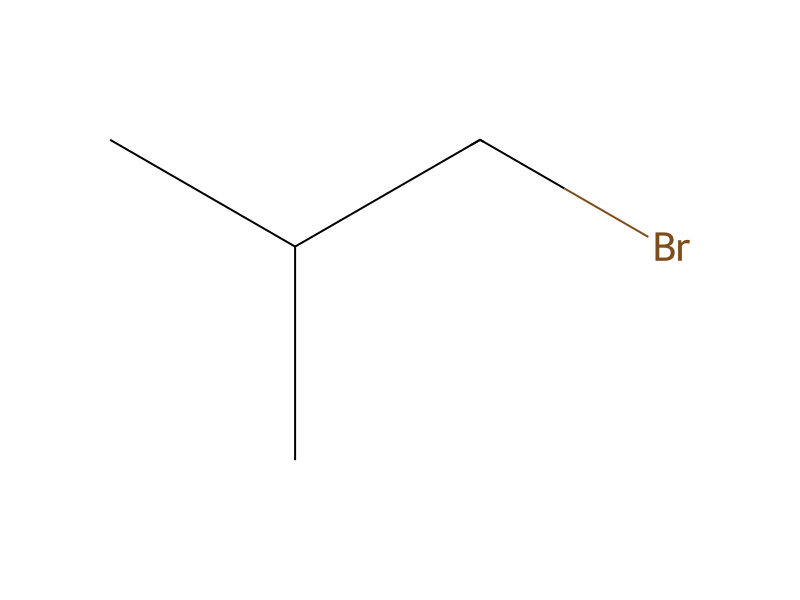


Product 1

Reagents, catalysts & solvents 1

Conditions
- Temperature
- 60 °C
Procedure
2-bromo-9H-carbazole (4.1 g, 16.74 mmol) was dissolved in DMF. To the stirred solution was slowly added NaH (1.8 g, 75.5 mmol) in 3 portions. Isobutylbromide (4.8 mL, 43.2 mmol) was added to the stirred slurry and after waiting for 20 minute, warmed up to 60° C. for 4 h. Reaction mixture was cooled to room temperature and carefully quenched with drop wise addition of saturated NH4Cl solution. Content was then partitioned in brine and ethylacetate. Organic layer was dried over anhydrous Na2SO4 and evaporated under vacuum. The crude product was flashed over silica gel with 10% ethylacetate/hexane. Final product (4.45 g, 14.8 mmol) was isolated as white solid.
Workup
- customReaction mixture
- temperaturewas cooled to room temperature
- customcarefully quenched with drop wise addition of saturated NH4Cl solution
- customContent was then partitioned in brine
- dry with materialOrganic layer was dried over anhydrous Na2SO4
- customevaporated under vacuum
Sources & evidence
- ORD record
- ord-70cd3d998aef4df78f0c7b57179869aa
- Source dataset
- uspto-grants-2014_05
- Patent number
- US08722205B2
Reaction notes
Loading…