Formaldehyde → HCID 57619349, compound
Reaction equation

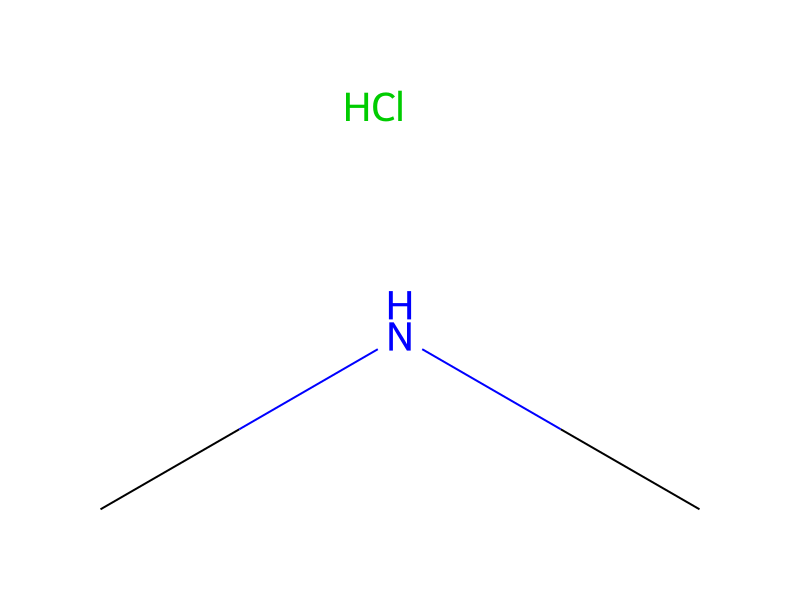
[Cl:1][C:2]1[CH:3]=[C:4]2[CH:10]=[CH:9][NH:8][C:5]2=[N:6][CH:7]=1.Cl.[CH3:12][NH:13][CH3:14].[CH2:15]=O>C(O)(C)C>[Cl:1][C:2]1[CH:3]=[C:4]2[C:10]([CH2:12][N:13]([CH3:15])[CH3:14])=[CH:9][NH:8][C:5]2=[N:6][CH:7]=1Participants
5
Reactant 3


Product 1

Reagents, catalysts & solvents 1

Procedure
To 5-Chloro-1H-pyrrolo[2,3-b]pyridine (532, 8.00 g, 0.0524 mol) in isopropyl alcohol (250.0 mL) were added dimethylamine hydrochloride (4.79 g, 0.0587 mol) and formaldehyde (1.77 g, 0.0589 mol). The reaction was stirred at room temperature overnight, followed by refluxing for 4 hours. The reaction was concentrated, poured into water, and extracted with ethyl acetate. The organic layer was dried over anhydrous sodium sulfate and filtered. The filtrate was concentrated to give crude compound (533, 10.0 g, 91%), that was used directly in the next step.
Workup
- temperatureby refluxing for 4 hours
- concentrationThe reaction was concentrated
- additionpoured into water
- extractionextracted with ethyl acetate
- dry with materialThe organic layer was dried over anhydrous sodium sulfate
- filtrationfiltered
- concentrationThe filtrate was concentrated
Sources & evidence
- ORD record
- ord-dc4835c5071b4cf2a60405e2588602ea
- Source dataset
- uspto-grants-2014_05
- Patent number
- US08722702B2
Reaction notes
Loading…