Ethanol → Ethanol
Reaction equation

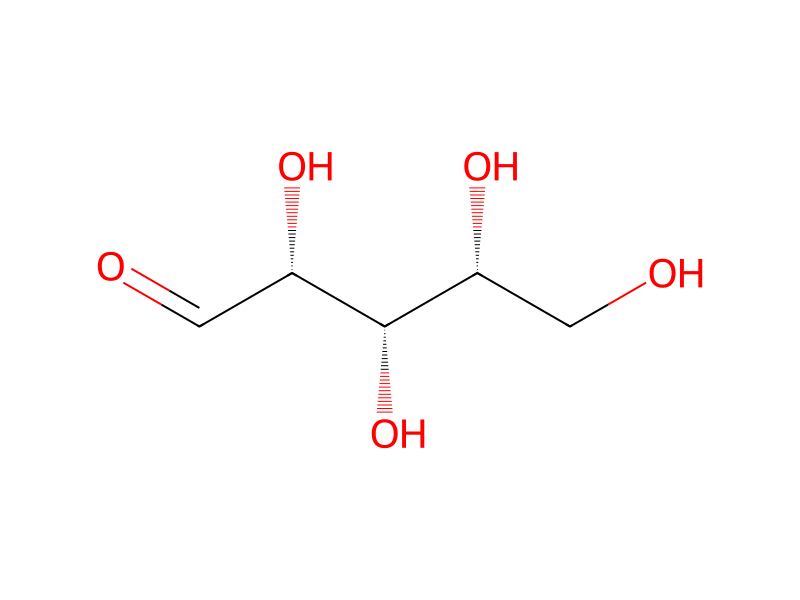
[O:1]=[CH:2][C@@H:3]([C@H:5]([C@@H:7]([CH2:9][OH:10])[OH:8])[OH:6])[OH:4].[CH2:11]([OH:13])[CH3:12]>>[O:1]=[CH:2][C@@H:3]([C@H:5]([C@@H:7]([CH2:9][OH:10])[OH:8])[OH:6])[OH:4].[O:1]=[CH:2][C@@H:3]([C@H:5]([C@@H:7]([C@@H:9]([CH2:11][OH:13])[OH:10])[OH:8])[OH:6])[OH:4].[CH2:11]([OH:13])[CH3:12]Participants
5


Procedure
Engineered bacteria show promise for biofuel production, but yeast fermentation predominates today [42, 43]. Pichia stipitis, which has an innate ability to ferment xylose, is a yeast candidate for bioconversion of lignocellulose-derived sugars [44-46]. Corn stover hydrolyzate sugars are an excellent carbon source for the growth of this yeast (FIG. 5, graph B), and P. stipitis efficiently converts hydrolyzate into ethanol. Fermenting xylose and glucose, the yeasts produced a 70±2% yield of ethanol from hydrolyzate and a 72±1% yield from pure sugars.
Sources & evidence
- ORD record
- ord-6d2da152f0af443b8d84341a9389c59c
- Source dataset
- uspto-grants-2014_05
- Patent number
- US08722878B2
Reaction notes
Loading…