Borate → 4-[3-(6-tert-butyl-8-hydroxymethyl-1-oxo-1H-phthalazin-2-yl)-2-hydroxymethyl-phenyl]-1-methyl-1H-pyrrole-2-carboxylic acid amide
Reaction equation

[C:1]([C:5]1[CH:6]=[C:7]2[C:12](=[C:13]([CH2:15][OH:16])[CH:14]=1)[C:11](=[O:17])[N:10]([C:18]1[CH:23]=[CH:22][CH:21]=[C:20](Cl)[C:19]=1[CH2:25][OH:26])[N:9]=[CH:8]2)([CH3:4])([CH3:3])[CH3:2].[CH3:27][N:28]1[CH:32]=[C:31](B2OC(C)(C)C(C)(C)O2)[CH:30]=[C:29]1[C:42]([NH2:44])=[O:43].B1(B2OC(C)(C)C(C)(C)O2)OC(C)(C)C(C)(C)O1.B([O-])([O-])[O-].CC(C1C=C(C(C)C)C(C2C=CC=CC=2P(C2CCCCC2)C2CCCCC2)=C(C(C)C)C=1)C.P([O-])([O-])([O-])=O.[K+].[K+].[K+]>C1C=CC(/C=C/C(/C=C/C2C=CC=CC=2)=O)=CC=1.C1C=CC(/C=C/C(/C=C/C2C=CC=CC=2)=O)=CC=1.C1C=CC(/C=C/C(/C=C/C2C=CC=CC=2)=O)=CC=1.[Pd].[Pd].O.O1CCOCC1>[C:1]([C:5]1[CH:6]=[C:7]2[C:12](=[C:13]([CH2:15][OH:16])[CH:14]=1)[C:11](=[O:17])[N:10]([C:18]1[C:19]([CH2:25][OH:26])=[C:20]([C:31]3[CH:30]=[C:29]([C:42]([NH2:44])=[O:43])[N:28]([CH3:27])[CH:32]=3)[CH:21]=[CH:22][CH:23]=1)[N:9]=[CH:8]2)([CH3:4])([CH3:3])[CH3:2]Participants
Reactant 6
 HCID 26574Borate
 HCID 62657Potassium Phosphate, Tribasic
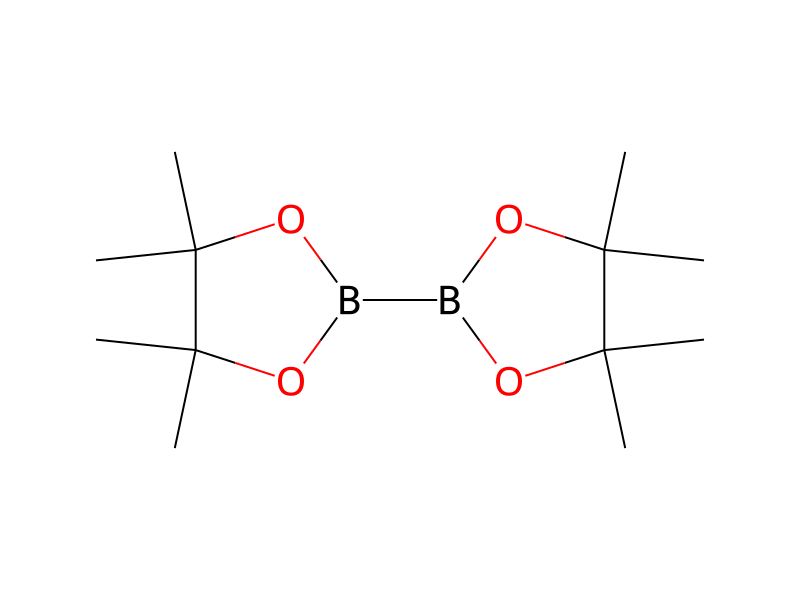 HCID 2733548Bis(pinacolato)diborane
 HCID 111557942-Dicyclohexylphosphino-2',4',6'-triisoprophylbiphenyl
 HCID 710080811-methyl-4-(4,4,5,5-tetramethyl-1,3,2-dioxaborolan-2-yl)-1H-pyrrole-2-carboxamide
 HCID 710084996-tert-butyl-2-[3-chloro-2-(hydroxymethyl)phenyl]-8-(hydroxymethyl)phthalazin-1(2H)-one
Product 1

Reagents, catalysts & solvents 3



Conditions
- Temperature
- 125 °C
Procedure
To a 15 mL tube were added 6-tert-butyl-2-[3-chloro-2-(hydroxymethyl)phenyl]-8-(hydroxymethyl)phthalazin-1(2H)-one (39 mg, 0.105 mmol), 1-methyl-4-(4,4,5,5-tetramethyl-1,3,2-dioxaborolan-2-yl)-1H-pyrrole-2-carboxamide (26.2 mg, 0.105 mmol, prepared from Intermediate-3 and bis(pinacolato)diboron under the same condition of borate formation described in the preparation of Intermediate-4), X-Phos (4.99 mg, 0.0105 mmol) and tris-potassium phosphate (55.5 mg, 0.262 mmol). Dioxane (5 mL) and water (0.5 mL) were added followed by the addition of Pd2(dba)3 (4.79 mg, 0.00523 mmol). The mixture was purged with argon and then heated to 125° C. with stirring for 30 minutes. Additional Pd2(dba)3 (6.0 mg, 0.00655 mmol) was added and the mixture was further stirred at 125° C. for 30 minutes. The mixture was extracted with dichloromethane and water. The organic layer was washed with brine and dried over sodium sulfate. Solvents were evaporated and the residue was purified by flash column chromatography (12 g silica gel, 0% to 10% methanol in dichloromethane). The desired fraction was further purified by preparative TLC (silica gel, dichloromethane/methanol/ammonium hydroxide 90/10/1) to give 4-[3-(6-tert-butyl-8-hydroxymethyl-1-oxo-1H-phthalazin-2-yl)-2-hydroxymethyl-phenyl]-1-methyl-1H-pyrrole-2-carboxylic acid amide as a light yellow powder (7.6 mg, 15.8% yield). LC/MS clacd for C26H28N4O4 (m/e) 460.21, obsd 459.0 (M−H, ES−). 1H-NMR (300 MHz, CDCl3)
Workup
- customThe mixture was purged with argon
- stirringthe mixture was further stirred at 125° C. for 30 minutes
- extractionThe mixture was extracted with dichloromethane and water
- washThe organic layer was washed with brine
- dry with materialdried over sodium sulfate
- customSolvents were evaporated
- customthe residue was purified by flash column chromatography (12 g silica gel, 0% to 10% methanol in dichloromethane)
- customThe desired fraction was further purified by preparative TLC (silica gel, dichloromethane/methanol/ammonium hydroxide 90/10/1)
Sources & evidence
- ORD record
- ord-f3f9c571fd8942869c33df3b04f69d01
- Source dataset
- uspto-grants-2014_05
- Patent number
- US08729078B2
Reaction notes
Loading…