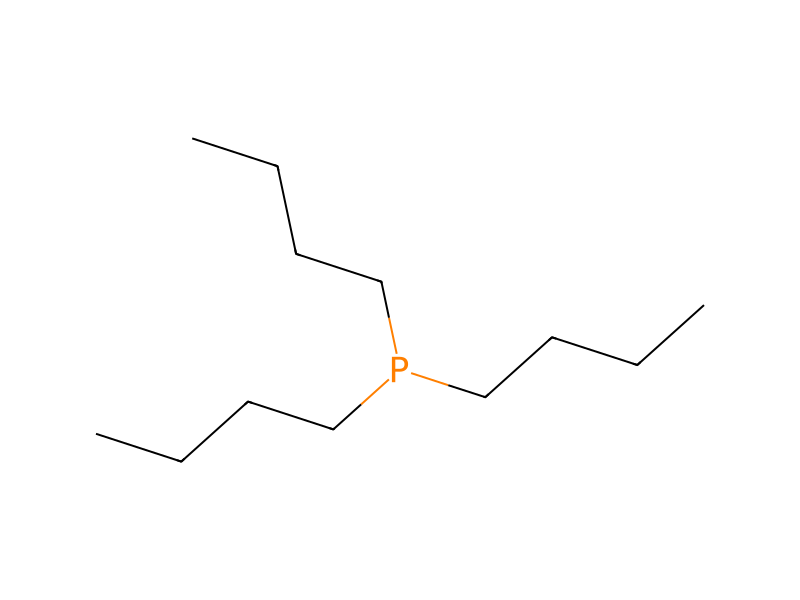
Tributylphosphine → Ethyl 5-fluoro-1-[2-(pyridin-3-yl)ethyl]-1H-indole-2-carboxylate
Reaction equation

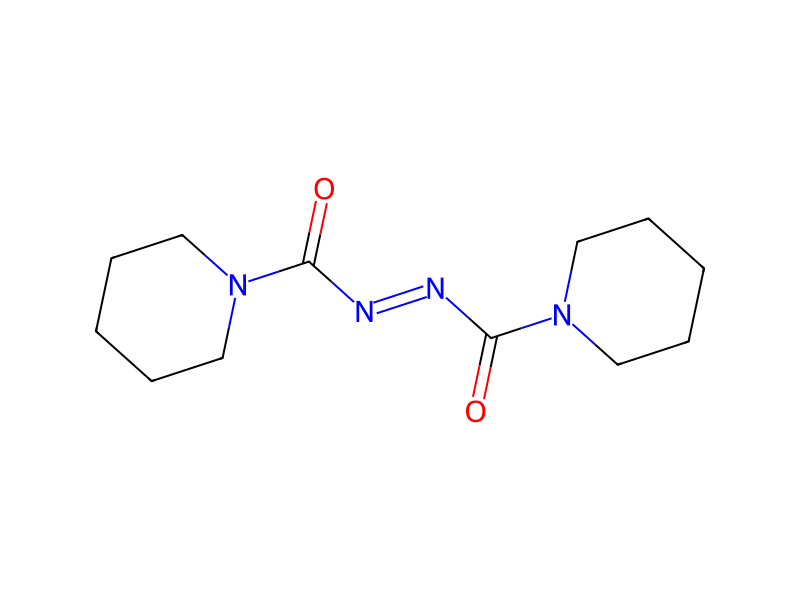
N(C(N1CCCCC1)=O)=NC(N1CCCCC1)=O.[F:19][C:20]1[CH:21]=[C:22]2[C:26](=[CH:27][CH:28]=1)[NH:25][C:24]([C:29]([O:31][CH2:32][CH3:33])=[O:30])=[CH:23]2.[N:34]1[CH:39]=[CH:38][CH:37]=[C:36]([CH2:40][CH2:41]O)[CH:35]=1.C(P(CCCC)CCCC)CCC>O1CCCC1>[F:19][C:20]1[CH:21]=[C:22]2[C:26](=[CH:27][CH:28]=1)[N:25]([CH2:41][CH2:40][C:36]1[CH:35]=[N:34][CH:39]=[CH:38][CH:37]=1)[C:24]([C:29]([O:31][CH2:32][CH3:33])=[O:30])=[CH:23]2Participants
6
Reactant 4


Product 1

Reagents, catalysts & solvents 1

Procedure
A solution of 0.365 g (1.44 mmol) of 1,1′-(azodicarbonyl)dipiperidine in 10 ml of tetrahydrofuran is added dropwise to a solution of 0.2 g (0.97 mmol) of ethyl 5-fluoro-1H-indole-2-carboxylate, 0.178 g (1.45 mmol) of 2-(pyrid-3-yl)ethanol and 0.36 ml (1.44 mmol) of tributylphosphine in 30 ml of tetrahydrofuran. The reaction mixture is stirred overnight at room temperature and then concentrated under reduced pressure and taken up in 50 ml of cyclohexane. The suspension is then filtered and the filtrate is chromatographed on a column of silica (eluent: dichloromethane/methanol). 0.125 g of the expected product is obtained.
Workup
- concentrationconcentrated under reduced pressure
- filtrationThe suspension is then filtered
- customthe filtrate is chromatographed on a column of silica (eluent: dichloromethane/methanol)
Sources & evidence
- ORD record
- ord-67c50f2d0a5c4efa86d731eef8274961
- Source dataset
- uspto-grants-2014_05
- Patent number
- US08735432B2
Reaction notes
Loading…