Phthalic Acid → Phthalic Anhydride
Reaction equation

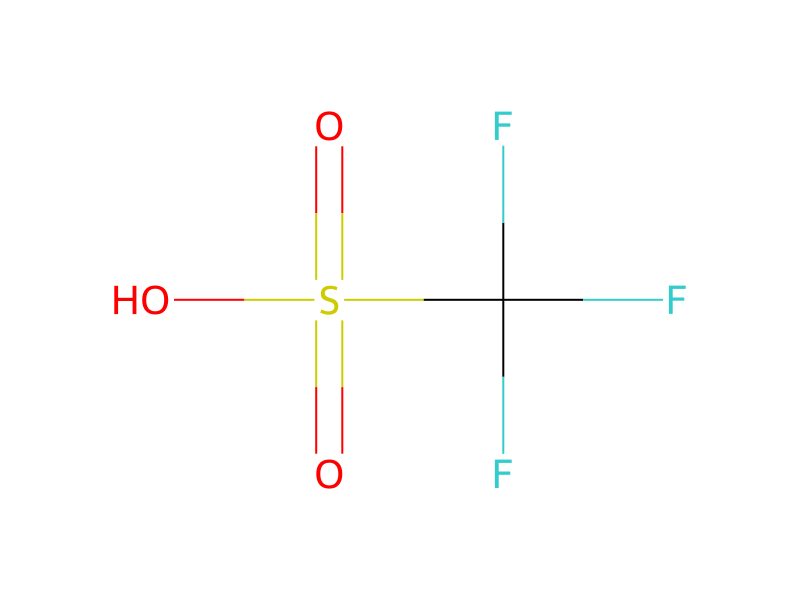
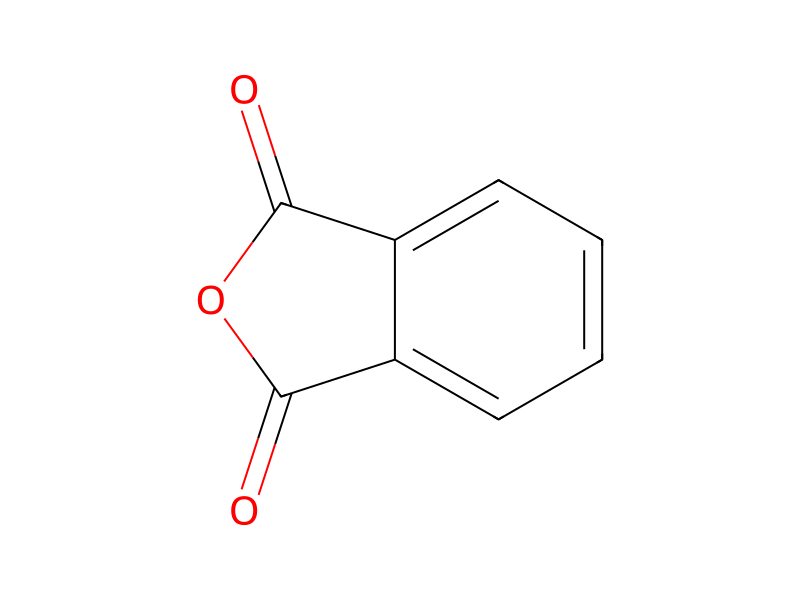
[C:1]([OH:12])(=[O:11])[C:2]1[C:3](=[CH:7][CH:8]=[CH:9][CH:10]=1)[C:4]([OH:6])=O.C1(C)C=CC(S(O)(=O)=O)=CC=1.FC(F)(F)S(O)(=O)=O.S(=O)(=O)(O)O>C1(C)C=CC=CC=1>[C:4]1(=[O:6])[O:12][C:1](=[O:11])[C:2]2=[CH:10][CH:9]=[CH:8][CH:7]=[C:3]12Participants
Reactant 4



Product 1
Reagents, catalysts & solvents 1

Procedure
As a method for producing a carboxylic anhydride, there have been known a reaction between a carboxylic acid and a carboxylic acid chloride and direct heating of a carboxylic acid. In the former case, since a large amount of hydrochloric acid is generated, a base in an amount in moles at least equivalent thereto must be used for neutralization, and hence the cost and time are increased. On the other hand, in the latter case, severe reaction conditions (300° C. or more) are required, and the yield is low. Besides those classical production methods, in Patent Document 1, a method for producing a phthalic anhydride derivative has been reported in which a dehydration reaction of a phthalic acid derivative is performed in an inert solvent in the presence of a catalytic amount of an acidic compound. As the acidic compound, for example, para-toluenesulfonic acid (p-TsOH), trifluoromethanesulfonic acid, polyphosphoric acid, and sulfuric acid are usable. For example, when phthalic acid was heated in toluene in the presence of a catalytic amount of p-TsOH under azeotropic reflux conditions with the removal of water, phthalic anhydride was obtained with a yield of 95%.
Workup
- temperatureunder azeotropic reflux conditions
- customwith the removal of water
Sources & evidence
- ORD record
- ord-2d83d288377f4848880cfb878fff851e
- Source dataset
- uspto-grants-2014_05
- Patent number
- US08735582B2
Reaction notes
Loading…