Hydrochloric Acid → Benzene-o-diamine monohydrochloride
Reaction equation

C(N(CC(O)=O)CC(O)=O)CN(CC(O)=O)CC(O)=O.[C:21]1([NH2:28])[CH:26]=[CH:25][CH:24]=[CH:23][C:22]=1[NH2:27].O=O.[ClH:31]>O=C1O[C@H]([C@H](CO)O)C(O)=C1O.O>[ClH:31].[C:21]1([NH2:28])[CH:26]=[CH:25][CH:24]=[CH:23][C:22]=1[NH2:27]Participants



Procedure
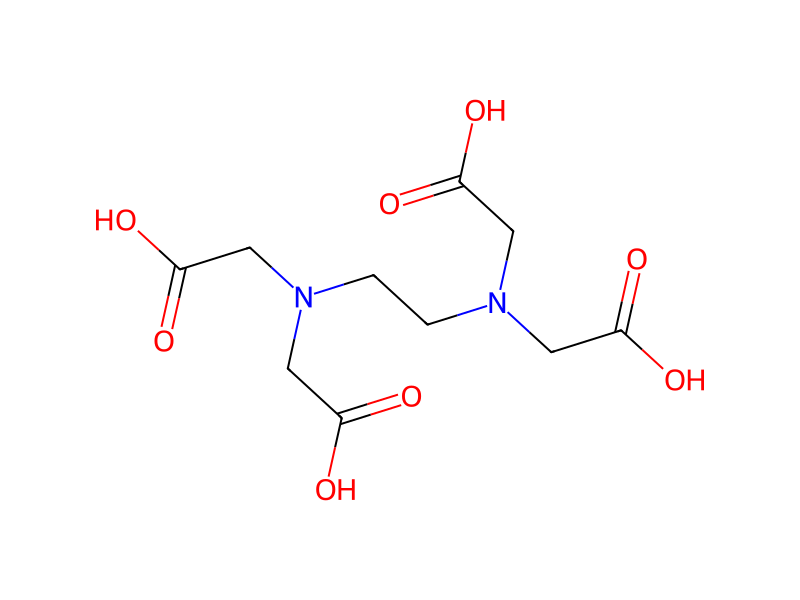
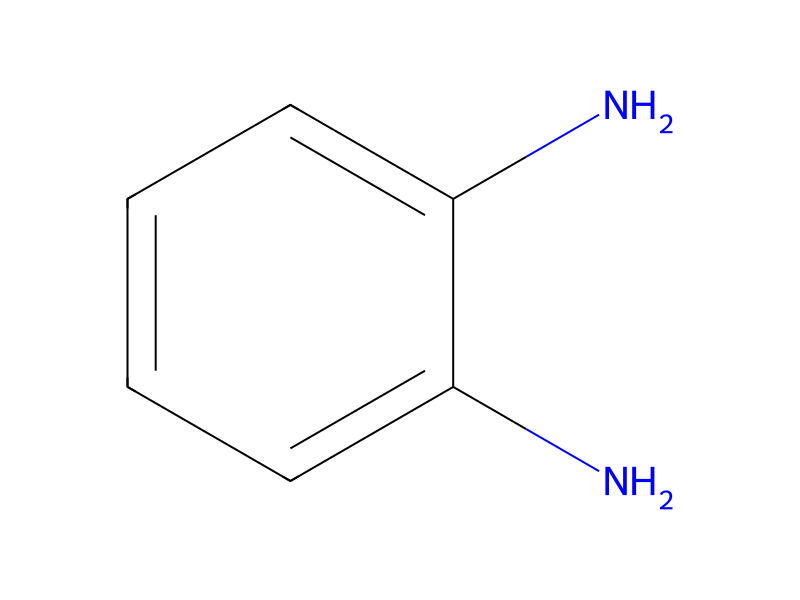
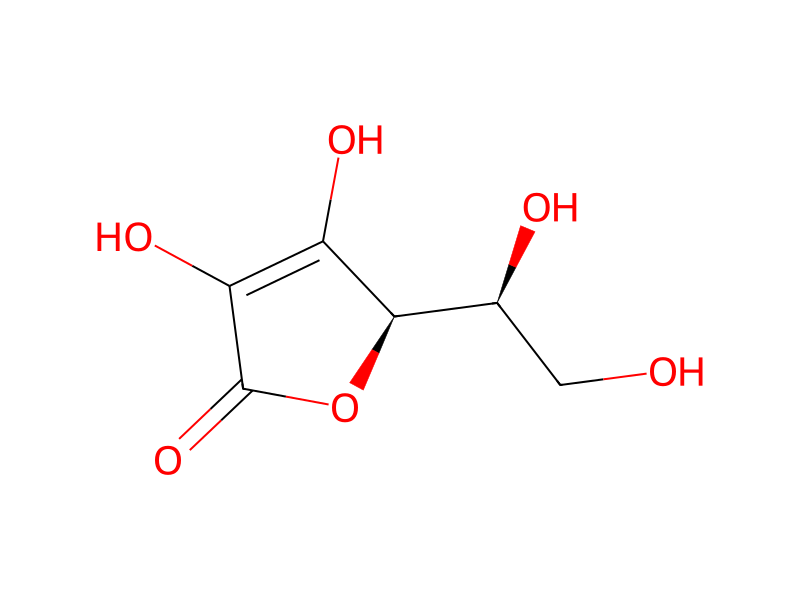
In a preferred embodiment, to a suitable reaction vessel is charged water containing trace amounts of ascorbic acid, an antioxidant, and ethylenediaminetetraacetic acid (EDTA), a metal deactivator. Because o-phenylene-diamine is sensitive to dissolved oxygen in solvents, ascorbic acid which functions as an oxidation inhibitor is added prior to o-phenylenediamine. EDTA, which complexes with metals is also added and prevents metal oxidation of o-phenylenediamine. The system is purged with nitrogen to remove air and a nitrogen blanket is maintained for the duration of the reaction. The aqueous solution is heated using an oil bath, and when the pot temperature reaches 95° C., o-phenylenediamine is added. Since water deoxygenates on heating, o-phenylene-iamine is added to a heated reaction medium with less dissolved oxygen present to react with o-phenylenediamine. Hydrochloric acid is added in a controlled manner to adjust the pH of the reaction mixture to a desired level and the amount used is recorded. An exothermic acid-base reaction occurs and o-phenylenediamine monohydrochloride salt is formed. A stoichiometric amount of 4-cyanothiazole is charged to the reaction vessel. Following addition of 4-cyanothiazole, the reaction mixture is heated to reflux (103°-104° C.). During the reaction, the pH is maintained within +/-0.2 of the desired level by periodic addition of concentrated hydrochloric acid. Since thiabendazole is only slightly soluble in water, the product precipitates as it is formed in the reaction mixture. The reaction is monitored by gas chromatography and determined to be complete when the peaks corresponding to o-phenylenediamine and 4-cyanothiazole are negligible. Upon completion of the reaction, the reaction mass is cooled to 50° C. A sufficient amount of 50° C. deionized water is added to dilute the reaction mass and the solid product is separated from the mother liquor by vacuum filtration. The filtered cake is washed with portions of fresh deionized water until the filtrate gives a negative test for chloride ion using AgNO3 solution which indicates the ammonium chloride coproduct is removed. The solid thiabendazole product is dried in a vacuum oven under 15-20" Hg and at a temperature of 80°-90° C.
Workup
- additionis added
- customThe system is purged with nitrogen
- customto remove air
- temperaturea nitrogen blanket is maintained for the duration of the reaction
- temperatureThe aqueous solution is heated
- customreaches 95° C.
- additiono-phenylenediamine is added
- temperatureon heating
- additiono-phenylene-iamine is added to a heated reaction medium
- dissolutionwith less dissolved oxygen present
- customto react with o-phenylenediamine
- customAn exothermic acid-base reaction
Sources & evidence
- ORD record
- ord-c554b131795c4d8683b3915c2fc06443
- Source dataset
- uspto-grants-1994_05
- Patent number
- US05310924
Reaction notes
Loading…